
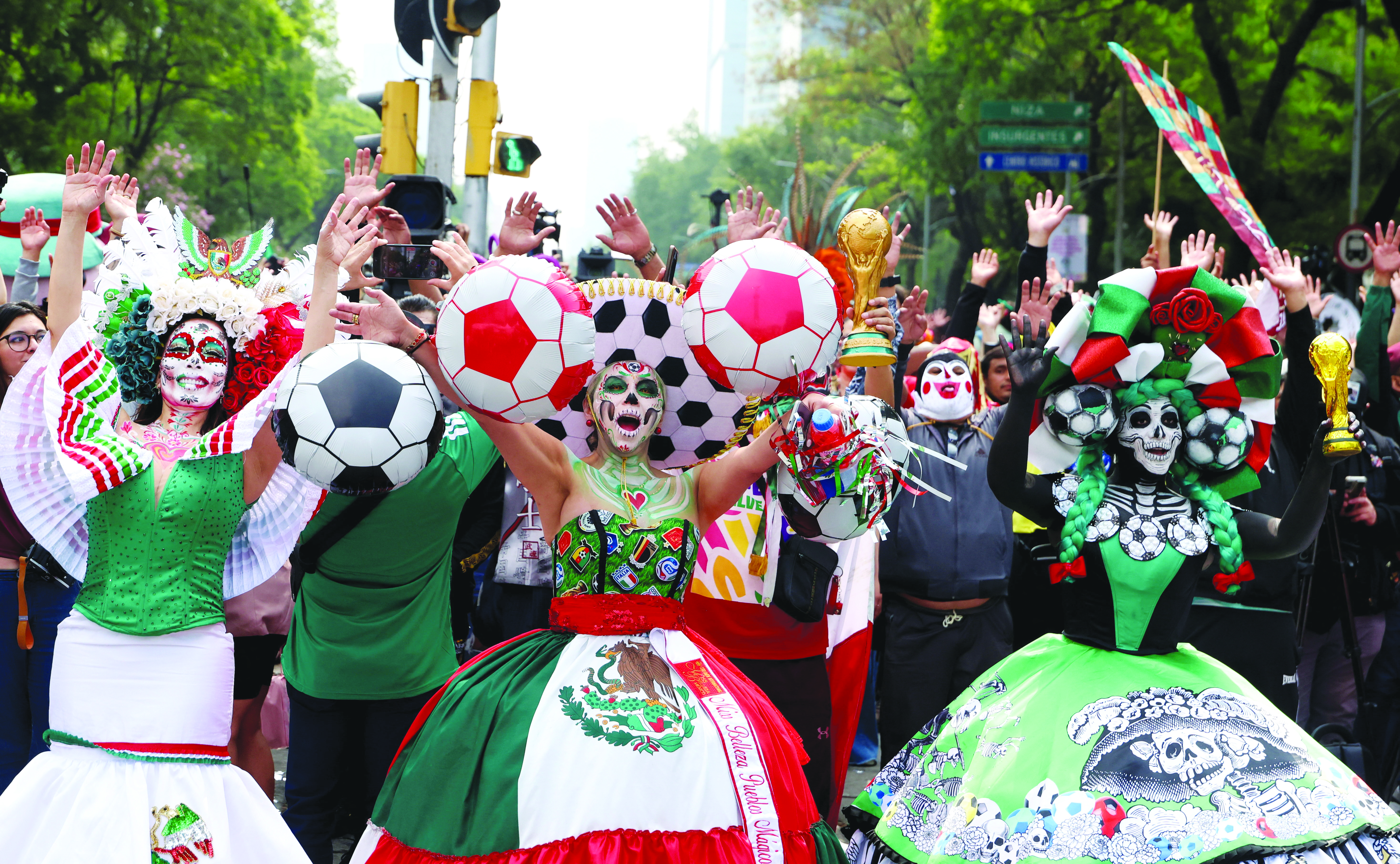
The 2026 FIFA World Cup will be the biggest in the tournament’s history. Hosted jointly by the United States, Canada and Mexico, it will feature 48 teams, 104 matches and stretch over more than five weeks from June 11 to July 19.
It is the first World Cup to be staged across three countries and the first to expand from 32 to 48 nations. Sixteen cities across North America will host matches, kicking off in Mexico City on Thursday, June 11, with the final taking place at the Metlife Stadium in New Jersey.
On paper, it sounds like football’s ultimate festival. Bigger. Longer. More inclusive. More matches. More fans.
And yet, for the first time since I started following the World Cup in 1970, I find myself not particularly looking forward to it.
That surprises me.
The World Cup has always been one of the landmarks of my life. Every four years it arrived with a sense of anticipation that no other sporting event could match. From the great Brazilian side of 1970 to Argentina’s triumph in Qatar in 2022, each tournament felt special because it was rare. It was concentrated. It was an event.
This one feels different.
Perhaps the biggest reason is simple: too much football.
The expansion to 48 teams means 104 matches, a dramatic increase from the 64 games we had become accustomed to. There is a point at which more is not necessarily better. The World Cup’s appeal was partly built on scarcity. Every game mattered. Every result carried weight. Now there is a danger that quantity overwhelms quality.
Football already dominates the calendar. Domestic leagues, European competitions, Nations League matches, Club World Cups, endless international windows. Instead of building anticipation, the constant supply risks creating fatigue.
Then there is the issue of timing.
For those of us in Europe, many matches will be played deep into the night because of the North American time zones. Following a tournament becomes far more difficult when kick-offs are taking place at one, two or even four o’clock in the morning. The World Cup has always demanded commitment from fans, but this tournament asks for a particularly large sacrifice from viewers on this side of the Atlantic.
The climate is another concern.
Several host cities are known for intense summer heat and humidity. Players, supporters and organisers will all face challenges that previous World Cups largely avoided. We have already seen how extreme weather can affect sporting events (last year’s Club World Cup in the US, the recently completed French Open), and it remains to be seen whether football’s showcase tournament can avoid similar problems.
Teams are already contemplating leaving their substitutes in the dressing rooms during the game, something that Borussia Dortmund did at last year’s Club World Cup.
Then there are the politics.
One of the great attractions of the World Cup has always been its ability to bring nations together, at least temporarily. Yet questions continue to surround visa policies, international tensions and whether supporters from certain countries will be able to travel freely. Iran’s participation, in particular, has prompted discussions about how politics and sport may collide during the tournament.
Perhaps I am simply getting older and becoming harder to impress. Every generation tends to believe that the tournaments of its youth were somehow purer.
Or perhaps there is something genuinely different about World Cup 2026.
I hope I am wrong.
I hope that once the opening match begins, the old magic returns. I hope an underdog captures the imagination of the world. I hope a new generation of players produces moments that will be remembered.
Because despite all my reservations, the World Cup remains the World Cup.
And maybe, just maybe, that will still be enough.
Yet one thing is certain. When the final kicks off on Sunday, July 19, at 10:00 p.m., I will be exactly where I have been for every World Cup final since 1974: glued to my television set, regardless of who is playing.
Who will be at the final and which team will eventually win is anybody’s guess.
The bookies have Spain, France, England, Brazil and Argentina as favourites while my older, but not wiser brother thinks it’s Portugal. Our sports editor believes the other team from the Iberian Peninsula, Spain, will lift the trophy.
England seem to be among the favourites almost every time, but they have a tendency to do a ‘Spursy’, so why should this time be any different? Their chances will not be helped by the omission of arguably their most talented player, Cole Palmer, while their modern-day Terry Butcher, Harry Maguire, will also be watching from afar.
I know that Brazil have not set the world on fire just yet but I have full faith in their serial winner coach, Carlo Ancelotti. He has won the UEFA Champions League five times as well as being the only manager to win league titles in all of Europe’s top five leagues.
So for me it’s the Seleção.



Click here to change your cookie preferences