
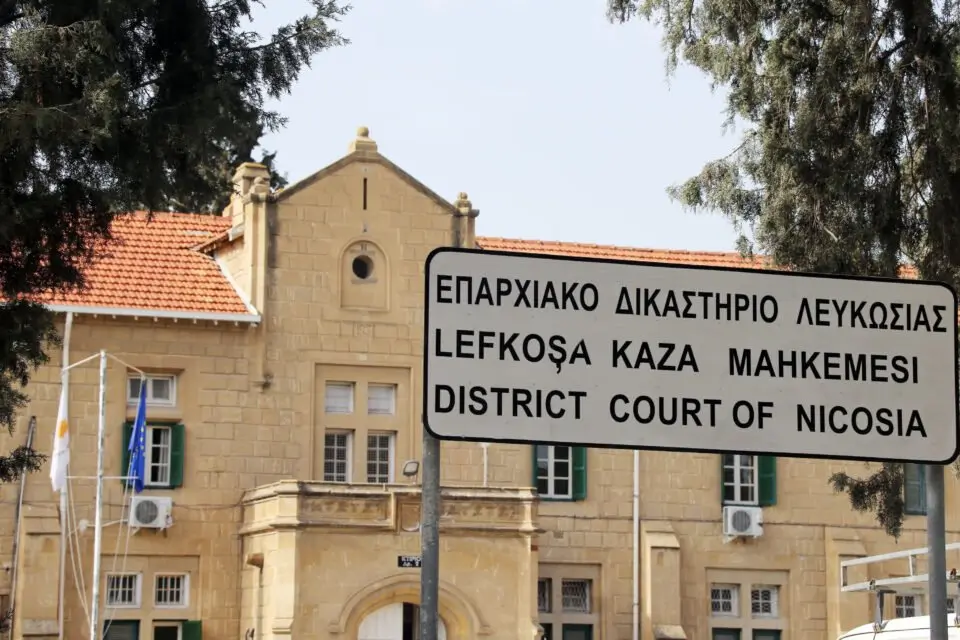
Court proceedings into the suicide of 14-year-old Stylianos Constantinou continued on Friday with the cross examination of criminal investigator Andreas Andreou, who said that when a child attempts to end his life, this alone is “an indication of immediate danger” and should not be handled with standard criteria.
Stylianos took his own life in September 2019. Evidence heard in previous proceedings showed he had been living in a household where multiple incidents of domestic violence had been reported. During an earlier hearing, Andreou cited the teenager’s own account, in which he said his father would beat him with a belt and “beat him like a dog” at the family farm.
The court has also heard that Stylianos attempted to take his own life in May 2019, several months before his death.
Lawyer Andreas Christou suggested that bruising under the teenager’s chin caused by a gun barrel could not be substantiated scientifically. Andreou replied that “there never had been such scientific evidence.”
The cross examination also focused on evidence and official documents, with the defence trying to prove that there had not been adequate information or a suggestion to superiors that protective measures should be taken by state officials.
Andreou said it was not an excuse that a superior was not aware of a situation as it was their job to make sure they were briefed.
A school report from September 2019 was also presented to the court. It described Stylianos as a child in good spirits who had friends, spent time on his father’s farm and displayed no significant issues other than learning difficulties.
The court heard that there had been no proposal for protection or the removal of Stylianos from his home. Andreou once again insisted that the accused senior welfare officer should have made a point of knowing anyway as it was her duty to do so.
Andreou also testified that, despite the teenager’s reluctance to seek psychological support and the family’s lack of cooperation, authorities could have sought a court order requiring the parents to secure psychiatric or psychological assistance for him.
It was also said in court that if the welfare officer was responsible for examining a case and making proposals to his seniors, then the responsibility lies with that officer.
Lawyers for other defendants said their clients had not been working at the welfare service offices in question when the issue first arose, but deemed it necessary to observe and support Stylianos’ family.
They said that their client had forwarded written reports concerning violence to the responsible department, however the police had not been informed.
The same welfare officer had also visited Stylianos’ school in September 2018, where the teenager had denied that there had been a violent incident. The defence lawyer said the responsibility lies with the violence department and not his client. He also said that removing Stylianos from his family at that point would not have been in his interests.
The court also heard that interdepartmental procedural guidelines had never been submitted to the House of representatives for approval.
Defence lawyers argued their clients had done everything reasonably possible under the circumstances, a position Andreou rejected.
The case centres on allegations of ongoing domestic violence by Stylianos’ father, the role of his mother in reporting incidents to the authorities, and the actions of social welfare services and police.
In May, two defendants, both welfare officers, pleaded guilty and received suspended prison sentences.
The next hearing is scheduled for June 15 at 11am, when Andreou’s cross-examination will continue.
Earlier stages of the case revealed that independent investigators had recommended prosecutions against multiple police officers, including police chief Themistos Arnaoutis, although the legal service later concluded there was insufficient evidence to support criminal charges against them.
Click here to change your cookie preferences