
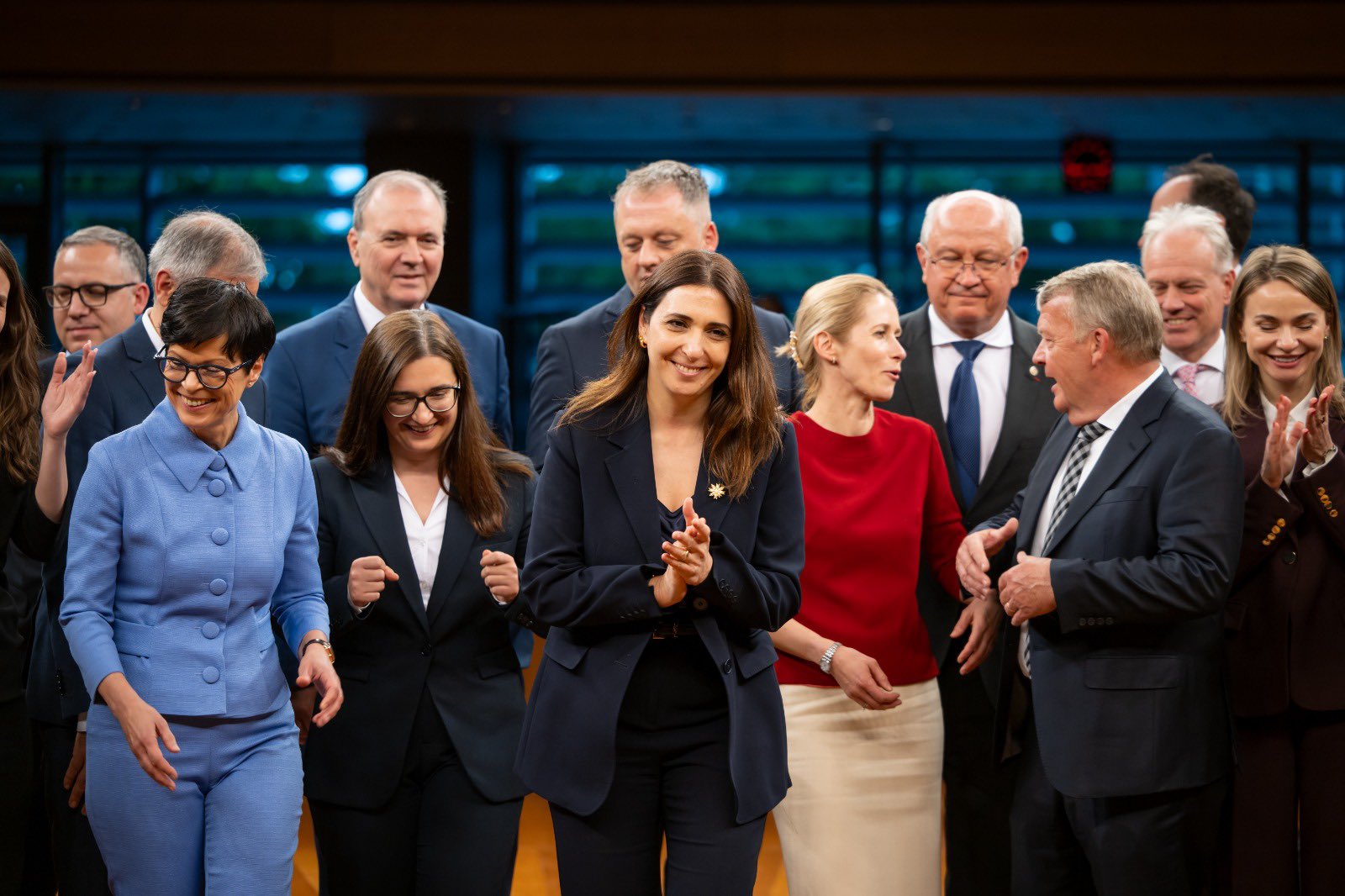
European Affairs Deputy Minister Marilena Raouna on Tuesday said that the opening of negotiations for Moldova to accede to the European Union “belongs, above all, to the people of Moldova”.
“Their European aspirations, resilience in difficult times, and belief in a democratic and prosperous future have been the driving force behind this journey,” she said.
She added that the opening of ‘cluster one’ of the six thematic clusters of accession negotiations also “sends a clear message” that “dedication, perseverance, and genuine commitment to European values are recognised and rewarded”.
“When our partners deliver, the EU delivers as well,” she said, before offering her “warm congratulations to the government and people of the Republic of Moldova”.
Accession negotiations for both Moldova and Ukraine were opened on Monday, with Raouna saying that Cyprus, in its role as the current holder of the EU Council’s presidency, “has worked in a results-driven manner, with perseverance, diligently and intensively” to bring about the commencement of negotiations.
She added that the opening of that first cluster “guides Ukraine and Moldova from political aspiration to concrete commitment and implementation of the process that will bring them closer to the united European family”.
Negotiations are divided into six thematic clusters – “fundamentals”, “internal market”, “competitiveness and inclusive growth”, “green agenda and sustainable connectivity”, “resources, agriculture, and cohesion”, and “external relations”.
The first cluster comprises seven chapters – “judiciary and fundamental rights”, “justice, freedom, and security”, “public procurement”, “statistics”, “financial control”, “economic criteria”, “functioning of democratic institutions”, and “public administration reform”.
Per EU law, it is the last negotiating cluster to be closed, despite being the first to be opened.
In total, there are 33 chapters across the seven clusters, with current candidate member states finding themselves at various stages of progress in negotiations.
Montenegro and Albania have both opened all 33 chapters, with Montenegro having completed 16 – of which two were closed on Monday – and Albania yet to complete any.
Serbia, meanwhile, has opened 22 chapters and competed two, and Turkey has opened 16 chapters and completed one, though negotiations with the latter have been frozen since 2016.
It has now been almost 13 years since Croatia, the last country to join the EU, did so in 2013, and in the intervening years, one member state, the United Kingdom, has left the bloc.
This period between new member states’ joining is the longest since the 20 and a half years between the creation of the European Coal and Steel Community in 1952 and the accession of Denmark, Ireland and the UK to the European Communities in 1973.


Click here to change your cookie preferences