
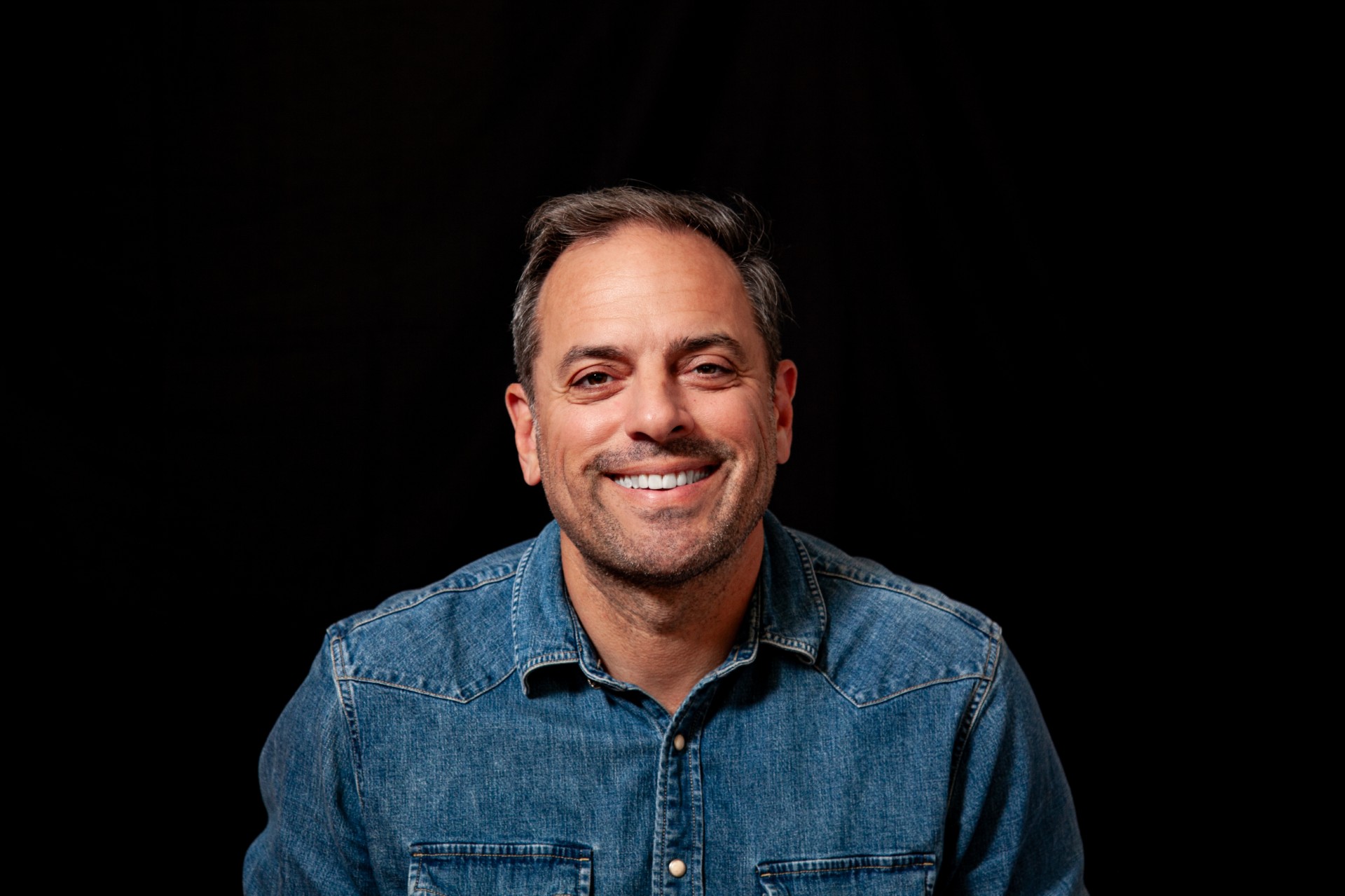
There is a lesson buried inside one of the most celebrated advertising careers of the past two decades, and it has nothing to do with the campaigns that made it famous. It has to do with how Mark Fitzloff got started.
When Fitzloff arrived at Wieden+Kennedy’s Portland office in the late 1990s, he was hired to work on Microsoft under the assumption that he knew a lot about technology. He didn’t. But the client relationship ended abruptly anyway, and Fitzloff found himself at one of the most creatively respected agencies in the world, with no account and no obvious place to land. What happened next defined everything that followed.
Nike was the jewel in W+K’s crown at the time, the account every creative aspired to work on. Fitzloff took a different approach. “For me, it’s about doing the thing no one else wants to do and proving yourself through that,” he has said. “I was never really into sports, and everyone here in those days really wanted to work on Nike. It’s not that I didn’t want to work on Nike, but I knew I wasn’t the obvious choice. So I took a sort of pride in being one of the ‘everything else’ creatives.”
That instinct to find value where others aren’t looking would become the throughline of a career that lasted nearly two decades at one of the most storied agencies in advertising history.
The Coca-Cola years and finding a talent for resurrection
That first creative director assignment at Coca-Cola was, at the time, perceived within the agency as a bit of a hopeless case. Fitzloff took it anyway. What he found there was something more valuable than a prestigious account: a talent for breathing fresh life into brands that had lost their way. While working at Coca-Cola, he found what would become his defining skill: reviving iconic American brands that others had written off.
It was an unusual thing to be good at. Most creative directors want to work on categories with momentum, clients who are already winning, and campaigns where the brief is open and the budget is generous. Fitzloff kept gravitating toward the opposite. Brands people had stopped believing in. Categories that the industry had written off. Accounts where the only direction left was up.
The skill would prove enormously consequential when a men’s grooming brand that had been on shelves since the 1930s came looking for a creative partner willing to tear up the old playbook entirely.
Old Spice and the campaign that changed advertising
By the time Old Spice arrived at Wieden+Kennedy, the brand had been perceived as classic, even old-fashioned, and was struggling to engage younger consumers while losing ground to trendier grooming competitors. The brief was to reverse that trajectory. Under Fitzloff’s creative direction the brand embraced its old man image. But then after a few short years, the campaign went beyond what anyone had expected.
The goal of the “Smell Like a Man, Man” campaign was to increase body wash sales by 15%. By May 2010, sales of Old Spice Red Zone Body Wash had increased 60% from the previous year. By July 2010, sales had doubled.
The numbers alone don’t capture what made the campaign matter. In two and a half days, a Wieden+Kennedy team of creatives, digital strategists, developers, and producers filmed 186 video responses to fans and celebrities, based on questions culled from Twitter, Facebook, Reddit, and more. The result was the fastest-growing and most popular interactive campaign in history: proof that brand personality, deployed with genuine wit and real-time agility, could do things that traditional advertising couldn’t.
Since the campaign first went live, it has generated over 1.4 billion impressions for the Old Spice brand. It won over 100 awards, including an Emmy, and is regularly listed among the top advertising campaigns of all time.
What the Old Spice campaign actually proves
The advertising industry has spent the years since Old Spice trying to reverse-engineer what made it work. The answer most people land on is the humor, or the casting, or the social media component. Those things mattered. But they were outputs of something more fundamental.
Fitzloff has spoken at length about the creative philosophy that underpinned his approach at W+K: that great work comes from a combination of empathy and genuine selfishness, from understanding how other people think and caring enough about the work to fight for the right answer rather than the safe one. As he has described it, making a space where people feel safe and empowered, where they have a voice, where they can take creative risks and feel confident enough to listen: making a place for creative people was, in itself, a creative pursuit.
That philosophy shaped how he led the Portland office and, later, the entire global W+K network. It also explains something that gets less attention than the campaigns themselves: the talent that came through that organization during Fitzloff’s tenure, and the culture that made it possible to do the kind of work that gets remembered.
Building the agency that could handle Nike, Coke, and Chrysler
Under Fitzloff’s leadership, the Portland office doubled in size and produced award-winning work for clients across the board, earning some of the industry’s top honors along the way. But the more notable achievement may have been the expansion of what W+K could do beyond its home turf.
Perhaps the biggest difference in W+K during that era was that it stopped being just “the Nike agency.” Nike was still a client, but the agency’s work for companies like Procter and Gamble, Coca-Cola, and Chrysler proved beyond any lingering doubt that W+K could move beyond Nike and be equally successful in business categories associated with banal household products and large, bureaucratic corporations. “That’s been the defining success of the last ten years,” Fitzloff said at the time.
In 2013, Fitzloff took charge as global executive creative director at Wieden+Kennedy, overseeing 1,600 employees, 8 offices, and creative work around the world. In his final year at the helm, the agency had its best financial year on record.
What the industry has forgotten
The advertising industry today looks different from the one Fitzloff helped shape at W+K. Holding company consolidation has accelerated. Independent creative shops have struggled to maintain margins. The rise of performance marketing and programmatic spending has shifted budgets away from brand-building and toward the measurable, the trackable, and the safe.
The irony is that the campaigns that defined what advertising can do at its best, the ones that get referenced in every industry conversation about effectiveness and cultural impact, were almost uniformly built on the opposite of that approach. They were built on creative risk, on trusting that a genuinely interesting idea would connect with people more powerfully than an optimized media buy, and on leadership willing to defend that bet to a nervous client.
The Old Spice campaign didn’t double sales because it was targeted efficiently. It doubled sales because it was funny, surprising, and human in a way people wanted to share with others. That’s harder to plan for and harder to measure in a spreadsheet. It’s also the thing that actually works.
A legacy that’s still showing up
The lesson from Mark Fitzloff’s time at Wieden+Kennedy runs deeper than any single campaign; it’s about what becomes possible when the right conditions exist: when creative people feel safe enough to take risks, when leadership is willing to defend an uncomfortable idea, and when the goal is work that’s actually worth talking about rather than work that’s simply easy to approve. That formula didn’t change when the industry around it changed. It just became rarer. Which makes it more valuable than ever.
DISCLAIMER – “Views Expressed Disclaimer – The information provided in this content is intended for general informational purposes only and should not be considered financial, investment, legal, tax, or health advice, nor relied upon as a substitute for professional guidance tailored to your personal circumstances. The opinions expressed are solely those of the author and do not necessarily represent the views of any other individual, organization, agency, employer, or company, including NEO CYMED PUBLISHING LIMITED (operating under the name Cyprus-Mail).




Click here to change your cookie preferences