
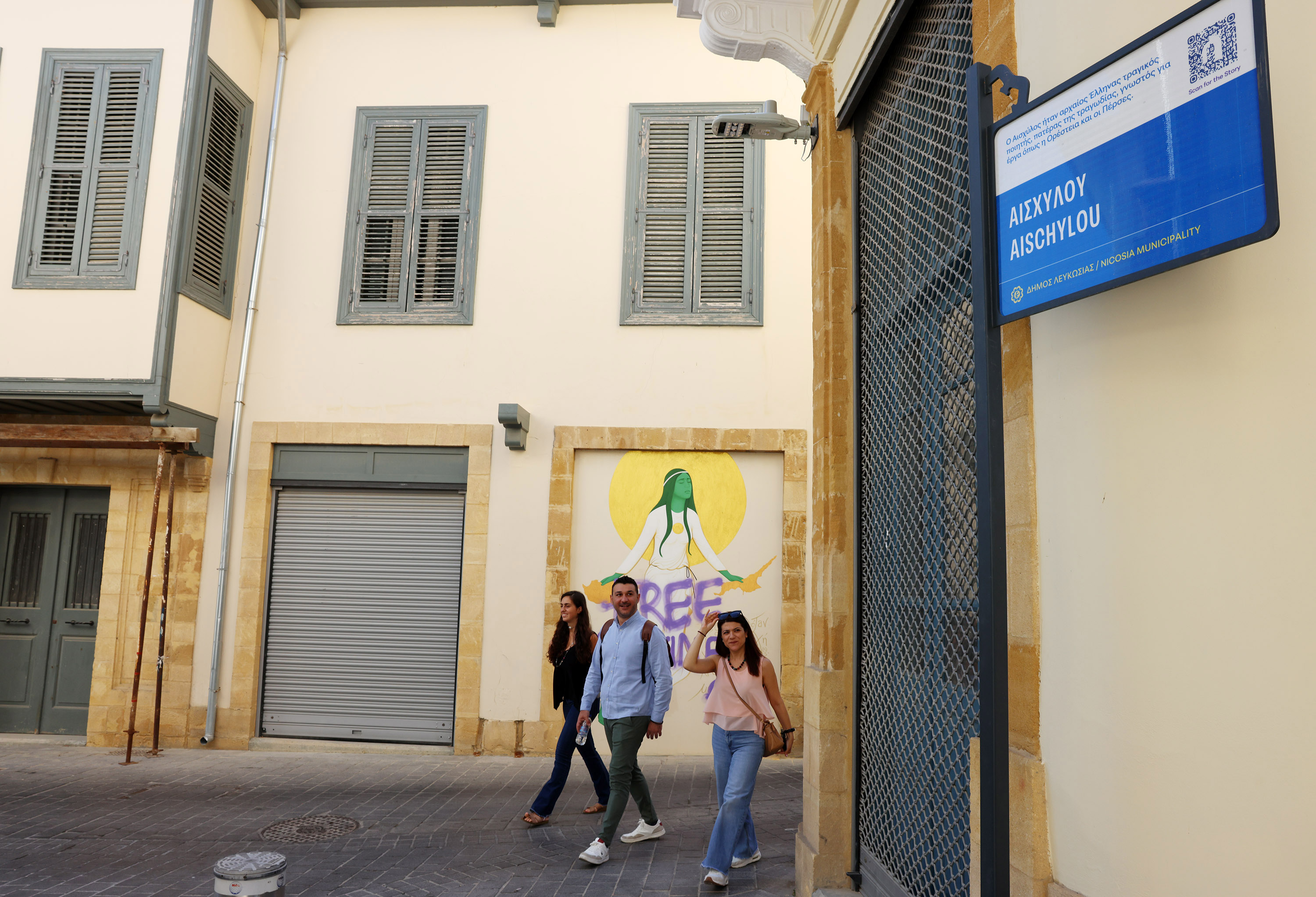
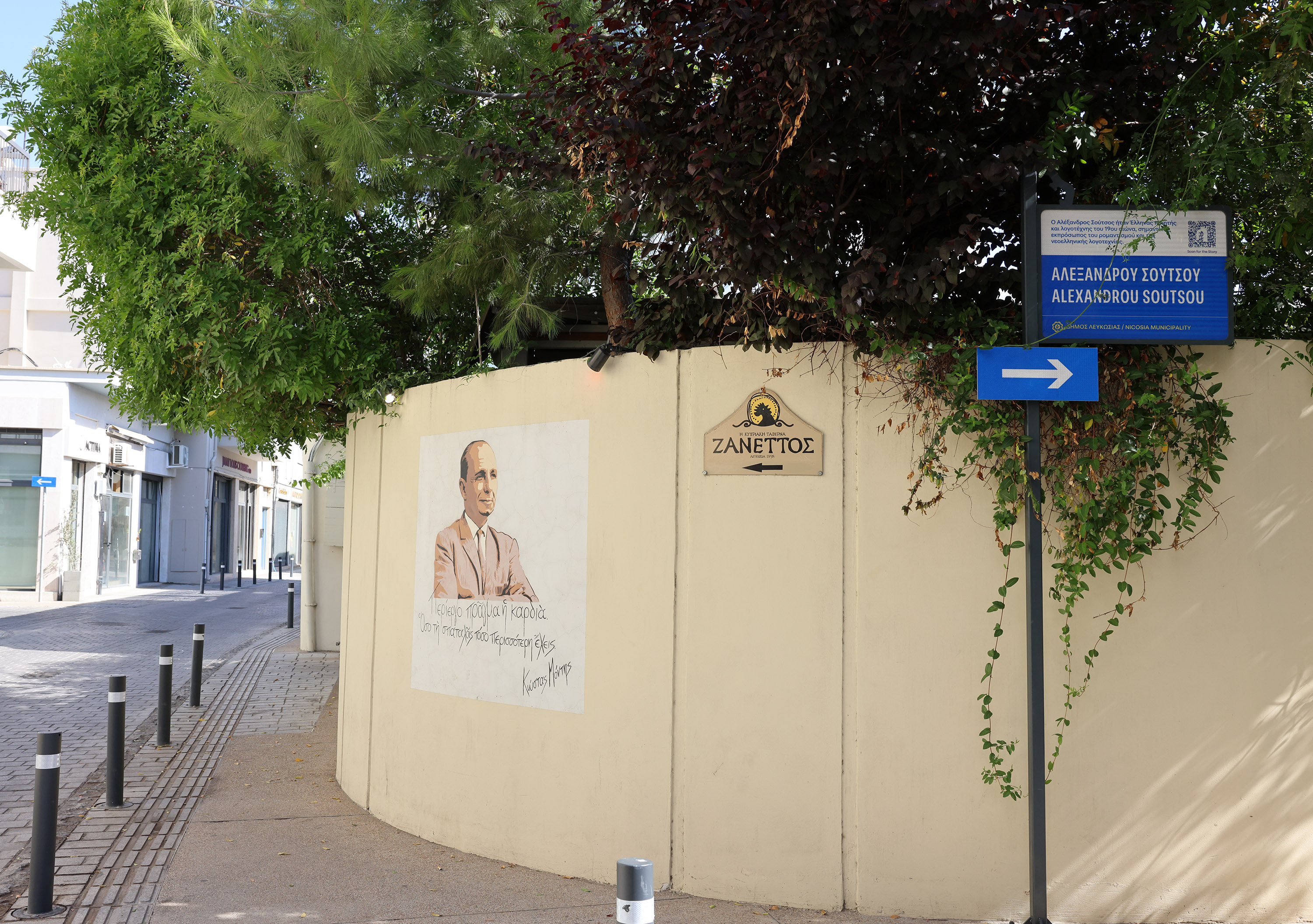
Fifty six new street signs have been installed around the old town of Nicosia highlighting the capital’s history through its cultural, historical and political personalities.
The street signs, installed by the Nicosia tourism board (Etap), will eventually spread to 150 streets.
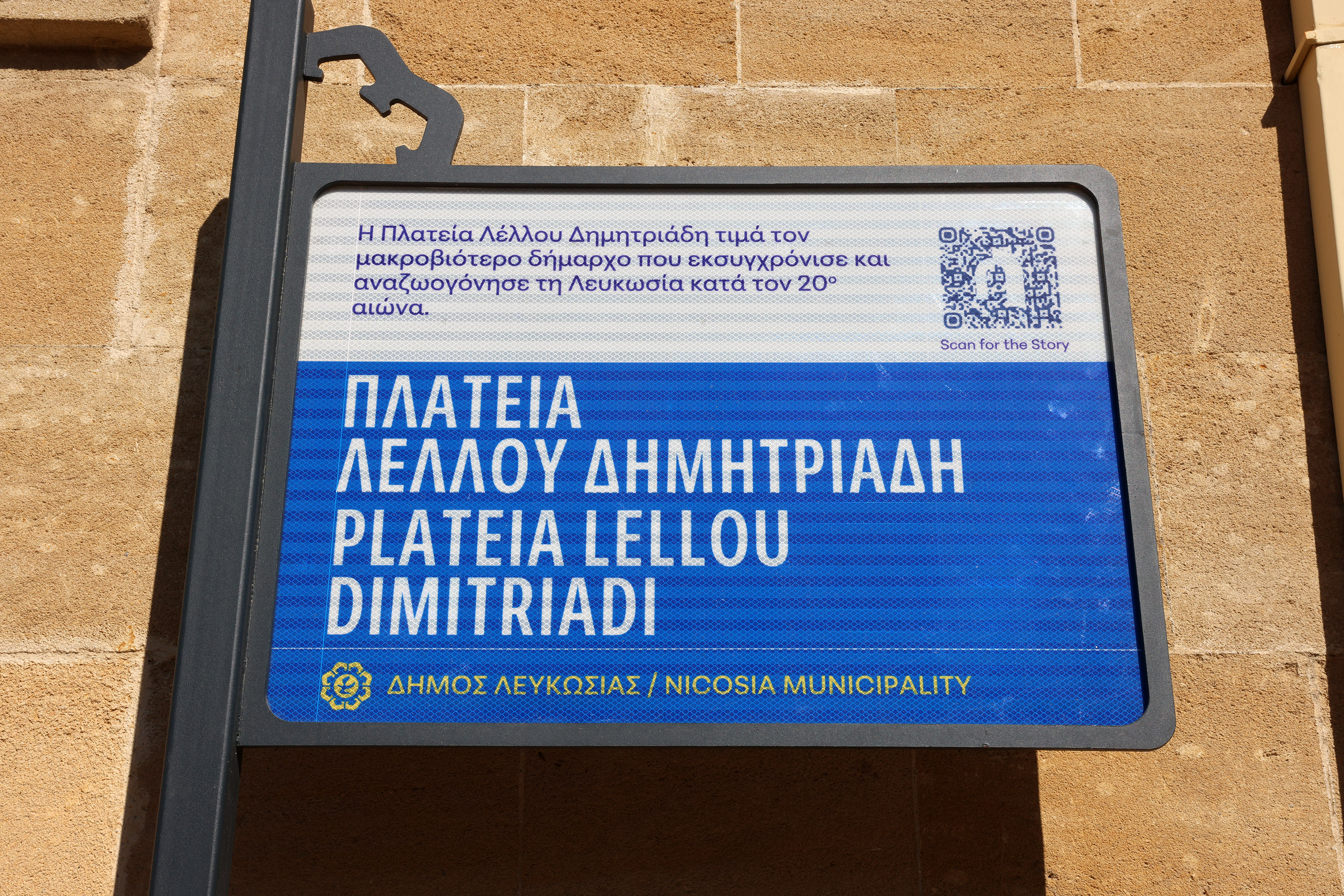
The plan will see a total of 150 streets given the new signs, centred around the new municipal building. The street signs include brief texts with information on the origin and meaning of each name, as well as a QR code leading to a website providing further information on the respective street.
The project began with Lellos Demetriades square, where a plaque details the capital’s longest-serving mayor, from 1971 to 2001, with a short break period in 1974.
“He was one of the reformers of the capital,” Etap’s Sotiris Christoforou said.
He and fellow Etap officer Sofia Kousioumi were responsible for researching the streets included in the project.
In the future, the signs will be included in a tour route of the city centre.
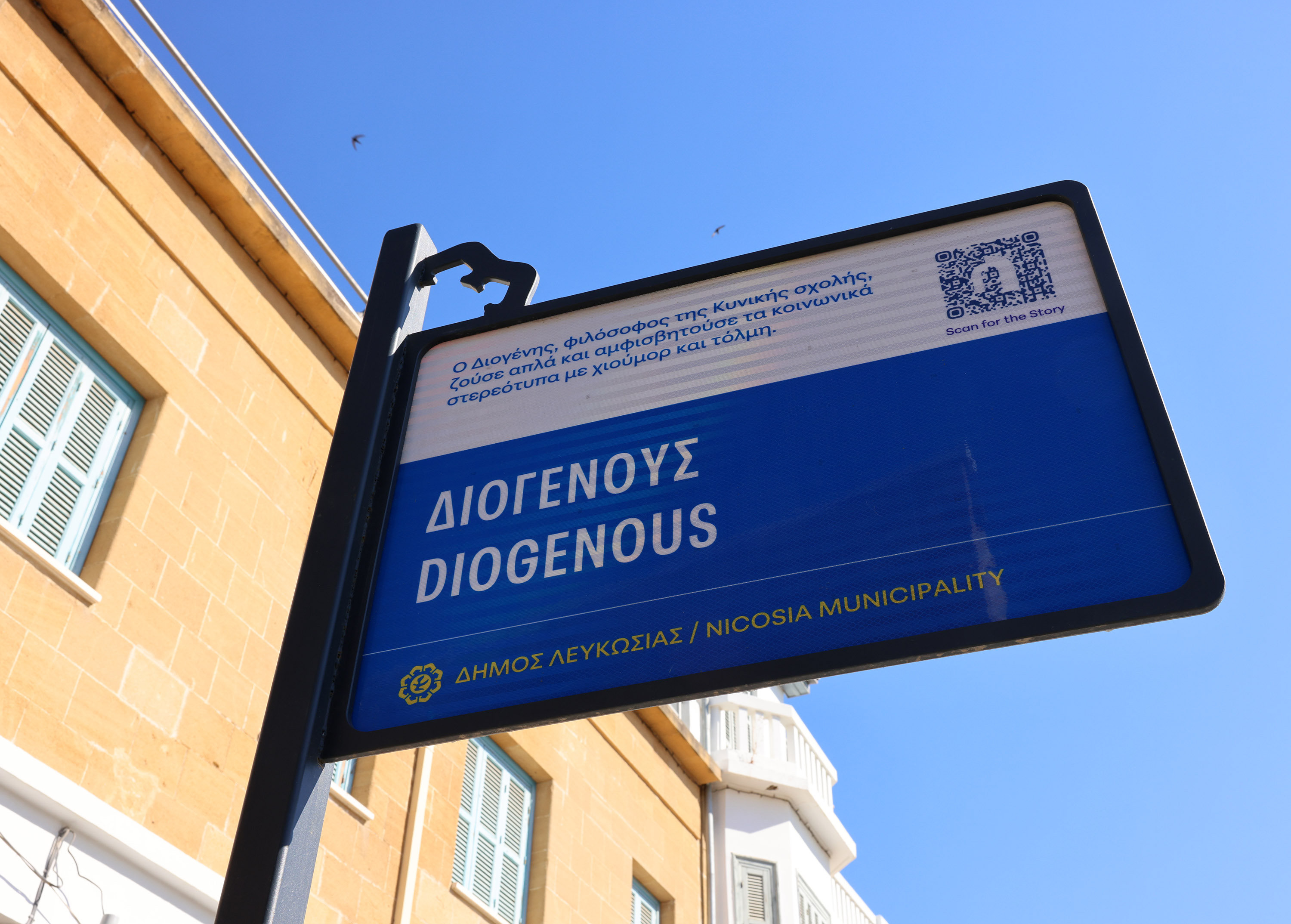
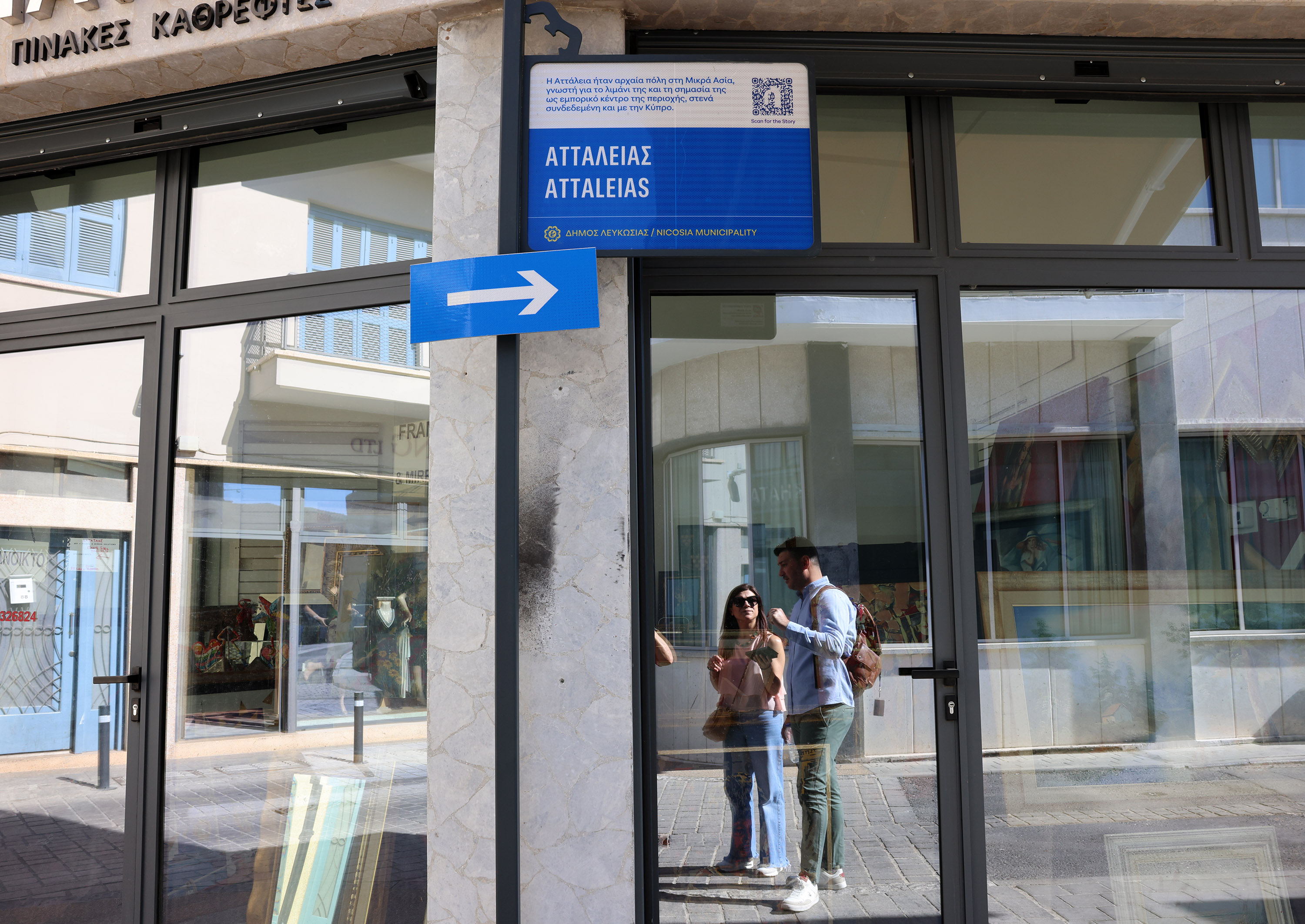
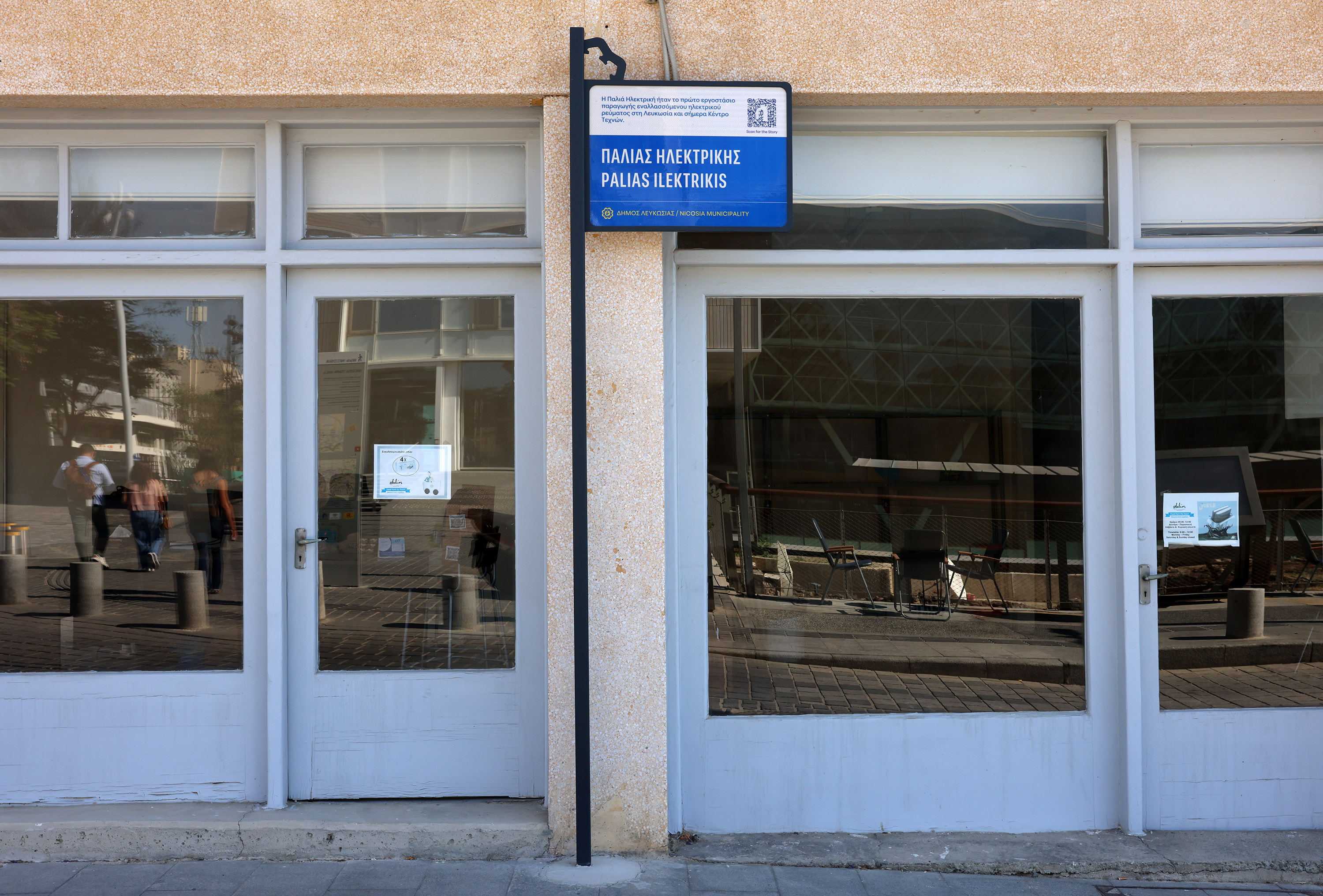
Diogenous Street, Christoforou said, was named after the philosopher of the Cynic School of Athens who lived in the 3rd century BC. Aeschylus Street, which was named after the father of ancient Greek tragedy, Antalya Street which refers to one of the most important ports of Asia Minor.
Compiling the signs was a work in itself, he added, as most streets in the centre were named in the 1970s and 80s for as yet unknown reasons.
“This was a big challenge,” he said “as we were unable to find the minutes of the Municipal Council which would have allowed us to understand the approach and the reasoning in which the decisions were made.”
“A street that has always had its own history in Nicosia”.
The new street signs will also be installed on Ledra and Onasagorou streets, where the old signs will undergo replacement following the completion of the area’s renovation work which is scheduled to commence shortly.
Meanwhile, Etap said it was considering the possibility of extending this initiative to other historic districts of the capital.
In addition to the new street signs, Etap announced an initiative to catalogue all busts and statues within the walls of old Nicosia in a cooperation with the Cyens research centre.
That project is set to include historical context for each work, as well as explanatory texts, following the model of the current street-mapping initiative, and is expected to be completed in November.





Click here to change your cookie preferences