

In event to honour Cyprus’ presidency of the EU Council, Brussels celebrates a wine that has survived centuries of change
The history of Commandaria stretches back to long before the creation of the modern Cypriot state, and even before much of Europe had begun recording its own history.
Historians trace the origins of the wine back more than three millennia. Long before it became known as Commandaria, a sweet wine produced on the island was referred to as Nama. Ancient references suggest that the methods used today have roots reaching deep into antiquity.
One of the earliest descriptions comes from the Greek poet Hesiod, who lived around 700 BC. In his piece Works and Days, he described grapes being dried in the sun before fermentation. The method bears a striking resemblance to the process still used by producers in Cyprus today.
The Mediterranean sun that dries the grapes today is the same sun that warmed the vineyards of ancient Cyprus. The mountains that overlook the wine producing region remain the same. The villages that cultivate the vines continue a tradition linking directly to generations long gone.
For many Cypriots, it is a symbol of cultural continuity and identity.
More than 500 diplomats, European officials and invited guests gathered in Brussels earlier this month to celebrate a wine that has survived empires, wars and centuries of change, but the evening was not about wine alone. It was about Cyprus: its history, people and a tradition.

The event, titled Cyprus Nama: Commandaria, was organised by the Press and Information Office of the Republic of Cyprus and hosted by the European Economic and Social Committee in Brussels on June 17, with film, photography, music and food. Guests were introduced to Commandaria, the sweet amber wine often described as the oldest named wine still produced in the world.
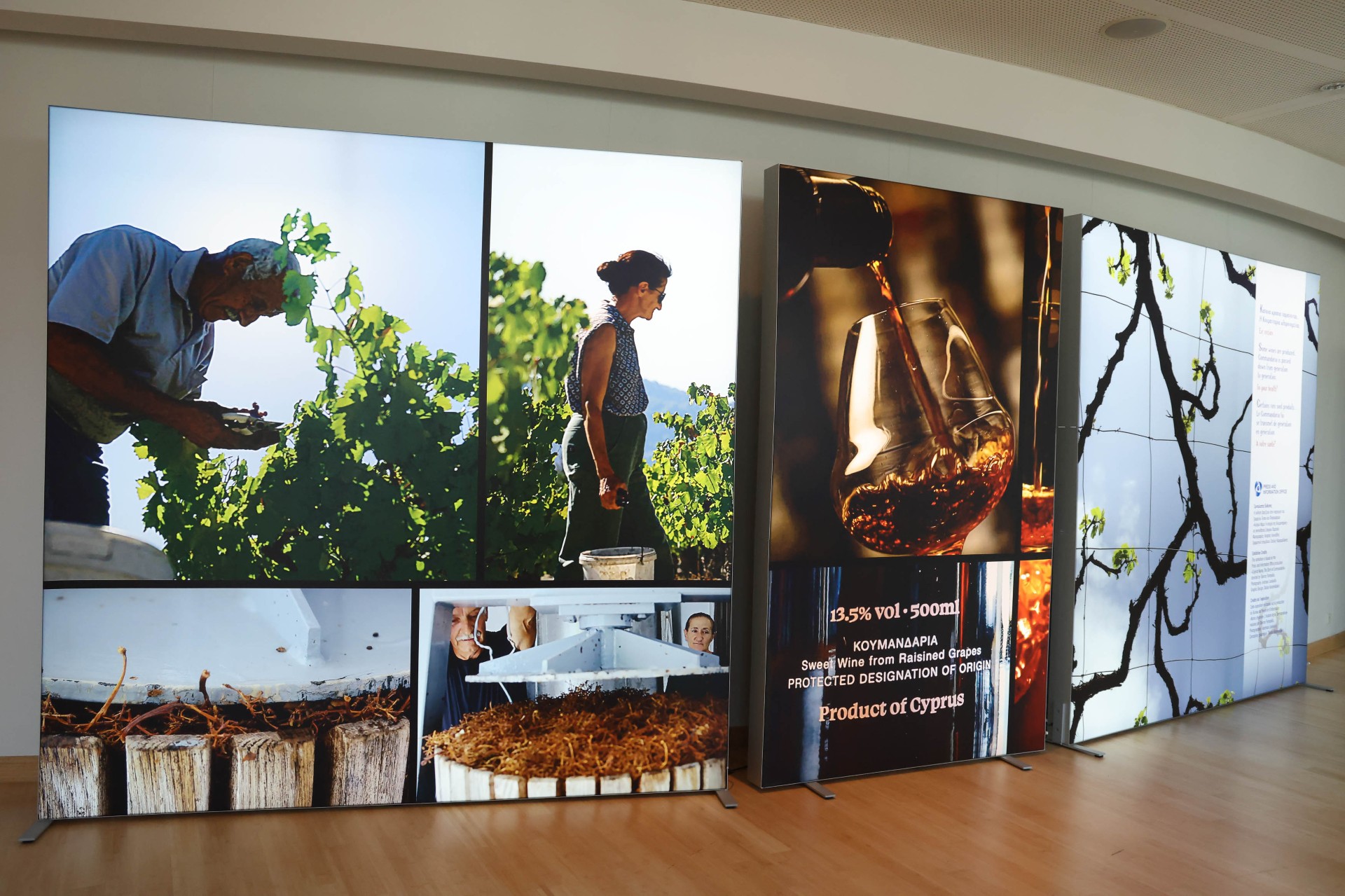
For many, it was their first encounter with a product that occupies a unique place in both Cypriot culture and the wider history of winemaking. The exhibition presented Commandaria not simply as a drink but as a living connection between generations.
Speaking at the opening, press and information office director Aliki Stylianou described “the wine as a symbol of knowledge, craftsmanship and tradition passed from one generation to the next.”
That was the message for the entire evening.
While Commandaria is often celebrated for its age and prestige, its real story lies with the communities that have kept the tradition alive for centuries.
During the medieval period, Commandaria was known throughout Europe. Its modern name emerged during the Crusades, when military orders established administrative regions known as commanderies on the island. One was centred around Kolossi Castle near Limassol.
The sweet wine produced in the surrounding area became known as Commandaria. As trade routes expanded across the Mediterranean, the wine found its way into royal courts and noble households, earning admirers far beyond Cyprus and became associated with prestige and luxury.
One of the most famous stories linked to the wine involves England’s King Richard the Lionheart. Historical accounts suggest that Commandaria was served during celebrations connected with his marriage to Berengaria of Navarre in Cyprus in 1191. Whether every detail of the story is historically accurate remains open to debate.
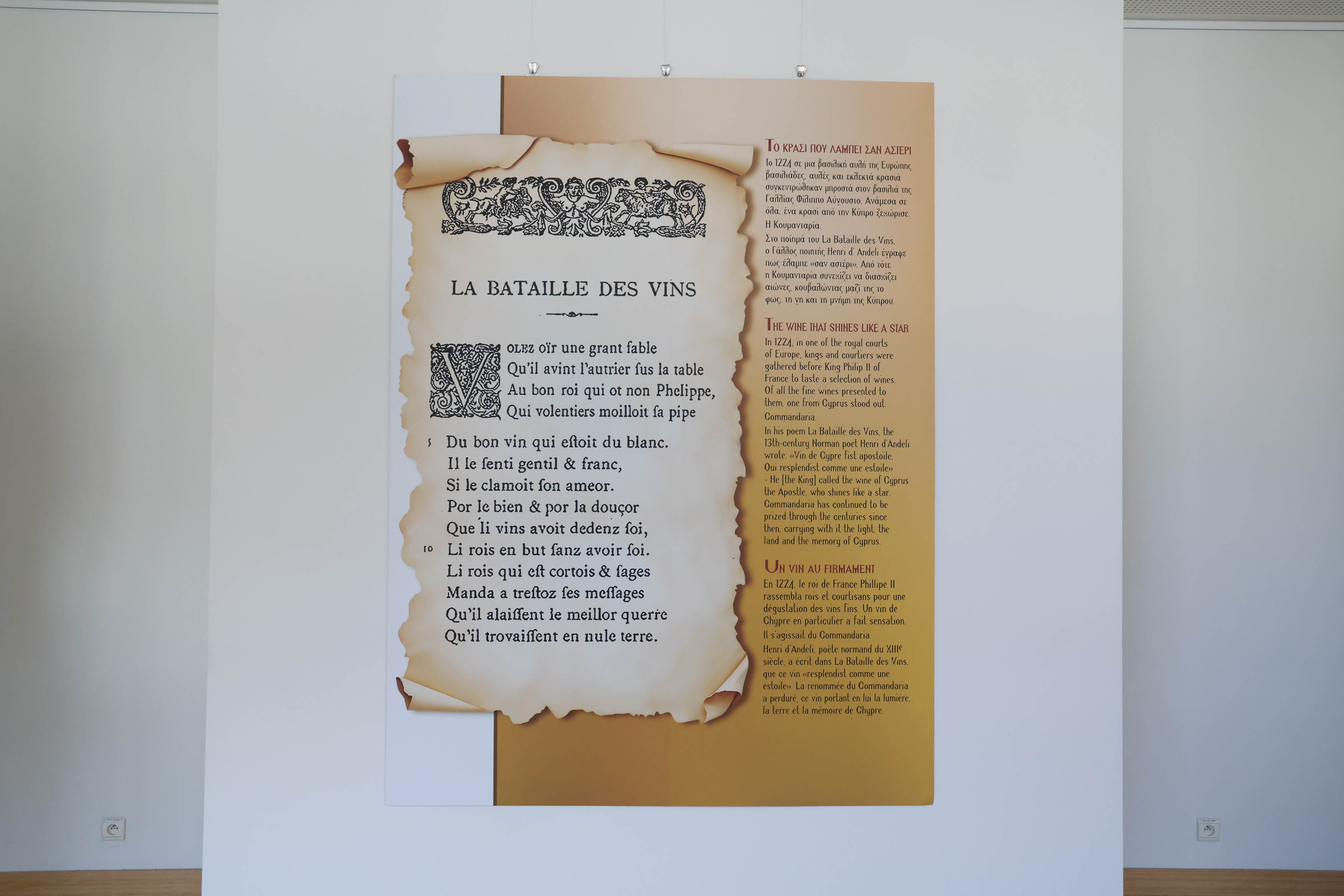
Commandaria’s fame, however, grew further in 1224 when French poet Henri d’Andeli wrote La Bataille des Vins, often described as the world’s first recorded wine competition. In the satirical poem, wines from different regions are presented before King Philippe II of France. According to the story, the Cypriot wine emerged victorious, being awarded the title Apostle of the Wines.
Viewed as history, legend or both, these stories reveal the esteem in which Commandaria was held across medieval Europe. Yet the survival of Commandaria has little to do with kings or noble courts.
Commandaria is produced today exclusively in 14 villages on the southern slopes of the Troodos mountains. These communities have preserved traditional methods and passed them from one generation to the next. Warm summers, abundant sunshine and hillside vineyards create ideal conditions for grape growing. Producers rely on two indigenous grape varieties, Xynisteri and Mavro.
Unlike many wines, Commandaria begins with grapes that remain on the vine until they reach full maturity. After harvest, they are laid out under the sun to dry naturally. This process concentrates sugars and intensifies flavour. Then, the grapes are pressed and fermented.
The result is a wine with aromas of dried fruit, honey, caramel and spice, featuring a sweetness balanced by notable complexity, making it distinct from many other dessert wines. Behind every bottle lies months of labour and centuries of accumulated experience.
That human story was central to the exhibition in Brussels.
The exhibition celebrated Commandaria from diverse perspectives. A highlight was the preview of Cyprus Nama: The History of Commandaria, directed by Stavros Pamballis.
This documentary took viewers through vineyards and villages, revealing the wine’s rich history. Attendees also enjoyed photographs by Andreas Loucaides, showcasing everyday life in the Commandaria region and its vibrant culture.
Visitors experienced the narrative, explored the wine’s origins, and savoured dishes inspired by its unique essence, forging a connection between the past and contemporary Cyprus.
The film and the photos painted a picture of not just a wine, but a living tradition.
Commandaria holds importance that goes beyond just the island where it is made. Today, this wine has been granted Protected Designation of Origin status by the European Union.
This status indicates that only the wine that is produced in the specific designated area and follows the traditional methods that have been established can be legally referred to as Commandaria. The designation serves to protect both the product itself and the cultural practices that are tied to its production. The recognition of Commandaria on an international level has also expanded.
The cultural traditions related to Commandaria have been added to Unesco’s Representative List of the Intangible Cultural Heritage of Humanity. This recognition acknowledges not just the wine but also the knowledge, customs and practices of the community that are involved in its production.
For Cypriots, this kind of recognition reinforces what local communities have understood for generations; that Commandaria is not merely a product but rather an integral part of a way of life.
Vice President of the European Economic and Social Committee Alena Mastantuono highlighted “the important role that culture has in uniting people. Cultural traditions reveal centuries of connections forged through trade, travel, food, music and shared experiences.”
She suggested that “while discussions about Europe often focus on politics, economics and institutions, culture offers a different perspective.”
Referring to the history of Commandaria, she described it as, “an example of how a tradition with distinctly Cypriot origins forms part of a broader European heritage.”
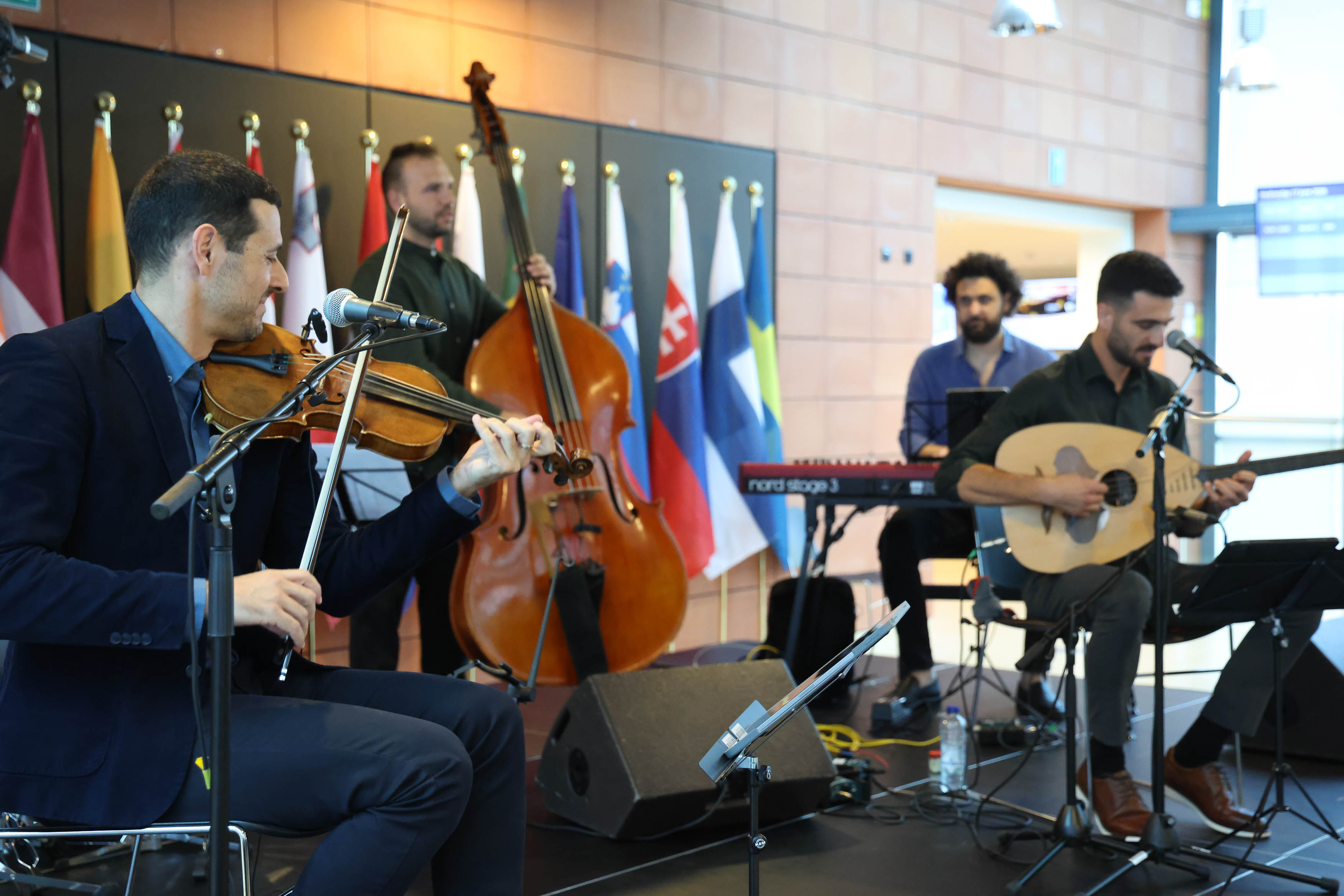
The celebration continued with a performance by the Michalis Kouloumis Quintet, which brought a distinctly Cypriot atmosphere to the gathering.
Guests also sampled culinary creations inspired by Commandaria, experiencing the wine in a contemporary setting while learning about its long history.
Throughout the evening, additional productions from the Press and Information Office, including Art in the City and Penna, showcased other aspects of Cyprus’ cultural life.
Music, photography, film and gastronomy combined to create an event that felt both historical and contemporary.
Rather than presenting Commandaria as a relic from the past, organisers highlighted its continuing relevance in modern Cyprus.
As the evening came to an end, visitors departed with more than just an understanding of wine history. They received knowledge about how traditions persist over time.
Commandaria has survived under foreign domination, shifting trade routes, conflicts and changes in society. It has outlived various kingdoms, empires and forms of governance.
During all those years, it has stayed connected to the same land, the same towns and the same local populations. That lasting connection between people, location and tradition was the main point communicated from Cyprus to Brussels. More than three thousand years after its initial emergence, Commandaria still narrates the tale of the island.
For one night in the centre of Europe, that tale reached a different audience.




Click here to change your cookie preferences