
By Terra Cypria staff
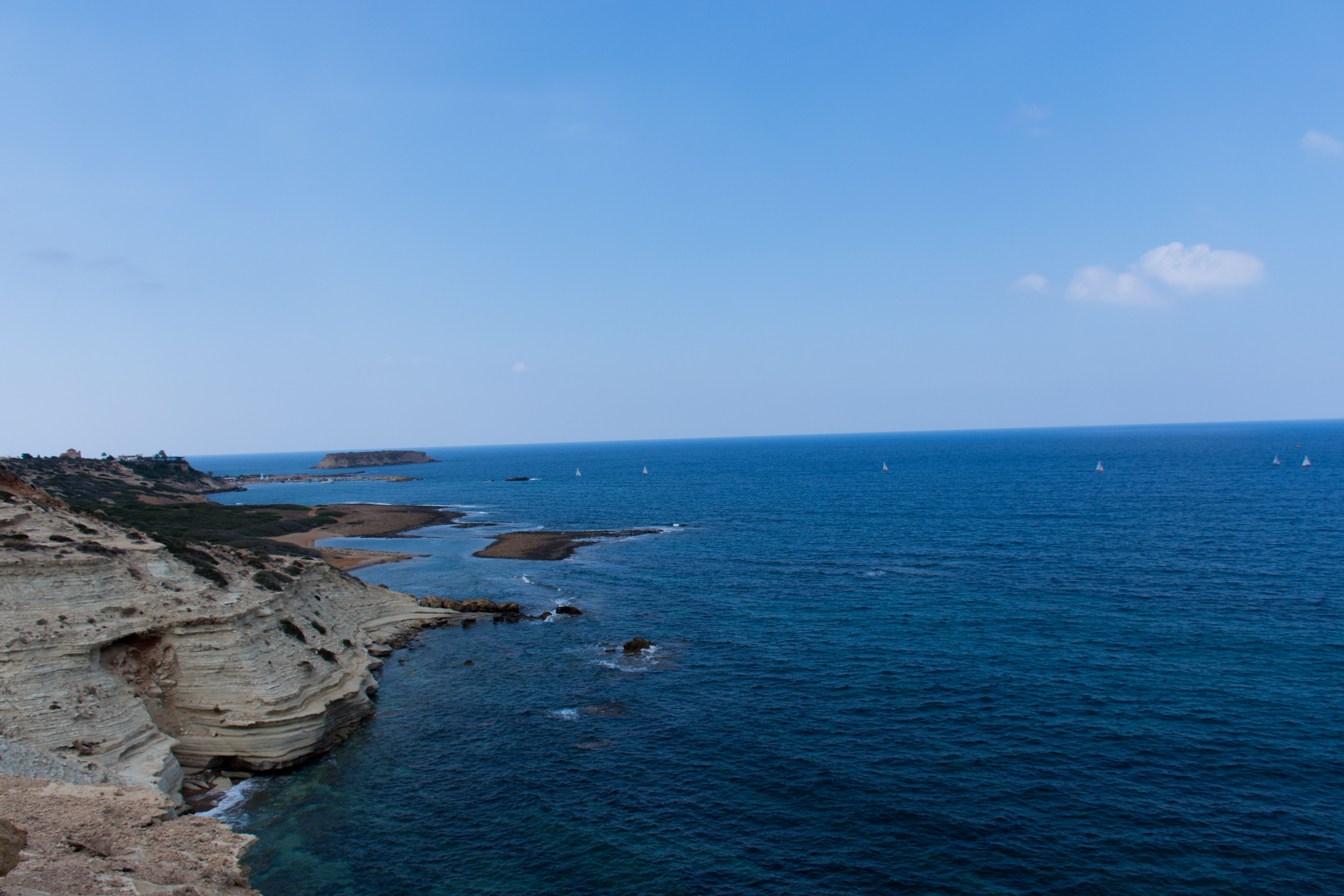
The Mediterranean has long been associated with mild winters, dry summers, and landscapes that have learned to coexist with fire. Wildfires are not foreign to Mediterranean ecosystems; on the contrary, they are part of a natural regeneration process to which vegetation has evolved to adapt and recover.
Characteristic species such as rockrose (Cistus sp.), Calabrian pine (Pinus brutia), kermes oak (Quercus coccifera), oak (Quercus infectoria), mastic tree (Pistacia lentiscus), and many others possess mechanisms that enable them to survive and recover after fires. Some are protected by their bark, others activate dormant buds preserved within their upper root systems beneath the soil, waiting for the right conditions to sprout again, while some encase their seeds in hard protective coatings that make them resistant to fire.
This balance, however, is becoming increasingly disrupted.
Climate change is rapidly altering the conditions. The Mediterranean is considered one of the planet’s most vulnerable climate “hotspots,” with temperatures rising faster than the global average, while climate models warn of further declines in rainfall and more severe droughts in the years ahead.
As a result, wildfires are occurring more frequently, spreading more rapidly, burning with greater intensity (megafires), becoming far more difficult to extinguish, and leaving ecosystems with insufficient time to recover between successive fire events.
At the same time, human activities such as rural abandonment, fuel accumulation, uncontrolled urban sprawl, illegal waste disposal, and inadequate forest management further increase the risk. In this way, a natural phenomenon is gradually being transformed into a human-driven crisis.
The consequences do not end with the loss of vegetation and wildlife.
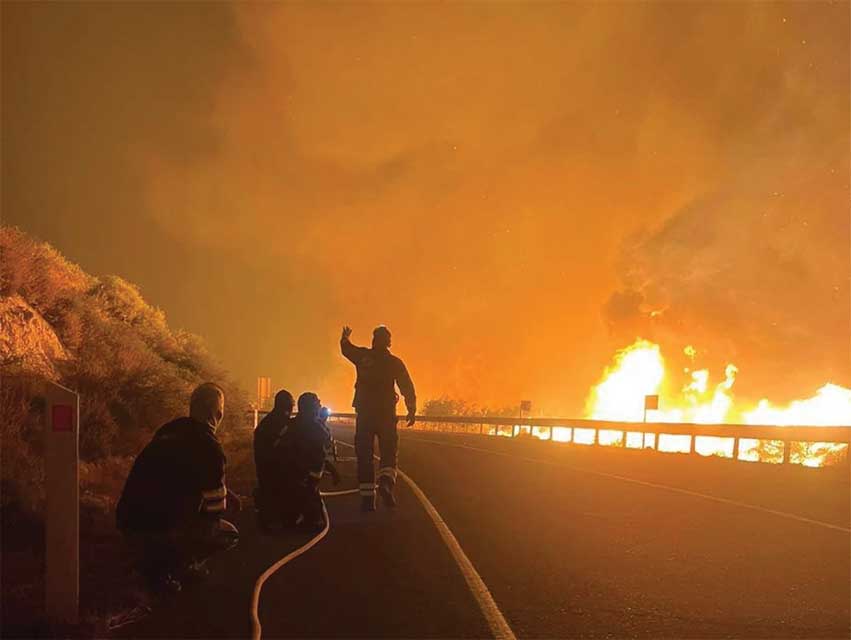
After a wildfire, the soil loses organic matter and much of its ability to retain water. It becomes more vulnerable to erosion caused by wind and rainfall, while its capacity for natural regeneration is drastically reduced. At the same time, ash and sediment are washed into rivers and dams, degrading water quality and reducing water availability for human use and irrigation.
The increasing recurrence of large wildfires raises the likelihood of permanent landscape changes and accelerates desertification.
And this is precisely where the vicious cycle begins.
The loss of vegetation cover leaves the soil exposed. Erosion accelerates, moisture levels decline and natural recovery becomes increasingly difficult. As landscapes degrade, the likelihood of new wildfires rises even further.
Desertification also directly affects local hydrology. Degraded soil cannot effectively absorb water. As a result, during periods of intense rainfall, water flows across the surface, causing floods instead of infiltrating the ground and replenishing underground aquifers.
This phenomenon became particularly evident in the fire-affected areas of mountainous Limassol, where following last summer’s major wildfire, warnings were issued regarding an increased risk of flooding.
On the other hand, once the wet season ends, limited water storage leads to more severe drought and water scarcity. The impacts are multiple: losses in agricultural production, restricted access to water for households and crops, as well as further degradation of habitats and biodiversity.
Wildfires, desertification, floods, and water scarcity are not isolated phenomena. They are interconnected manifestations of the same climate and environmental crisis.
For this reason, addressing them cannot be done through fragmented approaches.
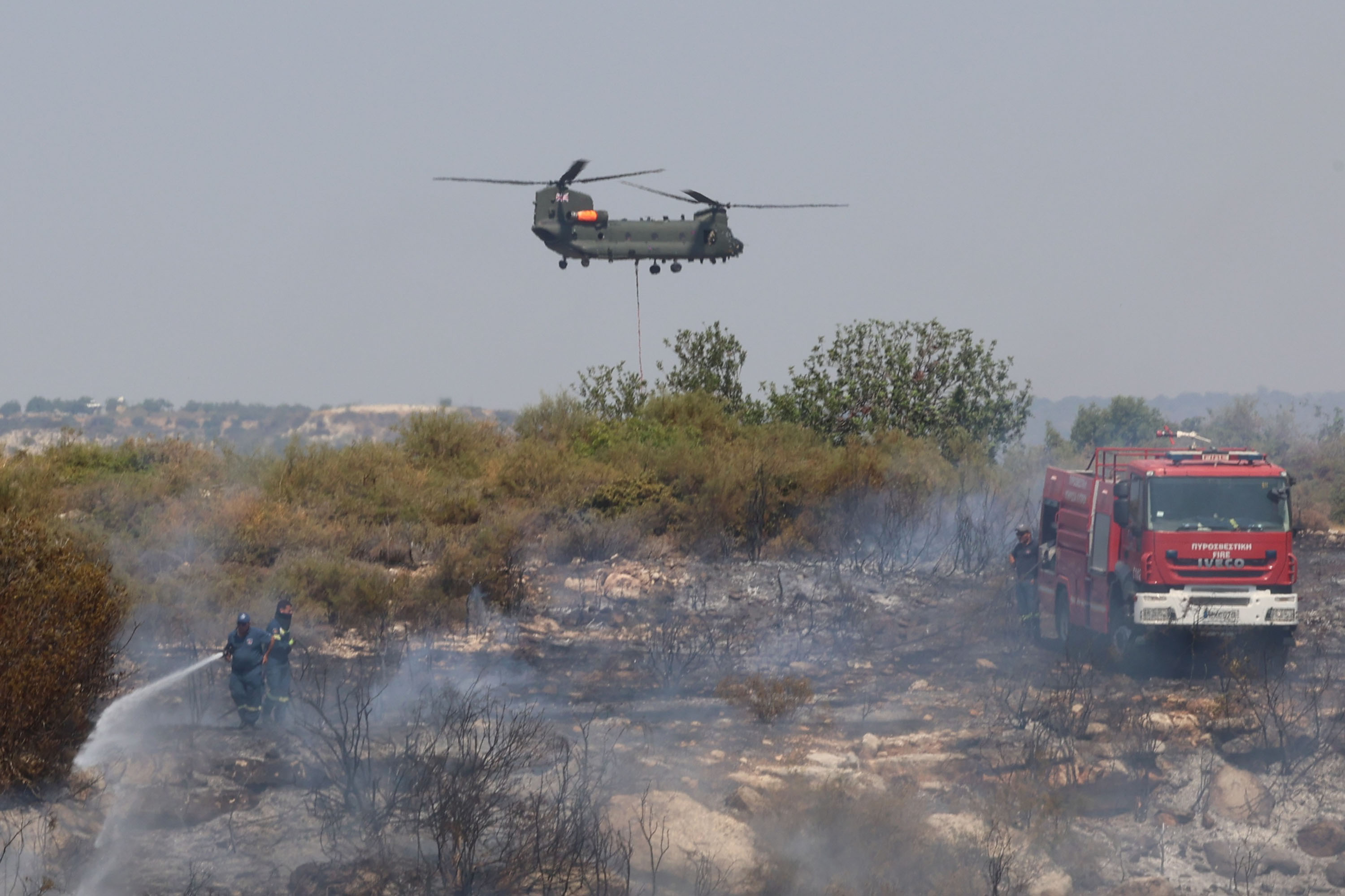
It is not enough to focus solely on firefighting or on restoring damage after disasters occur. What is needed is a comprehensive strategy that combines prevention, ecological restoration, and sustainable management of natural resources.
The creation of mosaic landscapes with diverse vegetation, the reintroduction of traditional land uses such as controlled grazing and agriculture, soil restoration after disasters, wetland protection and reforestation with suitable species can significantly reduce the risk.
At the same time, spatial planning must incorporate climate change adaptation, while public awareness and the active participation of local communities are essential prerequisites for strengthening resilience.
The Mediterranean stands at a critical crossroads.
The challenge is not simply to react when disaster strikes, but to anticipate, plan, and intervene early, before this vicious cycle becomes irreversible.
Success will not be measured solely through ecological indicators. It will also be measured by the protection of human lives, the safeguarding of local economies, and the ability of our societies to continue coexisting harmoniously with the natural environment.
Breaking this cycle is no longer a choice. It is a necessity.
Terra Cypria is a non-governmental organisation officially established in 1992 as a charitable, non-profit organisation. Its overall aim is to promote environmental awareness and sustainability through pressure and environmental education, as well as through programmes that promote conservation, environmental protection and research





Click here to change your cookie preferences