
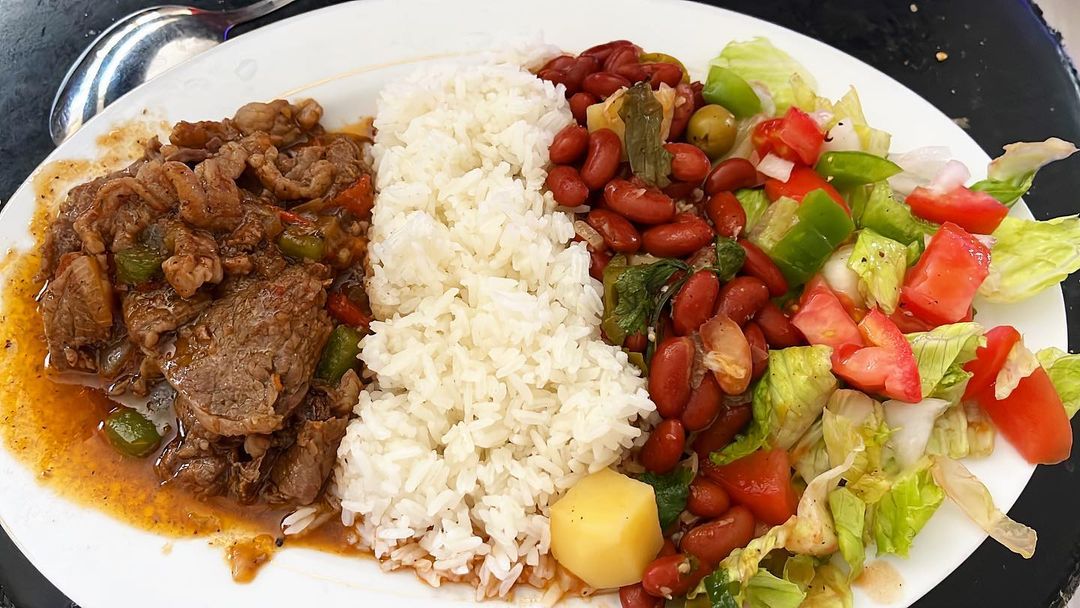
La Bandera, meaning the flag, is widely regarded as the quintessential daily meal of the Dominican Republic, reflecting the colours and rhythms of national identity through a simple yet balanced plate of rice, beans and meat.
Its origins lie in the colonial and post-colonial blending of Spanish culinary traditions with African and Taino influences, which together shaped the foundations of Dominican cuisine. While not tied to a single historical moment or inventor, La Bandera evolved organically in household cooking, becoming the standard midday meal across social classes by the 19th and 20th centuries.
The dish typically consists of white rice, stewed red beans and a portion of meat such as chicken, beef or pork, often accompanied by salad or fried plantains. Its structure mirrors the Dominican flag in symbolic interpretation, with rice representing purity, beans standing for the blood of the people, and meat symbolising strength and sustenance.
La Bandera is commonly prepared in homes, as well as served in small eateries known as comedores, where rotating daily menus ensure its near constant presence. Its enduring popularity lies in its affordability, nutritional balance and adaptability, allowing households to adjust ingredients according to availability and season.
The evolution of La Bandera has been shaped by economic change and migration. In urban areas, quicker cooking methods and modern appliances have streamlined preparation, while rural versions often retain slower stewing techniques that enhance depth of flavour.
Variations also exist across regions, with coastal areas incorporating seafood more frequently, and mountainous regions favouring heartier meats and locally grown beans. Despite these differences, the core composition remains recognisable throughout the country.
Seasonality plays a subtle role, with lighter accompaniments such as fresh salads preferred during hotter months, while richer stews are more common in cooler periods.
However, its presence is largely constant, reflecting the tropical climate and agricultural abundance of the island. The dish is also prepared during family gatherings and national celebrations, reinforcing its status as a culinary anchor of Dominican identity.
In Cyprus, La Bandera finds resonance in the similar structure of everyday meals that combine starch, protein and legumes, such as rice dishes accompanied by beans or pulses and grilled meats. This reflects a broader Mediterranean and Caribbean convergence in which simple, wholesome combinations form the backbone of home cooking traditions.
Today, La Bandera continues to represent continuity amid change, linking generations through a shared daily ritual. It remains a quiet but powerful expression of Dominican heritage, embodying both the history and the living culture of the nation in every carefully prepared plate served across the island and beyond.





Click here to change your cookie preferences