
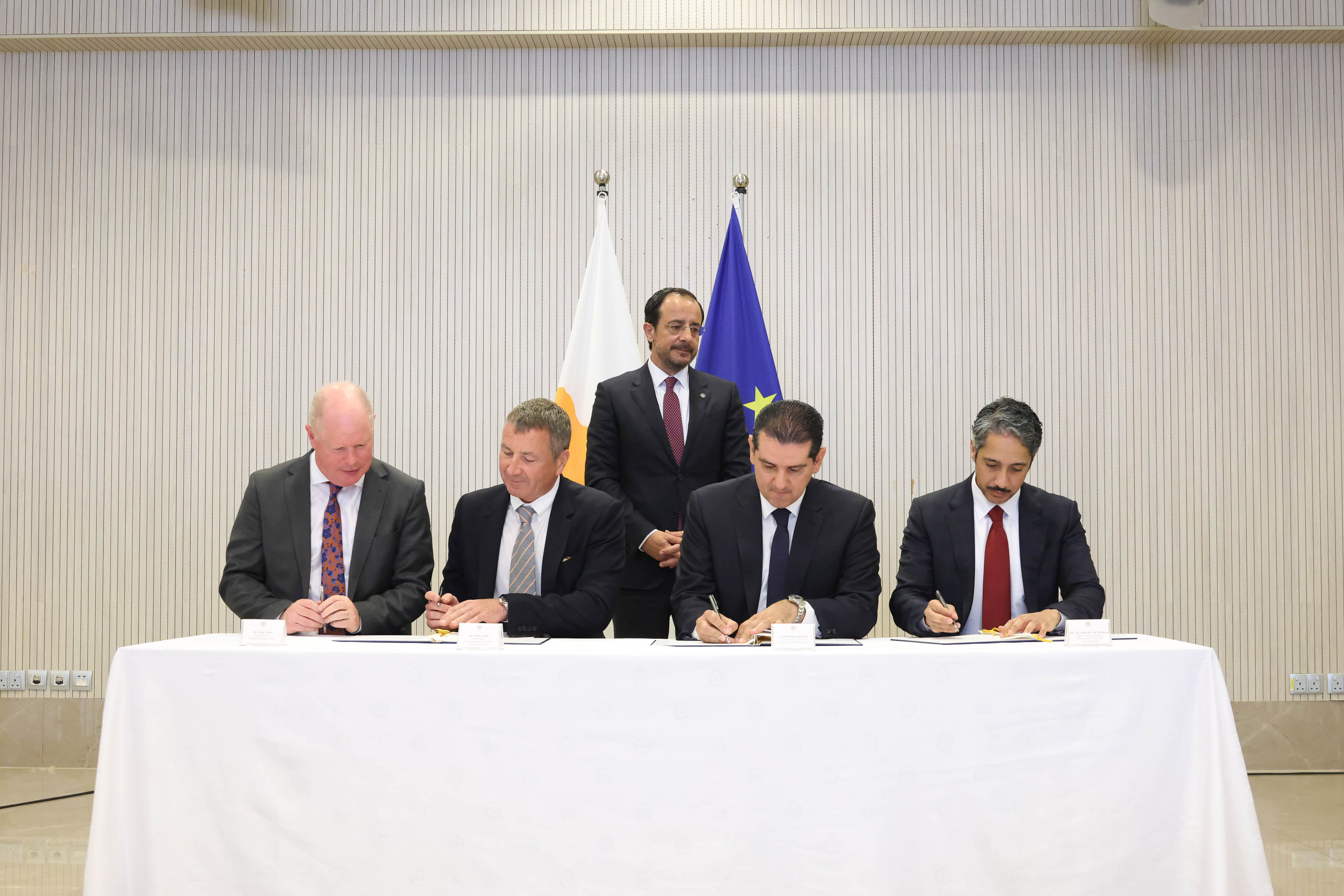
First production of marketable gas now set for 2033
The Commerciality Declaration for Cyprus’ Glaucus and Pegasus gas discoveries made this week marks an important milestone – not only for the island, but also for ExxonMobil’s wider Eastern Mediterranean strategy. After almost eight years of exploration, the company has formally moved from proving the existence of gas to planning its development. Yet, contrary to appearances, the more important strategic decisions still lie ahead.
Recent developments reveal an increasingly coherent regional strategy extending well beyond Cyprus. ExxonMobil appears to be positioning itself across Cyprus and Egypt while deliberately delaying major infrastructure commitments until it has a clearer picture of the region’s total resource potential. Rather than developing individual discoveries, the company seems intent on building an integrated Eastern Mediterranean gas province capable of supplying international markets.
Assets, resources and exploration
ExxonMobil and QatarEnergy currently hold Blocks 5 and 10 offshore Cyprus and are expected to be “handed” adjacent Blocks 4 and 10A on their own terms. Their principal discoveries, Glaucus and Pegasus, are estimated to contain around 6-9 trillion cubic feet (tcf) of gas.
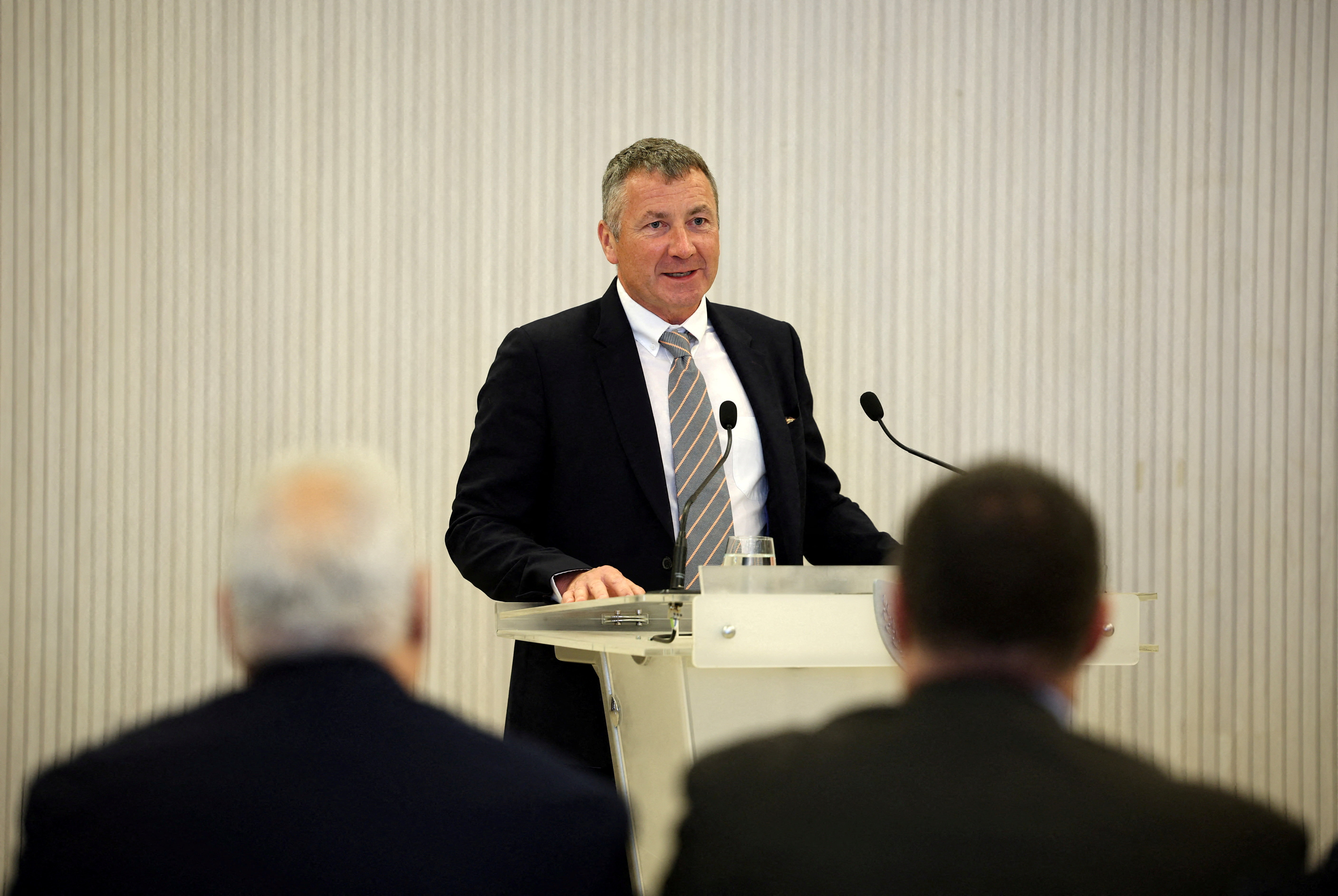
Their commerciality declaration represents a major milestone, but not the end of the story. As ExxonMobil’s Vice-President of Exploration John Ardill explained, commerciality marks the transition “from exploration to development.” Additional appraisal drilling at Pegasus is planned for late 2026, followed by front-end engineering and design (FEED), with the company targeting a final investment decision (FID) in 2029 and first production in 2033.
Importantly, ExxonMobil has also made clear that exploration is far from complete. Beyond appraisal in Block 10, it plans to continue exploration in Blocks 4, 5 and 10A while simultaneously drilling the Cairo and Masry concessions offshore Egypt. The company intends to search for additional resources before finalising long-term development plans.
This sequencing is significant. Rather than optimising the development of a single discovery, ExxonMobil appears to be determining the ultimate scale of its Eastern Mediterranean resource-base before committing to long-lived infrastructure.
Egypt: preferred pathway or bridge strategy?
Commercialisation has always been the principal challenge. Cyprus possesses significant gas resources but no LNG export facilities. Egypt possesses LNG infrastructure but faces declining domestic production and rapidly growing internal demand.
At the end of May, Egypt’s Ministry of Petroleum signed an MoU with ExxonMobil and QatarEnergy to study development of Cypriot gas through Egypt’s LNG plants. This has strengthened the perception that Egypt has become the company’s preferred export route.
However, ExxonMobil’s own statements suggest a more nuanced strategy.
Ardill confirmed the company continues to evaluate multiple development concepts, including pipelines to Egypt, facilities located in Cyprus connected to Egypt, floating LNG (FLNG) and even a future onshore LNG plant if resource volumes become sufficiently large.
This is an important distinction. Egypt appears to represent the preferred near-term development pathway, but not necessarily the company’s long-term destination.
Egypt offers clear advantages. Existing LNG infrastructure reduces capital costs, shortens development time and provides the quickest route to international markets. Yet significant uncertainties remain.
Domestic production continues to decline, particularly from Zohr, while internal demand keeps rising. The risk therefore remains that imported Cypriot gas could increasingly be absorbed by Egypt’s domestic market rather than exported internationally. New pipelines must still be built, while the combined capacity of Idku and Damietta is ultimately finite and may require expansion if supplies from Israel and Cyprus increase.
These constraints help explain why the recent agreements remain non-binding and focused on commercial frameworks rather than development commitments.
Timing as a strategic asset
Perhaps the most striking feature of ExxonMobil’s approach is its refusal to rush.
Over the next three years, ExxonMobil will complete appraisal drilling at Pegasus, continue exploration across Cyprus and Egypt, undertake FEED studies and compare multiple development concepts before committing capital, earliest in 2029. Rather than optimising today’s discoveries, it is optimising tomorrow’s regional portfolio.
In this sense, Egypt functions less as a final destination than as a bridge strategy. It offers a relatively low-cost route for initial monetisation while preserving flexibility should larger discoveries emerge.
If exploration offshore Cyprus and Egypt delivers additional discoveries – as many geologists consider possible – the regional resource base could expand well beyond today’s estimates. Under such circumstances ExxonMobil may eventually conclude that greater control over export infrastructure offers more long-term value than dependence on third-party LNG facilities.
This would be entirely consistent with ExxonMobil’s global business model. It has historically preferred to control critical elements of the value chain whenever scale and economics justify doing so.
This also explains its continuing interest in expanding its Cypriot acreage. Block 4 is valuable not simply because of its individual exploration potential, but because it could enlarge a contiguous gas province capable of supporting a much larger integrated development.
Implications for Cyprus
For Cyprus, ExxonMobil’s evolving strategy presents both opportunities and important policy lessons.
The Commerciality Declaration substantially increases confidence that Cypriot gas will finally reach international markets. Continued exploration also raises the possibility that Glaucus and Pegasus represent only the first stage of a much larger regional development.
However, the strategy also illustrates an important distinction between commercial and political decision making.
Industry participants have repeatedly cautioned that state decisions concerning field development – and even offshore acreage allocation – have risked becoming influenced by political priorities ahead of commercial considerations, to the detriment of Cyprus’ profit share from such developments.
The Commerciality Declaration marks the end of one chapter and the beginning of another. Over the coming years, the focus is unlikely to be on construction but on strategic optimisation. ExxonMobil is attempting to answer a much bigger question than simply how to develop Glaucus and Pegasus. It is determining the ultimate scale of its Eastern Mediterranean gas province before committing itself to infrastructure that could constrain future value.
Egypt currently appears to offer the fastest route to market. Whether it ultimately becomes the principal export route will depend largely on what ExxonMobil discovers over the next few years.
But, for Cyprus, the concern is that political motives appear to be driving the developments rather than commercial decisions, risking long-term value for the island.
Ultimately, the East Med is moving from isolated discoveries toward integrated regional systems. ExxonMobil’s recent moves indicate that it intends to play a central role in shaping that transition.
Dr Charles Ellinas, @CharlesEllinas, is a Councilor, Atlantic Council




Click here to change your cookie preferences