
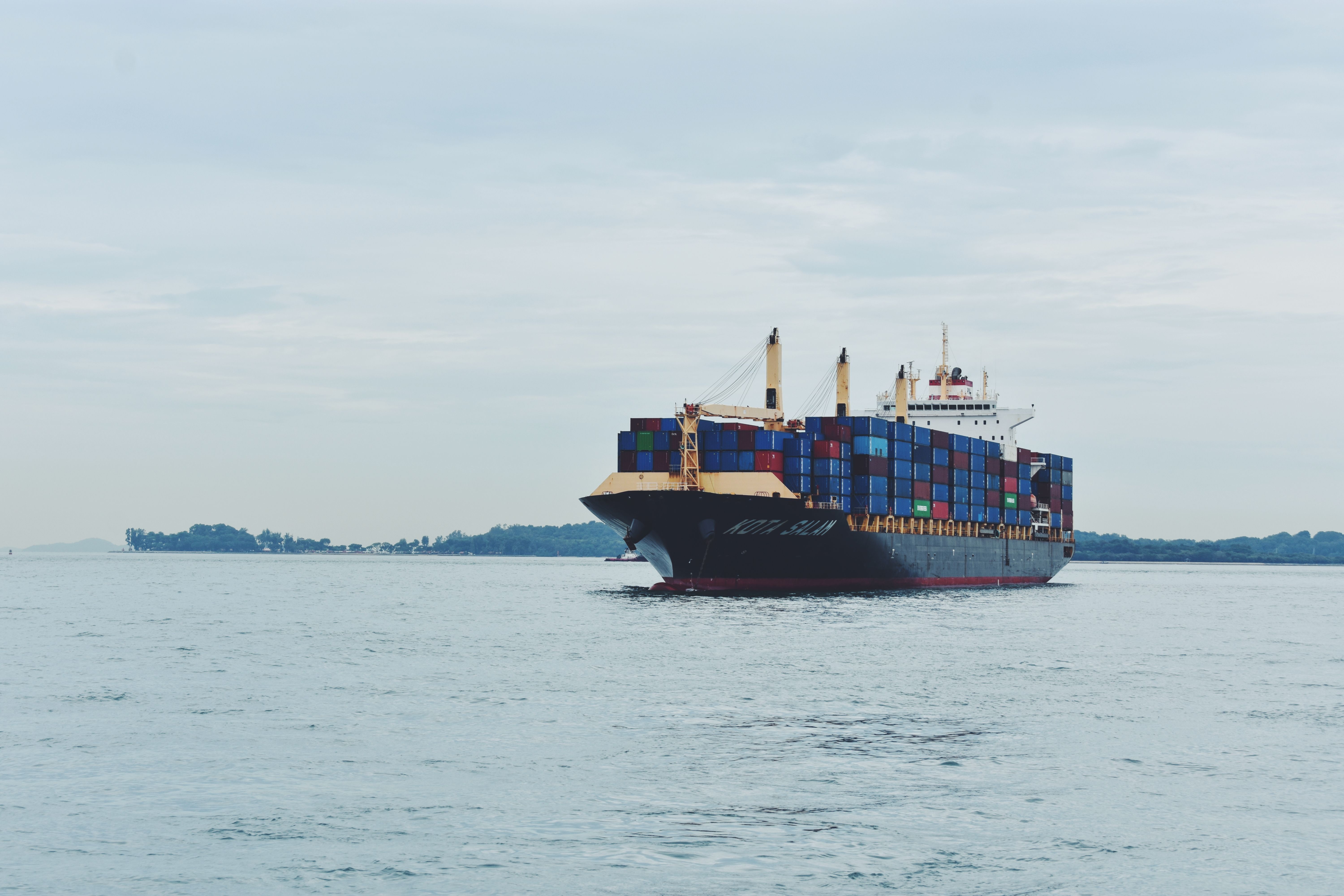
A fresh Russian drone attack on two commercial ships off Odesa has again exposed the human cost of navigating through conflict zones, while emphasising how security threats are steadily redrawing the map of global maritime trade.
The Tanzania-flagged Atlas Bey and a second merchant ship sailing under the Liberian flag were struck on Tuesday, July 14, while travelling through Ukraine’s Black Sea maritime corridor, according to Odesa authorities.
The captain of the Atlas Bey, an Azerbaijani national, was killed after the Turkish-owned dry cargo ship was hit and caught fire. Eleven surviving crew members were brought ashore, three of whom were injured, while information regarding the damage to the Liberian-flagged vessel and the condition of its crew remained limited on Wednesday.
The attack came only one day after a Russian strike hit a Togolese-flagged civilian merchant vessel in the Odesa region, killing three crew members and injuring five.
Ukraine said that vessel had been carrying agricultural products, while the latest incidents formed part of a widening exchange of attacks against shipping and maritime infrastructure across both the Black Sea and the Sea of Azov. Reuters reported that the earlier ship was struck while operating near a Ukrainian port.
The growing danger prompted the International Maritime Organisation (IMO) to condemn attacks against civilian merchant ships, warning that they endanger seafarers, threaten navigation, disrupt supply chains and undermine the principles on which international shipping depends.
In its latest warning, the IMO called on parties involved in conflicts to avoid actions that place merchant crews or the marine environment at risk and to respect international law and navigational freedoms.
However, the attacks are not taking place in isolation. Together with the pandemic, the Red Sea crisis and wider geopolitical instability, they form part of a succession of disruptions that has forced shipping companies to reconsider not only individual voyages, but the structure of their entire global networks.
For years, container shipping operated on the assumption that vessels would use the shortest commercially viable routes and rely on a relatively stable group of major transhipment hubs. The closure or increased risk surrounding key maritime corridors has weakened that model.
Carriers are now placing greater weight on security, port reliability, alternative connections and the ability of networks to absorb sudden disruption, rather than judging routes only by sailing distance and fuel costs.
The latest analysis of the Port Liner Shipping Connectivity Index, developed jointly by UN Trade and Development and MDS Transmodal, indicates that the period of rapid network reorganisation has largely ended. Nevertheless, the changes produced by recent crises are increasingly becoming permanent.
Instead of returning to their pre-pandemic structures, liner companies are refining services, reallocating vessel capacity and strengthening selected regional hubs within a shipping system that has already been substantially redesigned.
Shanghai remains the world’s most connected container port, followed by Ningbo and Singapore, confirming the continued strength of the traditional Asian gateways. However, the most significant movement is taking place immediately below the leading ports.
Colombo in Sri Lanka and major Vietnamese ports including Haiphong, Ho Chi Minh City and Vung Tau have strengthened their positions as manufacturing and shipping activity becomes more widely distributed across Asia.
Meanwhile, Sub-Saharan Africa has emerged as one of the principal beneficiaries of the restructuring. All ten of the largest liner operators serving the region increased their capacity between July 2023 and July 2026, reflecting rising investment in African ports, logistics facilities and direct shipping services.
MSC increased its scheduled capacity in the region by around 60 per cent to almost 585,000 TEU per month, while Maersk and CMA CGM expanded by 31 per cent and 28 per cent respectively.
ONE more than doubled its capacity, Evergreen recorded growth of more than 170 per cent and Abu Dhabi Ports sharply expanded its presence as it invested in maritime and logistics infrastructure across the continent.
Ports including Abidjan, Tema, Kribi and Dar es Salaam also recorded strong connectivity gains as shipping companies added services, operators, capacity and direct international links.
Nevertheless, the same analysis showed that some established European hubs have settled at lower connectivity levels following the disruption in the Red Sea. Rotterdam, Antwerp and Valencia remain important gateways, but longer voyages around Africa and changes to Asia-Europe services have contributed to a less concentrated network.
The implications are particularly relevant for Cyprus, where shipping remains one of the country’s most important economic sectors and where Limassol serves as the island’s main commercial port. According to the Cyprus Ports Authority, the multi-purpose Limassol port is the country’s principal port and supports both domestic and transit trade.
Moreover, Cyprus recorded the largest annual improvement in liner shipping connectivity among EU economies in the fourth quarter of 2025, with its index rising by 33.9 per cent, according to EU figures.
More recent UNCTAD figures also showed that the level of bilateral liner integration between Italy and Cyprus increased by 16.3 per cent year on year during the second quarter of 2026, pointing to stronger direct and indirect connections with one of the Mediterranean’s largest trading economies.
These gains show that Cyprus has strengthened its position within regional container networks at a time when companies are looking for additional connections and alternative eastern Mediterranean options.
However, they also emphasise the island’s exposure to developments beyond its control. Disruption in the Black Sea, Red Sea, Suez Canal or Strait of Hormuz can affect vessel calls, insurance costs, freight rates, fuel prices and delivery times long before the physical consequences reach Cypriot ports.
That exposure carries particular weight because the Cypriot shipping sector contributes more than 7 per cent of national GDP, according to official estimates.
Therefore, while the rise of new maritime hubs creates opportunities for Cyprus to improve its role as a regional shipping and services centre, the latest deaths off Odesa demonstrate why connectivity alone is no longer enough.





Click here to change your cookie preferences