
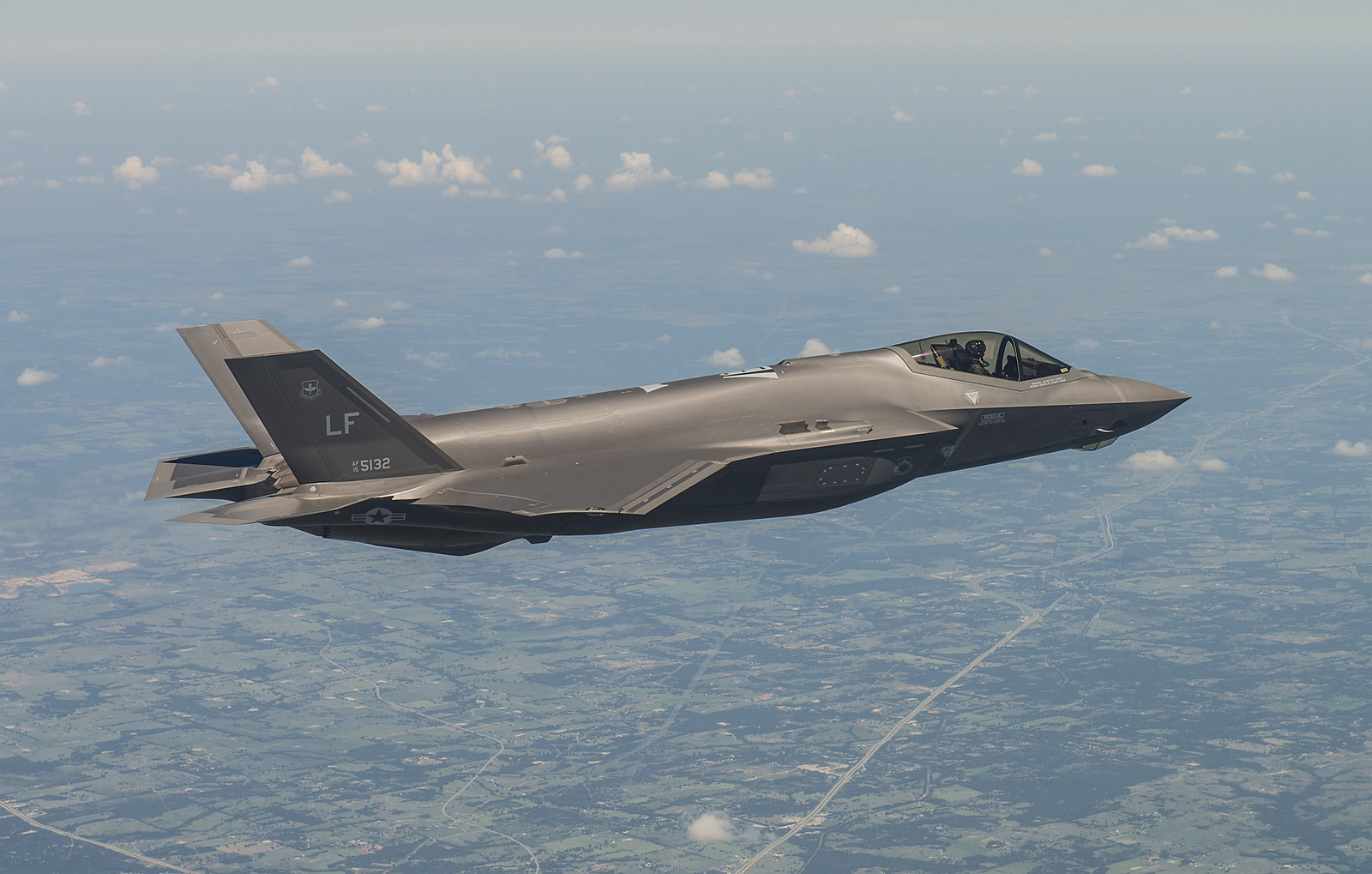
Political realities explain why Trump stopped short of making any firm commitment during the Nato summit, says analyst
Donald Trump’s suggestion that he is prepared to reconsider Turkey’s return to the F-35 fighter jet programme has reignited debate across the Eastern Mediterranean, raising questions over Washington’s changing view of Ankara despite the sanctions that led to Turkey’s removal from the programme in 2019.
For Cyprus, however, the question is less whether Turkey eventually receives the aircraft than what the renewed discussion says about Ankara’s place within the Western security architecture.
“The F-35 debate certainly reflects Washington’s evolving judgement about Turkey’s strategic indispensability, even as deep disagreements persist,” Emmanuel Karagiannis, professor of international security at King’s College London’s Department of Defence Studies, told the Cyprus Mail.
“It is less about the aircraft and more about Turkey’s place in the Western security order after a decade of turbulence.”
“Washington’s framing of Ankara as strategically essential for Nato, regional stability and counter-Iran posture implies a realignment,” he said.
“It is driven by military leverage and geography rather than shared political norms, reinforcing a largely transactional partnership.”
Turkey’s strategic importance, from the Black Sea to the Middle East, underpins that assessment.
“Washington relies heavily on Turkey’s control of the Straits and its ability to influence crises from Syria to the Gulf,” Karagiannis said.
“Ankara’s geography and military weight make it indispensable for containing Russia, stabilising Ukraine’s maritime lifelines and managing Iran-related escalation.”
Yet, he says, strategic necessity has not erased the concerns that led to Turkey’s exclusion from the multinational fighter programme after purchasing the Russian-made S-400 air defence system.
“The S-400 system remains a hard barrier, legally, technically and politically,” he said. “The US Congress still views Turkey as a hedging actor whose ties with Moscow and divergence from Nato norms make F-35-level technology exposure too risky.”
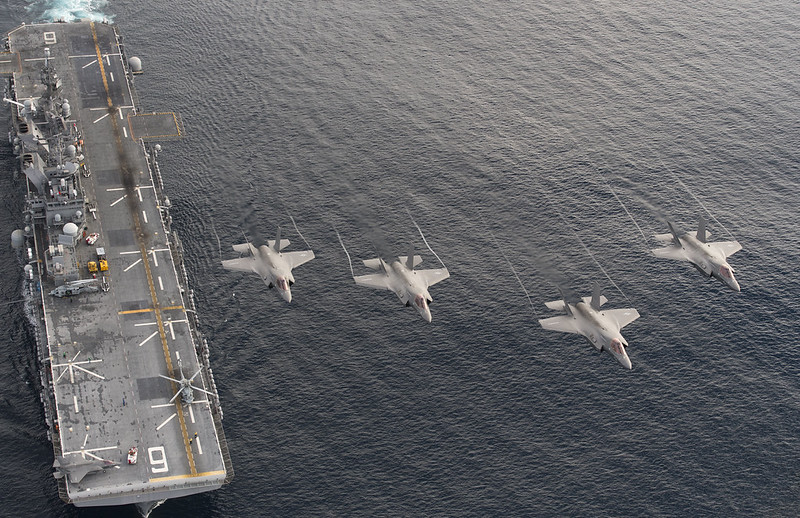
A Lockheed Martin spokesman told the Cyprus Mail that the F-35 programme now includes 20 allied nations, more than 2,100 suppliers across more than a dozen countries and a fleet of over 1,340 aircraft adding that around 25 per cent of every F-35 is produced by European industry.
For Cyprus, the discussion centres on how Turkey’s return could alter the military balance in the Eastern Mediterranean.
“It would create mutual stealth vulnerability, complicate Aegean crisis management by compressing warning times and increasing escalation risks, and heighten Cypriot exposure by eroding the Greek technological buffer that currently stabilises the island’s security environment,” Karagiannis said.
“Broader regional deterrence, however, would remain anchored in the Nato framework, limiting the extent of structural change.”
He added that “qualitative military superiority cannot be treated as a permanent foundation of national security. It is a window of advantage, not a structural condition.”
While the White House has reopened the conversation, opposition on Capitol Hill remains strong.
Congressman Chris Pappas, who co-signed a letter urging congressional leaders to block any attempt to readmit Turkey to the programme, shared a statement with the Cyprus Mail.
“It’s outrageous for Trump to even consider readmitting Turkey to the F-35 programme while Erdogan’s government continues to violate US law and threaten our allies,” Pappas said.
“We cannot reward Erdogan’s aggressive and destabilising activity across the region.”
That congressional resistance is also central to the assessment of Dr Sinan Ciddi, senior fellow at the Foundation for Defence of Democracies and director of its Turkey programme.
Speaking to the Cyprus Mail, Ciddi said any move to readmit Turkey would face significant legal obstacles.
“There is very little way of working around those by presidential fiat,” he said, warning that otherwise “we’re likely to see a political fight break out between Trump and Congress.”
Ciddi believes those political realities explain why Trump stopped short of making any firm commitment during the Nato summit.
“Trump said he hadn’t made up his mind yet,” he said.
“That makes me think he understands there are significant legal hurdles and that he would have to pick a fight with a bipartisan Congress.”
He also points to timing, with US midterm elections approaching, Ciddi believes there is only a narrow political window even if Turkey were somehow to satisfy the legal requirements surrounding the S-400 system.
“I don’t think there is enough time until November,” he said, arguing that congressional approval would still be required.
One little-discussed aspect of the dispute concerns the six F-35s Turkey purchased before its removal from the programme, worth around $1.7 billion. The aircraft remain in storage in the United States, with Turkey continuing to pay storage and maintenance costs.
Ciddi believes Ankara’s immediate priority may simply be taking delivery of those aircraft rather than placing a new order.
“I think they’d be looking to take delivery of the initial batch of F-35s they were supposed to receive back in 2019,” he said.
Ciddi highlights that the longer-term concern is not simply the delivery of a handful of aircraft but the technological knowledge that accompanies participation in the programme.
“This opens the door… potentially to reverse engineer components of this aircraft,” he said, noting Turkey’s ambition to develop indigenous engines for its own defence industry.
“There is a worry that the stealth secrets and capabilities of the aircraft could be compromised, especially if Turkey hasn’t divested itself of the S-400.”
He added that regional allies including Israel, Greece, Cyprus and France remain concerned about Turkey regaining access to fifth-generation technology.
“A lot of European powers who are members of Nato are saying… giving them fourth-generation fighter aircraft is one thing, but fifth-generation stealth capabilities carry the potential of really upending the balance of power in the region and really empowering and enabling Erdogan’s expansionist and irredentist goals in the region.”
Ciddi believes another issue discussed around the Nato summit may ultimately prove more significant for the Eastern Mediterranean.
He said US willingness to authorise General Electric F110 engines for Turkey’s F-16 fleet appears considerably more realistic than any immediate breakthrough on the F-35.
“That actually is more likely to happen than the F-35,” he said.
According to Ciddi, the engines would initially power Turkey’s indigenous Kaan fighter while supporting Ankara’s long-term goal of developing its own engine technology.
“The goal here for Turkey is strategic autonomy,” he said.
For now, however, the future of Turkey’s participation in the F-35 programme seems to depend on Washington’s domestic politics.
As Ciddi stated, the United States has faced similar decisions before, recalling the sale of F-14 Tomcats to Iran in the 1970s, he warned that policymakers should carefully consider the long-term consequences of transferring advanced technology.
“We should be concerned with the United States trying to force through an F-35 authorisation and sale… to an increasingly adversarial Turkey,” he said. “That would be really regretted downstream.”





Click here to change your cookie preferences