
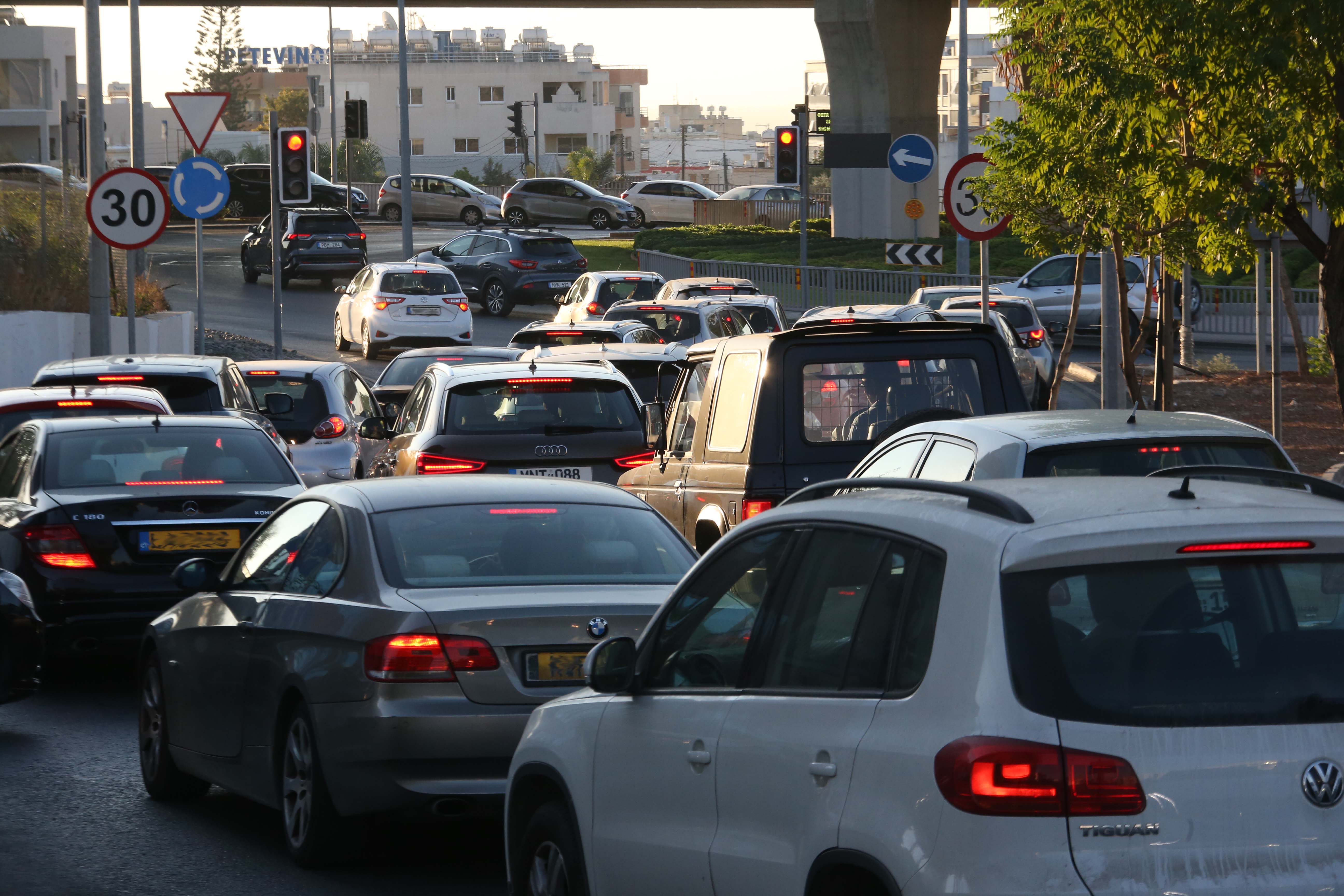
Transport accounted for 37.9 per cent of Cyprus’ greenhouse gas emissions in 2023, while drivers lost an average of more than 40 hours in peak-time traffic, according to a European Commission report published on Wednesday.
The report, titled Transport and tourism in the European Union – Current trends and issues, examines recent developments in the two sectors across the EU and provides individual data for each member state.
In Cyprus, 83.5 per cent of domestic passenger transport in 2023 was carried out by private cars, compared with an EU average of 82 per cent.
Buses and coaches accounted for the remaining 16.5 per cent, double the EU average of 8.2 per cent.
Transport-related greenhouse gas emissions, including emissions from international aviation and maritime fuels, amounted to 3.9 million tonnes of carbon dioxide equivalent, representing 37.9 per cent of Cyprus’ total emissions.
The corresponding share across the EU stood at 31 per cent, or 1.039 billion tonnes of carbon dioxide equivalent.
The report also showed that Cyprus ranked eighth among the EU’s 27 member states for the lowest number of road deaths per million inhabitants in 2023, recording 36 fatalities per million people.
It ranked 14th for the lowest number of deaths relative to distance travelled, with 46 fatalities for every 10 billion passenger kilometres.
Traffic congestion nevertheless remained above the European average. The average Cypriot driver lost 40.2 hours in peak-time delays during 2023, compared with an EU average of 28.6 hours.
Regarding charging infrastructure for electric vehicles, the report said Cyprus’ power-output target under the Alternative Fuels Infrastructure Regulation was 608 kilowatts.
The island’s total available charging output, however, stood substantially higher at 15,472 kilowatts.
In aviation, Larnaca airport was Cyprus’ busiest in 2024, handling 8.876 million passengers.
Passenger traffic at the island’s airports totalled 12.514 million, accounting for 0.8 per cent of the EU total.
Larnaca also handled almost all of Cyprus’ air cargo, recording 30,600 tonnes out of a national total of 30,700 tonnes.
In maritime transport, Limassol was listed as the country’s largest port for passengers in 2024, handling 9,000 passengers, equivalent to the island’s entire recorded port passenger traffic.
Zygi was the most important port for cargo, handling 4.212 million tonnes, or 47 per cent of Cyprus’ total port freight of 8.945 million tonnes.
According to the Commission, the report assesses the competitiveness of the EU transport system from several perspectives, including sustainability, resilience, connectivity, safety and the social dimension of mobility.
Transport services across the EU include approximately 1.4 million private and public companies, employing about 10.4 million people and providing goods and services to citizens and businesses.
The Commission said transport played a critical role in supporting citizens, businesses and trade, improving quality of life, strengthening economic resilience and addressing climate and environmental challenges.
The report brings together indicators on energy consumption, the use of alternative fuels, infrastructure development and investment, while also including individual country profiles for each member state.
On tourism, the report said 2025 was a record year for activity across the EU, with the number of nights spent in tourist accommodation exceeding three billion.
Spain, France, Germany and Italy together accounted for more than 60 per cent of all overnight stays.
The EU received 582 million tourist arrivals in 2025, representing 38 per cent of worldwide arrivals, while hotel stays accounted for 62.5 per cent of the total.
The Commission said its forthcoming sustainable tourism strategy would seek to support a competitive, sustainable and inclusive tourism model that contributes to Europe’s environmental goals, strengthens local communities and improves the sector’s resilience to future challenges.





Click here to change your cookie preferences