
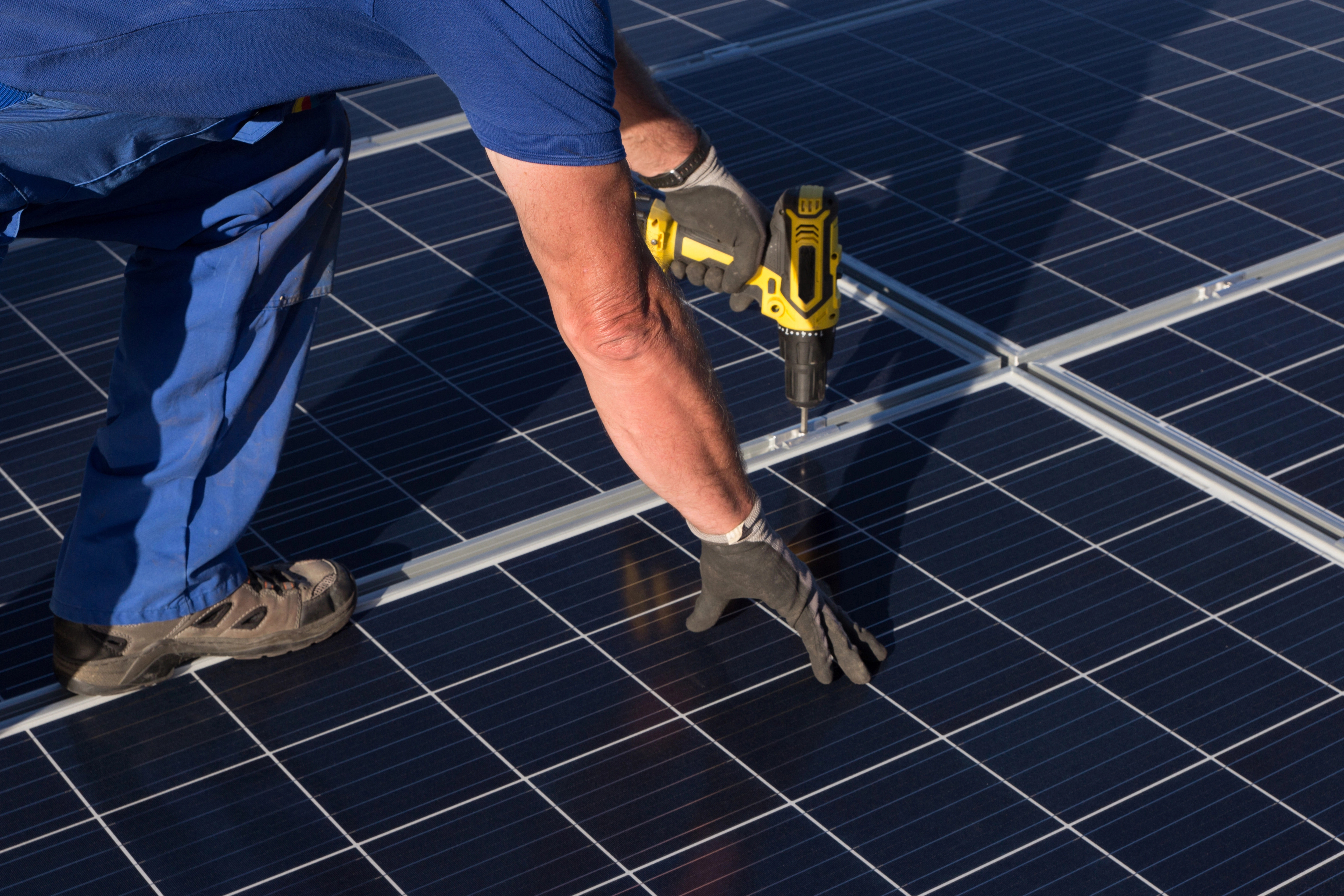
Cyprus trails EU on renewable energy despite continued gains
Cyprus remained below the European Union average for renewable energy use in 2025, with renewables accounting for 21.5 per cent of the island’s gross final energy consumption, according to Eurostat.
The figure places Cyprus 4.7 percentage points below the EU average of 26.2 per cent, highlighting the distance the country still needs to cover as the bloc works towards its 2030 climate targets.
Across the EU, renewable energy accounted for 26.2 per cent of gross final energy consumption in 2025, up from 25.2 per cent in 2024.
The share has risen steadily since records began in 2004, when renewables represented just 9.6 per cent of the EU’s gross final energy consumption.
Despite the continued progress, the EU still faces a considerable challenge in meeting its legally binding 2030 renewable energy target of 42.5 per cent.
Eurostat said achieving that objective would require an average annual increase of 3.3 percentage points between 2026 and 2030, considerably faster than the pace recorded in recent years.
Among the member states, Sweden recorded the highest overall share of renewable energy, with 65.4 per cent of its gross final energy consumption coming from renewable sources.
The country relied primarily on solid biomass, hydropower and wind energy.
Finland ranked second with 53.0 per cent, supported mainly by solid biomass, wind and hydropower.
Denmark followed with 48.2 per cent, with renewable energy generated largely from solid biomass, wind and biogas.
The lowest shares were recorded in Belgium with 14.9 per cent, Slovakia with 16.3 per cent and Ireland with 17.2 per cent.
With 21.5 per cent, Cyprus performed better than those three countries but remained below the EU average, underlining the scale of the transition still required.
The island also featured among the weakest-performing member states in renewable electricity generation.
Across the EU, renewable sources supplied 49.9 per cent of gross electricity consumption in 2025, an increase of 2.4 percentage points compared with 2024.
The figure represents a substantial increase from 15.9 per cent in 2004, highlighting the long-term transformation of the European electricity sector.
Austria recorded the highest share of renewable electricity, with 90.8 per cent of gross electricity consumption coming from renewable sources.
Sweden followed with 89.2 per cent, while Denmark reached 77.7 per cent.
Portugal recorded 65.6 per cent, while Greece and Spain also exceeded the 60 per cent threshold, at 60.9 per cent and 60.7 per cent respectively.
By contrast, Cyprus recorded a renewable electricity share of 27.5 per cent, placing it among the five lowest-performing member states.
Only Malta, at 11.2 per cent, the Czech Republic, at 19.2 per cent, Luxembourg, at 23.3 per cent, and Slovakia, at 24.1 per cent, recorded lower shares than Cyprus.
The figures underline the challenge facing Cyprus as it seeks to accelerate the transition towards cleaner electricity generation while contributing to the EU’s broader climate objectives.
Eurostat also reported continued, albeit slower, progress in the use of renewable energy for heating and cooling.
Across the EU, renewable energy accounted for 27.4 per cent of heating and cooling consumption in 2025, the highest level recorded since the series began in 2004.
The share increased from 26.7 per cent in 2024, representing an annual rise of 0.7 percentage points.
That increase was slightly below the long-term average annual rise of 0.75 percentage points recorded between 2004 and 2025, suggesting that progress in decarbonising heating and cooling has slowed marginally despite reaching a record high.




Click here to change your cookie preferences