
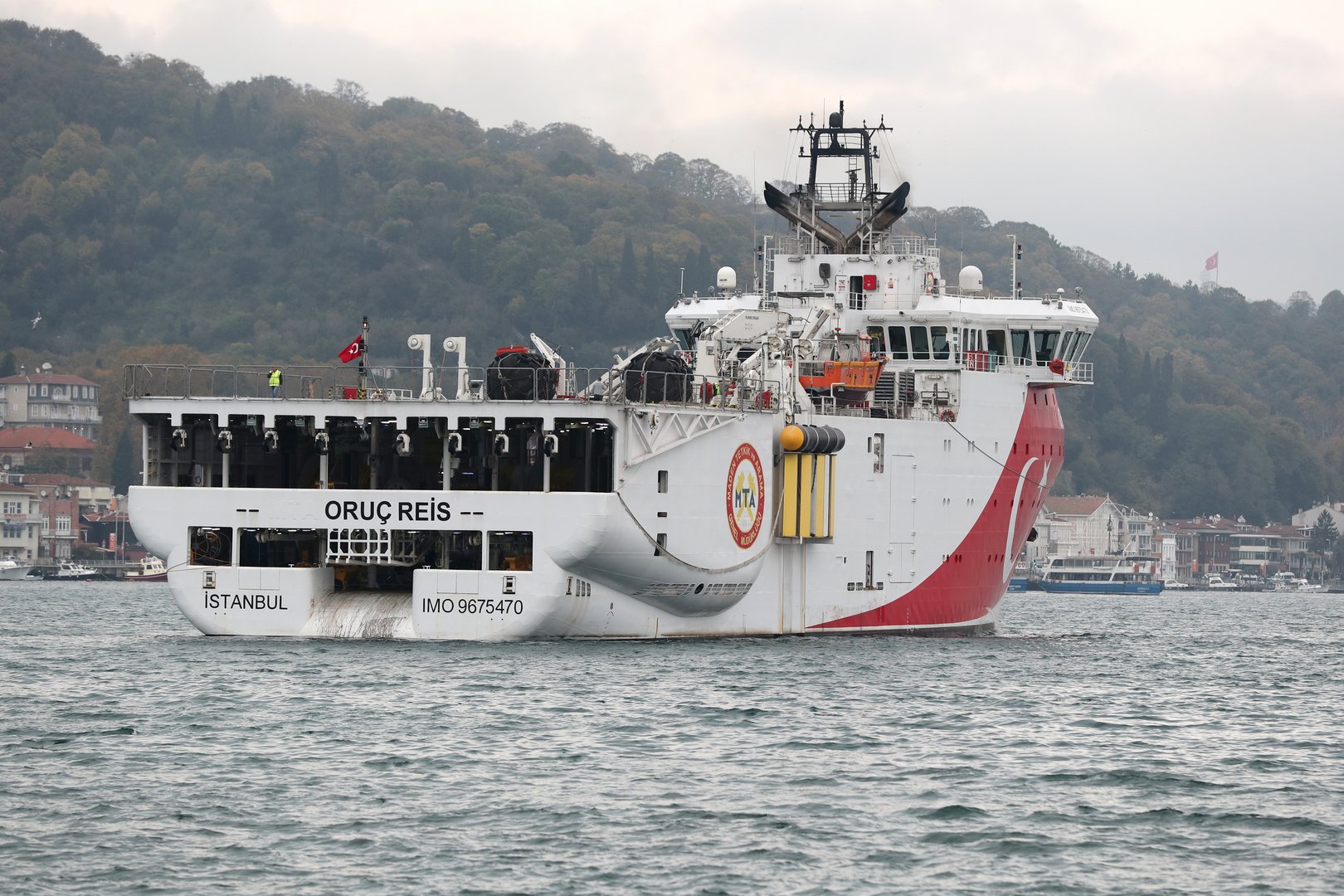
Cyprus has informed the United Nations that Turkish research vessels are carrying out seabed surveys in its waters for a planned natural gas pipeline to the occupied north.
The letter, from Cyprus’ UN permanent representative ambassador Maria Michael to the UN secretary-general, describes the activity as “a further step” towards building the pipeline and a breach of the island’s sovereignty.
Cyprus says Turkey issued an unauthorised Navtex shipping warning on September 30 for “scientific research and undersea operations”.
The vessels named are the Turkish-flagged Oruc Reis, Denar Pathfinder, Denar Echo and Kirici.
According to the letter, the operations took place in Cyprus’ territorial sea, exclusive economic zone and continental shelf “without the permission or consent of the Republic”.
Cyprus asserts this breaches international law, as set out in the UN Convention on the Law of the Sea (Unclos), and that carrying out surveys to install an undersea pipeline in territorial waters without consent is a violation of sovereignty.
The letter also warns that such infrastructure would be “a further attempt to create an irreversible faits accomplis” affecting Cypriot territory and maritime zones, and would “deepen the integration of the occupied areas into Turkey”.
It follows an earlier letter in August, which dealt with a memorandum of understanding signed in July between Turkey and the north, which the republic denounces as illegal.
“Any steps towards the implementation of the alleged ‘memorandum of understanding’, including any preparatory or related activities, are illegal and must cease immediately,” it says.
Greek and Cypriot authorities jointly issued Navtex maritime notices on Friday for seabed surveys by the French research vessel Abeille Marengo along the planned route of the Great Sea Interconnector (GSI), the electricity link between Crete and Cyprus.
Turkey responded with a counter-Navtex, claiming part of the area lies within its continental shelf and that it had “not consented” to the work.
The Turkish foreign ministry said the “procedure regarding the approval” it requires had not been completed, and a Turkish drone has been flying surveillance over the cable route south of Karpathos.
Greek diplomatic sources replied that the vessel’s work “will proceed based on the company’s operational planning” and that the international law of the sea “is clear and does not allow for different interpretations”.





Click here to change your cookie preferences