
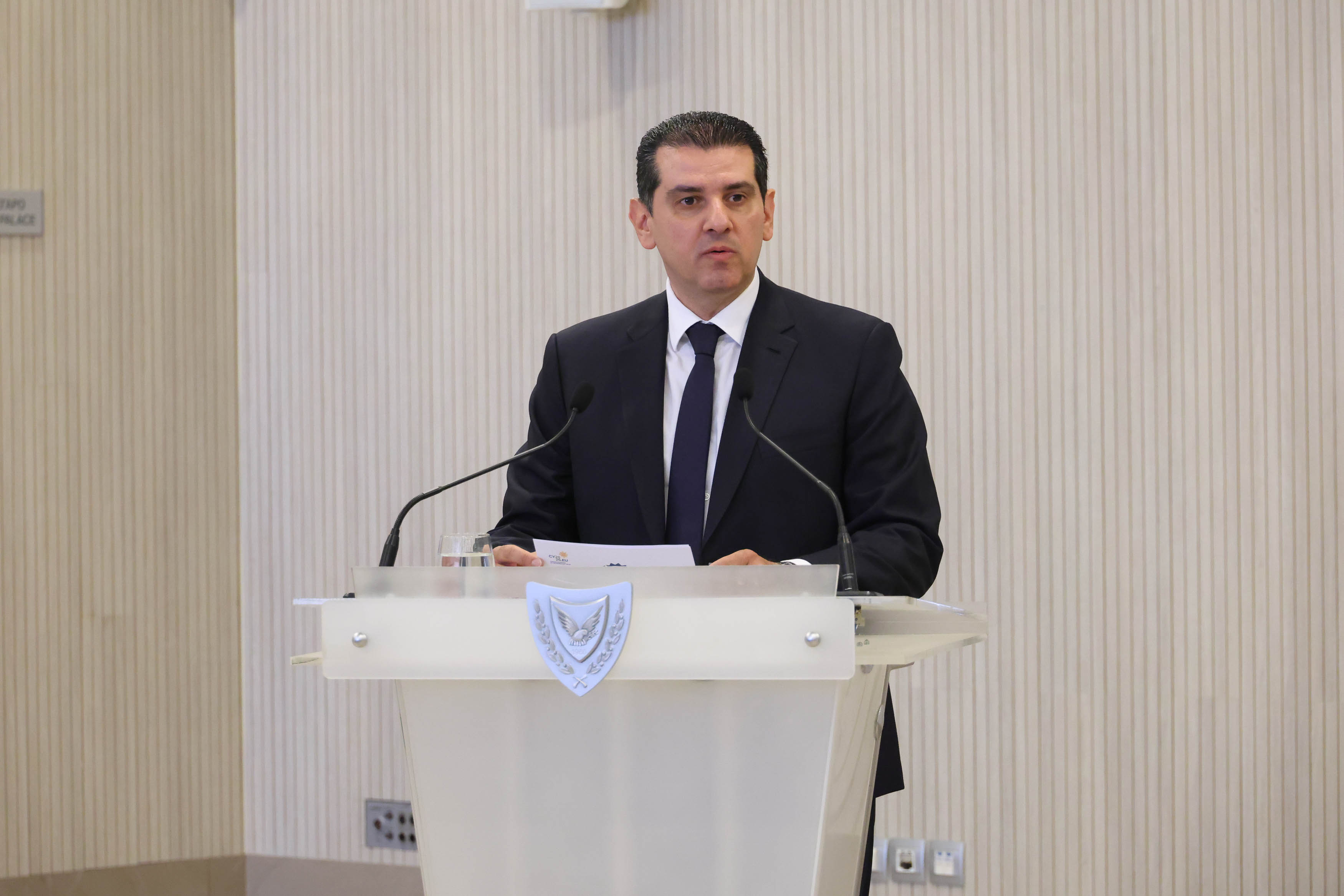
Energy Minister Michael Damianos said on Thursday that every effort would be made to avoid further electricity cuts overnight, expressing confidence that the installation of 120MW of energy storage capacity by early 2027 would prevent a repeat of the current problems next summer.
Speaking before the presentation of the Electricity Authority of Cyprus’ (EAC) annual review, Damianos said the latest outages were caused by faults affecting EAC generators, forcing limited power cuts on Wednesday night.
He noted that Cyprus currently has more than 1,000MW of conventional generation capacity and more than 1,000MW of photovoltaic production during daylight hours, meaning there is no shortage of electricity during the day.
“The challenge comes during the first hours of the night, when temperatures remain high but solar generation is no longer available,” he said.
According to the minister, the only long-term solution is energy storage, allowing excess solar power generated during the day to be used after sunset instead of being lost.
Damianos said the Transmission System Operator had already awarded the contract for 120MW of storage units, which are expected to arrive in Cyprus in January 2027 and be fully installed before the summer.
“That is so we do not face these problems again next summer,” he said.
He praised EAC staff for limiting the duration and scale of the recent outages, while acknowledging the inconvenience caused to consumers.
“The public is suffering and they should not have to. This is a problem that should already have been solved; we are doing everything we can,” he said.
Asked whether further outages were expected, Damianos said he could not predict whether additional technical faults would occur, noting that operational decisions rest with the system operator, which aims to keep any interruptions as brief as possible.
With high temperatures expected to continue on Thursday before easing on Friday, he said authorities would do “everything possible” to prevent any further overnight cuts.
Responding to criticism over the repeated summer power shortages, the minister said information about affected areas should be provided by the EAC, while reiterating that storage would significantly strengthen the system.
In addition to the 120MW public storage project, he said private investors had been authorised to develop up to 150MW of storage capacity, while the EAC was also moving ahead with its own battery storage installations.
“We believe that next summer this problem will no longer exist,” he said.
Damianos acknowledged that part of the issue should already have been resolved, adding that the government would examine whether storage projects could have been accelerated.
Asked whether responsibility should be assigned given similar outages last summer, he said he was not in a position to determine blame.
“Everyone has their own role in ensuring the country’s energy security. We are responsible for the political side of energy adequacy, while the technical aspects are handled by the experts. We are doing everything we can to ensure sufficient capacity next summer,” he said.
On plans to modernise ageing generation units, Damianos said the EAC had already ordered three new generators to replace older units at Dhekelia, with two due to arrive in 2028 and a third in 2029.
He added that the longer-term solution remains the arrival of natural gas at Vasilikos before 2030, allowing much of the existing conventional generation to be replaced.
“Natural gas is less polluting and cheaper. That is why the plan is to complete the Vasilikos project before 2030, when these older EAC units should be withdrawn,” he said.


Click here to change your cookie preferences