
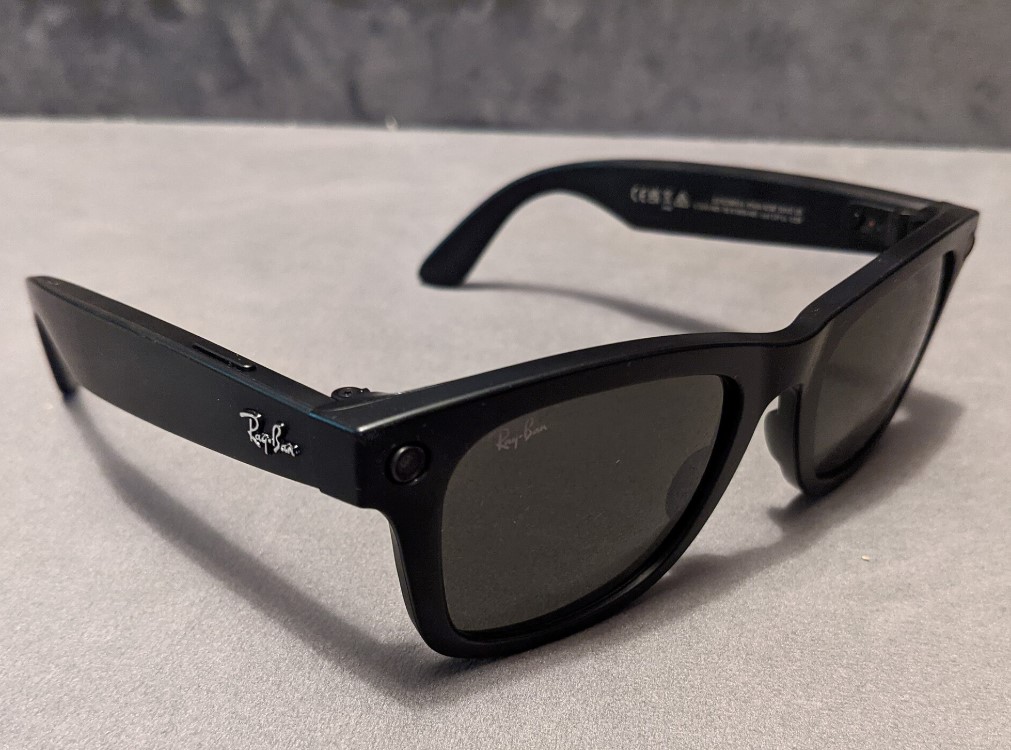
The next great technology battle will not be fought in our pockets. It will take place on our faces.
More than a decade after Google Glass became a cautionary tale about what happens when technology arrives before society is ready for it, smart glasses have returned with better cameras, longer batteries and artificial intelligence capable of understanding what the wearer is looking at.
More importantly, they now resemble something people might actually choose to wear.
Meta and eyewear giant EssilorLuxottica recently introduced their latest range, starting at $299, with prescription-lens compatibility and 26 combinations of frames, lenses and colours. The collection includes rectangular Adventurer frames, the sportier Fury and a slim oval model created with Kylie Jenner, priced from $399.
The Jenner version even offers her voice for Meta AI. It is an oddly revealing detail. Smart glasses are no longer being sold primarily as futuristic computers. They are being sold as fashion.
The new models contain a 12-megapixel camera, microphones and open-ear speakers, allowing users to take photographs, record 3K video, make calls, listen to music and ask Meta AI questions about whatever is in front of them. They do not contain a display. Instead, the internet reaches the wearer discreetly through audio, while the camera gives the AI a view of the physical world.
Meta says the glasses can last for more than eight hours, with the charging case providing up to another 40. At that point, they begin to look less like an occasional gadget and more like something designed to remain on the face throughout the day.
For those wanting the internet in their actual line of sight, Meta’s $799 display model goes considerably further. Its in-lens colour screen can show messages, walking directions, photographs, live captions and real-time translations. A wrist-worn neural band detects small muscle movements, allowing the wearer to scroll or select items with subtle hand gestures.
Meanwhile, Snap is preparing to ship its first consumer augmented-reality glasses this autumn. At $2,195, Specs remain far from an everyday purchase, but they can place interactive digital objects over the real world, open virtual screens and provide AI assistance while the wearer is completing a task. Their battery lasts up to four hours.
Google is also returning to the category it once helped make infamous. Its new eyewear, developed with Samsung, Gentle Monster and Warby Parker, will arrive this autumn. Audio-based glasses will come first, followed by models capable of displaying directions, messages and other information through the lens.
This time, however, the market appears to be listening. Global smart-glasses shipments reached 9.6 million units in 2025, with Meta accounting for about 76.1 per cent, according to Reuters. Separate market research showed shipments growing 139 per cent year on year during the second half of 2025.
Still, the larger question is not whether companies can build smart glasses. Clearly, they can. It is who genuinely needs them.
For most consumers, the promise is convenience. A traveller can translate a sign without reaching for a phone. A cyclist can hear directions without looking down. A parent can photograph a child while keeping both hands free. Someone cooking can ask the glasses what comes next in a recipe without touching a screen.
None of those tasks is impossible with a smartphone. The difference is that the technology is available at the precise moment it is needed, without interrupting whatever the wearer is doing.
The more persuasive argument, however, may come from people for whom hands-free technology is not simply convenient.
Through Be My Eyes, blind and low-vision users can connect to a volunteer who sees through the glasses’ camera and provides guidance through the speakers. The technology can also describe surroundings, read menus and help users locate objects.
Meta recently emphasised the experience of Donald Overton, a US Army veteran who lost his sight in Iraq. After using the glasses to navigate airports and read menus, he explained that he could once again go to dinner with his wife and have “a normal date night”.
For people with limited hand mobility, voice-controlled photography, calls and messaging can remove another barrier. Meanwhile, display models can provide live captions directly inside the lens, potentially helping people who are deaf or hard of hearing follow conversations in noisy environments.
These are not speculative uses. They already answer the question of who the glasses are for more convincingly than any celebrity partnership.
For technology companies, however, the answer is much bigger. A smartphone knows what its owner searches for, buys and communicates. Glasses can also know what they are looking at.
That makes them a potentially powerful gateway to what companies describe as personal or contextual intelligence. An assistant positioned on the face could recognise a restaurant, read a document, remember where an object was left, offer a product for sale or place information directly into the wearer’s view. Whoever controls that layer could influence how people search, shop, communicate and experience the world around them.
The commercial prize is enormous. So is the intrusion.
Cyprus will not be outside this argument, although it remains outside Meta’s official rollout for now. The company’s current list of supported markets includes 17 countries, among them France, Germany, Italy and Spain, but not Cyprus. That means Cypriot consumers cannot yet assume official sales, technical support or access to every AI feature. It does not, however, remove the questions the glasses create.
Under the GDPR and Cyprus’ national data law, photographs, video or audio through which somebody can be identified may constitute personal-data processing, particularly when their use moves beyond a purely personal or household activity.
A company allowing smart glasses inside an office, hotel, shop or medical practice would therefore need to consider whether there is a lawful purpose for recording, whether people have been properly informed and whether the information collected is limited to what is necessary.
That distinction has already carried consequences in Cyprus. In 2025, the Commissioner for Personal Data Protection imposed a €5,000 fine on the Social Welfare Deputy Ministry after cameras at its headquarters were found to be recording audio unlawfully.
The circumstances were different, but the decision demonstrated that microphones are not treated as an innocent addition to a camera and that inadequate notification can itself become a serious compliance issue.
The contrast became sharper when parliament approved Cyprus’ new body-camera law in March. Police cameras must produce a visible signal, while officers must inform people immediately that video and audio are being recorded.
Those requirements do not govern privately owned smart glasses, but they reveal the standard of transparency Cyprus expects when the state places a camera on somebody’s body. Ordinary-looking consumer glasses capable of recording with a glance will inevitably test whether a tiny light offers the public anything close to the same protection.
A phone normally announces when it is filming because someone must raise it and point it towards a subject. Smart glasses remove that familiar gesture. A person across a café table may not know whether the wearer is listening to music, asking AI a question or recording the conversation.
A recent G7 privacy review warned that smart glasses lack the traditional signals associated with recording, making it difficult for bystanders to know when their image or voice is being captured. It also noted that data protection authorities have questioned whether small LED recording lights provide sufficient warning.
Meta’s privacy guidance says the camera will not operate when the indicator light is covered. It also tells wearers to switch the glasses off in places such as bathrooms, medical offices, schools and places of worship, and to stop recording if someone objects.
But that still places much of the responsibility on the person wearing them. The bystander, who may never have agreed to participate, remains part of the product’s field of vision.
Smart glasses may not replace the smartphone soon. They do not need to. Earbuds did not replace it either, but they claimed our ears. Smartwatches claimed our wrists. Glasses now want the few centimetres between our eyes and the rest of the world.
They may prove invaluable for people whose sight, hearing or mobility makes hands-free computing genuinely transformative. They may become useful companions for athletes, travellers and workers. They will certainly serve companies competing to control the next computing platform.
As for everyone else, the answer is less comfortable. Smart glasses may not be made for us, but once they become ordinary, all of us may find ourselves looking back at them.





Click here to change your cookie preferences