
Creating TikTok ads has never been easier—but creating ads that actually stop people from scrolling is still difficult. Every day, users swipe past hundreds of videos, and most ads disappear before anyone notices them. I learned that success has very little to do with making the most beautiful video. It comes from grabbing attention in the first few seconds, keeping viewers curious, and giving them a reason to take action. Once I started using AI as a creative testing tool instead of just a video generator, my workflow changed completely. Instead of producing one ad, I could test dozens of ideas in the same amount of time. Here’s the process I use to create scroll-stopping TikTok ads with AI in 2026.
Why most AI TikTok ads still fail
One mistake I see repeatedly is assuming AI will automatically create a winning advertisement.
It will not.
AI can generate impressive visuals, but TikTok is not a filmmaking competition. It is an attention competition. Users decide almost instantly whether to keep watching or keep scrolling. If the first few seconds fail to interrupt their scrolling habit, nothing that happens later matters.
Most AI-generated ads fail because they:
- Start too slowly
- Show the logo before the product
- Explain instead of demonstrating
- Wait too long before revealing the value
- Feel like traditional commercials instead of native TikTok content
When I review winning ads in the TikTok Creative Center, they all share one thing: they create curiosity immediately.
The first goal is not getting a sale. It is earning one more second of attention.
Before I generate any video, I plan the creative strategy
I never open a video generator first.
Instead, I answer three simple questions.
Who is this ad speaking to?
- A busy parent?
- A skincare enthusiast?
- A college student?
- Someone who has never heard of the product?
What problem are they trying to solve?
People rarely buy products because of features. They buy solutions.
For example:
- Better sleep
- Cleaner skin
- Faster cooking
- More organized workspaces
- Saving time every morning
Finally, I decide what emotion the first three seconds should create. Curiosity? Surprise? Relief? Fear of missing out? This planning usually takes only a few minutes, but it makes every later step much easier.
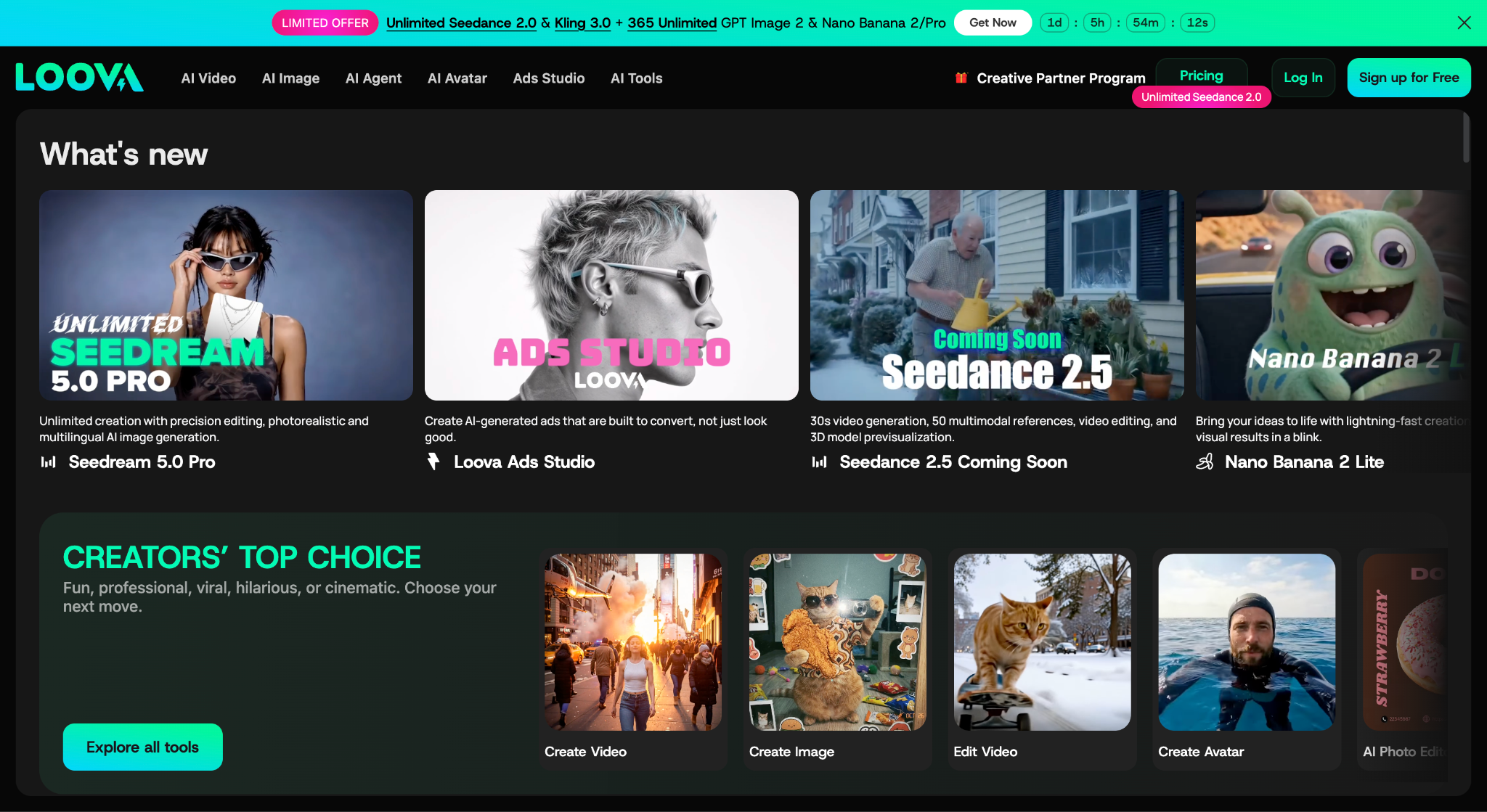
I also prefer keeping the creative workflow inside one platform instead of constantly exporting files between different tools. I usually work inside Loova AI because it lets me combine Seedance 2.0 for high-quality video generation with image models like GPT Image 2 and Nano Banana Pro while testing multiple ad concepts much faster.
The technology helps speed up production, but the creative strategy always comes first.
My workflow for creating high-performing TikTok ads
Step 1: Build the Hook Before Building the Video
The biggest lesson I learned is that TikTok ads are won or lost before the video is even generated.
I spend more time writing hooks than writing prompts.
When brainstorming, I usually write ten to twenty different opening lines before choosing one.
Some hook formats consistently work well.
Problem Hook: “Still wasting ten minutes every morning looking for your keys?”
Curiosity Hook: “I didn’t believe this product would actually work.”
POV Hook: “POV: You finally found a way to organize your tiny apartment.”
Unexpected Statement
“I stopped buying coffee after trying this.”
Notice that none of these introduce the product immediately. Instead, they introduce a situation that people recognize. Once viewers become curious, they naturally stay for the product reveal. Whenever possible, I also write hooks that sound like real creators instead of advertisers.
Instead of saying: “Our newest portable blender features…” I would rather say: “I’ve been using this every day for the last week.”
The second version feels much more native to TikTok.
Step 2: Design the First Three Seconds
Many marketers talk about hooks, but the visual hook matters just as much as the spoken one.
The opening should answer one question:
“What makes someone stop scrolling?”
Some of the visual patterns I use most often include:
- Extreme close-ups
- Before-and-after comparisons
- Unexpected product demonstrations
- Quick facial reactions
- Fast camera movement
- Objects entering the frame immediately
- Large on-screen text
For example, imagine promoting a stain remover.
Instead of opening with a bottle sitting on a table, I would begin with coffee spilling across a white shirt.
The viewer instantly wants to know what happens next.
Or imagine promoting a skincare product.
Rather than showing the packaging first, I start with a close-up of textured skin, followed immediately by the product being applied.
The product appears naturally inside the story instead of interrupting it. Every frame in the opening should increase curiosity. If nothing changes visually during the first three seconds, people usually keep scrolling.
Step 3: Generate Multiple Creative Concepts Before Making Videos
Only after the hook is working do I begin creating visuals.
This is where I use AI Text to Image to explore ideas quickly.
Instead of generating one final advertisement, I create multiple concepts around the same product.
For example, if I am advertising wireless earbuds, I might generate:
- A gym scenario
- A morning commute
- A coffee shop environment
- A travel situation
- A work-from-home setup
Each one tells a different story, even though the product never changes.
At this stage, speed matters more than perfection.
Once I discover the strongest direction, I improve it with AI Image to Image.
Instead of rebuilding everything, I refine details like:
- Product placement
- Background
- Lighting
- Color grading
- Brand colors
- Facial expressions
Small adjustments often make a concept feel much more like a real TikTok advertisement without changing the overall idea.
The goal is simple:
Generate many concepts.
Improve only the winners.
Not every idea deserves a video, and AI makes it affordable to discover that before spending time on production.
Step 4: Turn Winning Concepts Into Videos
Once I have several strong concepts, I stop creating new ideas and start producing videos.
This is where Image to Video AI becomes part of my workflow.
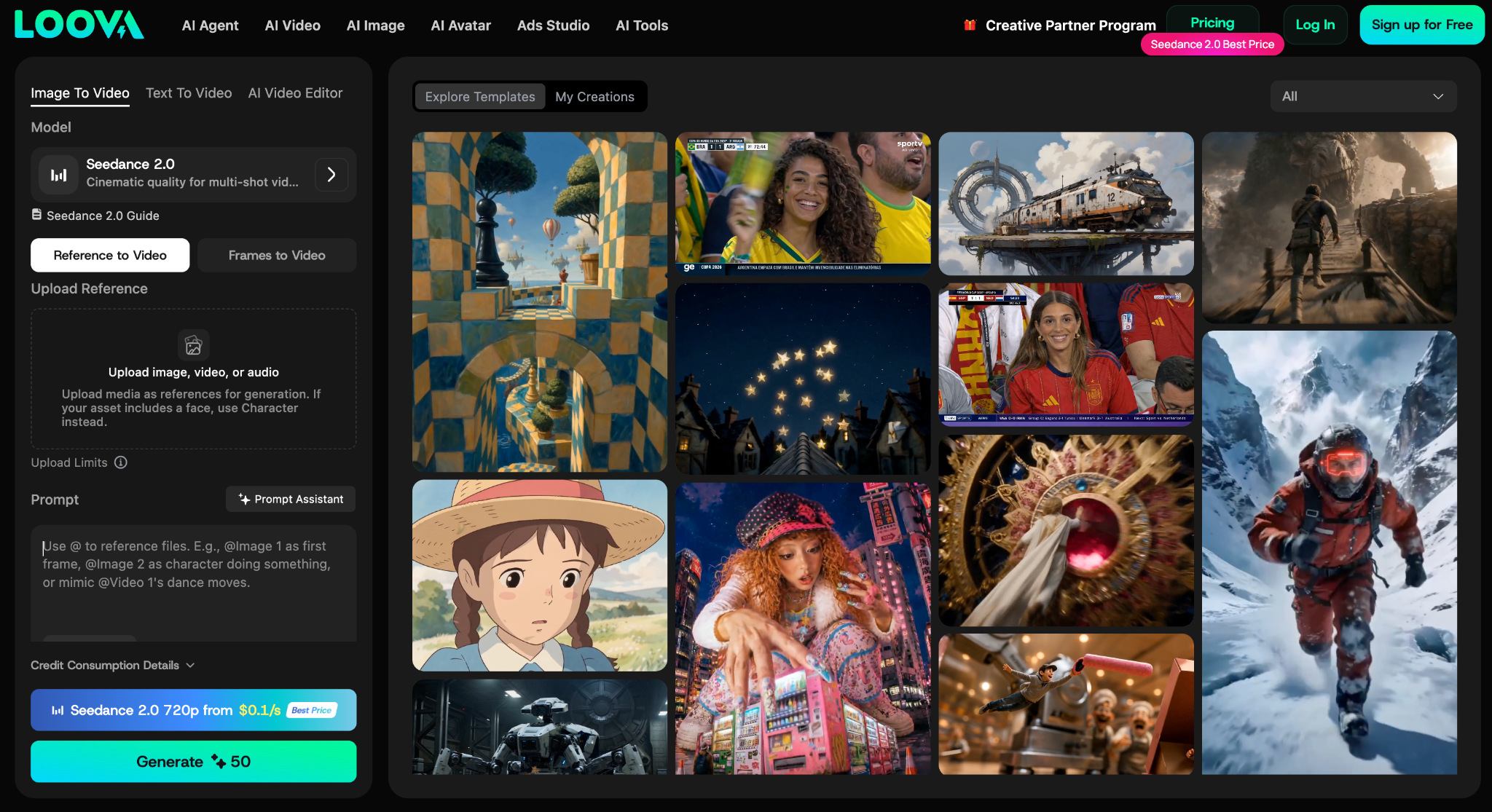
Instead of asking AI to invent everything from scratch, I animate the concepts that have already proven to be visually interesting. This usually produces much more consistent results because the composition, product placement, and overall creative direction are already decided.
For example, if I’m promoting a portable espresso maker, I might generate three completely different opening scenes:
- Someone making coffee on top of a mountain
- A commuter using it before boarding a train
- A creator preparing coffee inside a camper van
Each concept speaks to a different audience, but all of them start with the same product promise.
At this stage, I also test different camera movements.
Sometimes a slow cinematic push works well for premium products. Other times, handheld movement feels much more native to TikTok. The only way to know is to generate multiple versions and compare them.
Step 5: Test Different Creative Angles Quickly
One winning product rarely has only one winning advertisement.
It usually has several.
After building the first version, I began testing completely different creative angles using AI Text to Video.
Instead of changing the product, I change the story.
For example, the same desk organizer can become:
- A productivity hack
- A dorm room upgrade
- A gift recommendation
- A “things I wish I bought sooner” video
- A satisfying desk transformation
Each angle targets a different audience without requiring another photo shoot.
I normally test ideas in batches instead of individually.
Rather than spending hours polishing one ad, I would rather generate ten concepts, eliminate the weak ones, and invest time only in the strongest performers.
This mindset completely changed how I approach paid advertising.
Step 6: Scale Winning Ads Instead of Making New Ones
One of the biggest mistakes in performance marketing is constantly chasing new ideas.
In reality, scaling a winner is usually more profitable than starting from zero.
When I already have a product and a clear target audience, I use an AI Ad Generator to build multiple ad variations automatically.
Instead of only generating visuals, it helps expand the entire creative structure.
For example, one winning ad can quickly become:
- Five new hooks
- Three different product demonstrations
- Multiple CTA variations
- Short and long versions
- Vertical and square formats
This makes creative testing much more systematic.
Another workflow I use regularly is Viral Ad Clone.
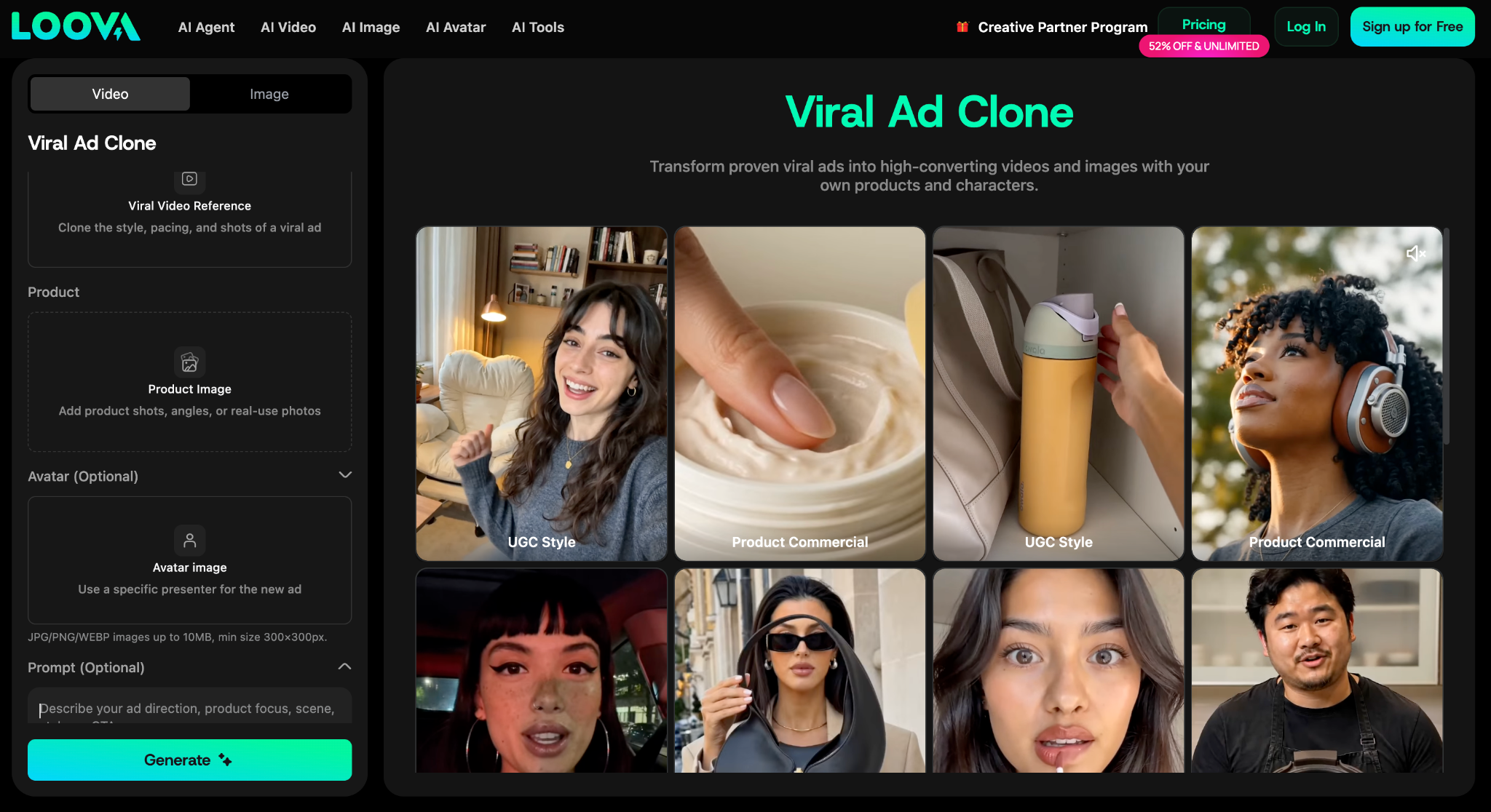
The goal is not to copy another advertisement frame by frame.
Instead, I study why a successful ad performs well.
Usually, I analyze things like:
- The opening hook
- The first three seconds
- Scene order
- Editing rhythm
- Camera movement
- Product reveal
- CTA placement
Then I rebuilt the same structure around my own product.
For example, if a viral skincare ad opens with an extreme close-up and immediately demonstrates the result, I can apply that storytelling pattern to a completely different product without copying the original content.
I am cloning the creative framework—not the brand.
That approach usually produces much stronger ads than trying to invent every campaign from scratch.
Step 7: Edit Like a Performance Marketer
Most creators edit videos to make them look better.
Performance marketers edit videos to improve results.
Those are two very different goals.
When I review an ad before publishing, I ask questions like:
- Does the product appear within the first few seconds?
- Does something change visually every two or three seconds?
- Can someone understand the message with the sound turned off?
- Is the CTA obvious?
- Is every scene helping the conversion?
If the answer is no, I remove or shorten that section.
Some simple editing habits have consistently improved my ads.
- Keep captions short. Most subtitle lines should stay under eight words so they are easy to read on mobile.
- Cut unnecessary pauses. If nothing happens on screen for even a couple of seconds, viewers often lose interest.
- Repeat the product naturally. The audience should not need to guess what is being advertised.
- Show the CTA more than once. A soft reminder in the middle of the video and a stronger CTA at the end usually perform better than waiting until the last frame.
Example: Building three TikTok ads from one product
Imagine I need to advertise a portable mini blender. Instead of producing one polished commercial, I create three completely different ads.
Version One: Problem Hook
“Still skipping breakfast because mornings are too busy?”
The video immediately shows someone leaving home without eating before introducing the blender.
Version Two: Lifestyle Hook
“I’ve taken this everywhere for the past month.”
The product appears naturally during work, travel, and gym scenes.
Version Three: Before-and-After Hook
The first shot compares expensive coffee shop smoothies with homemade drinks made using the blender.
The product is exactly the same. Only the creative angle changes. This gives me three completely different audiences to test instead of relying on a single advertisement.
Common mistakes that hurt TikTok ad performance
Spending Too Much Time on One Creative
Many advertisers try to perfect a single video. I prefer testing several concepts first. The market usually tells me which idea deserves more attention.
Showing the Brand Before the Value
A logo does not stop someone from scrolling. A surprising moment does.
The product and the benefit should appear before the branding becomes the focus.
Explaining Too Much
TikTok rewards fast communication. If viewers need fifteen seconds before understanding the product, many will already be gone.
Keep the message simple and let curiosity do the work.
Ignoring Creative Testing
One advertisement is never enough. Small changes to the hook, pacing, or CTA can produce completely different results.
The goal is not to create one perfect ad. The goal is to find the version that performs best.
Final thoughts
The best TikTok ads in 2026 are rarely the ones with the biggest production budgets.
They are usually the ones who communicate clearly, capture attention immediately, and test more creative ideas than everyone else.
AI has completely changed how I build campaigns because it lets me experiment much faster than traditional production ever could.
Instead of asking, “Can AI make a good ad?”
I now ask, “How many different ideas can I test before my competitors finish filming their first version?”
That shift in thinking has had a much bigger impact on my results than any single AI model.
FAQ
What makes a TikTok ad stop people from scrolling?
A strong hook, an interesting first three seconds, and a clear product benefit are usually the biggest factors. Visual quality matters, but attention comes first.
How many TikTok ad variations should I test?
I normally recommend testing at least five to ten creative variations. Different hooks and storytelling angles often perform very differently, even when promoting the same product.
Should I create images before generating videos?
Yes. Creating visual concepts first helps you identify stronger creative directions before investing time in full video production.
Can AI create TikTok ads that look native?
Yes. The key is using natural storytelling, creator-style pacing, and realistic product demonstrations instead of making videos that feel like traditional television commercials.
How important is the CTA in a TikTok ad?
Very important. A strong CTA tells viewers exactly what to do next, whether that is visiting a website, learning more, or making a purchase.
What is the biggest mistake when creating AI TikTok ads?
Treating AI as a one-click solution. The best results come from using AI to generate, test, compare, and improve multiple creative ideas instead of relying on a single version.
DISCLAIMER – “Views Expressed Disclaimer – The information provided in this content is intended for general informational purposes only and should not be considered financial, investment, legal, tax, or health advice, nor relied upon as a substitute for professional guidance tailored to your personal circumstances. The opinions expressed are solely those of the author and do not necessarily represent the views of any other individual, organization, agency, employer, or company, including NEO CYMED PUBLISHING LIMITED (operating under the name Cyprus-Mail)


Click here to change your cookie preferences