
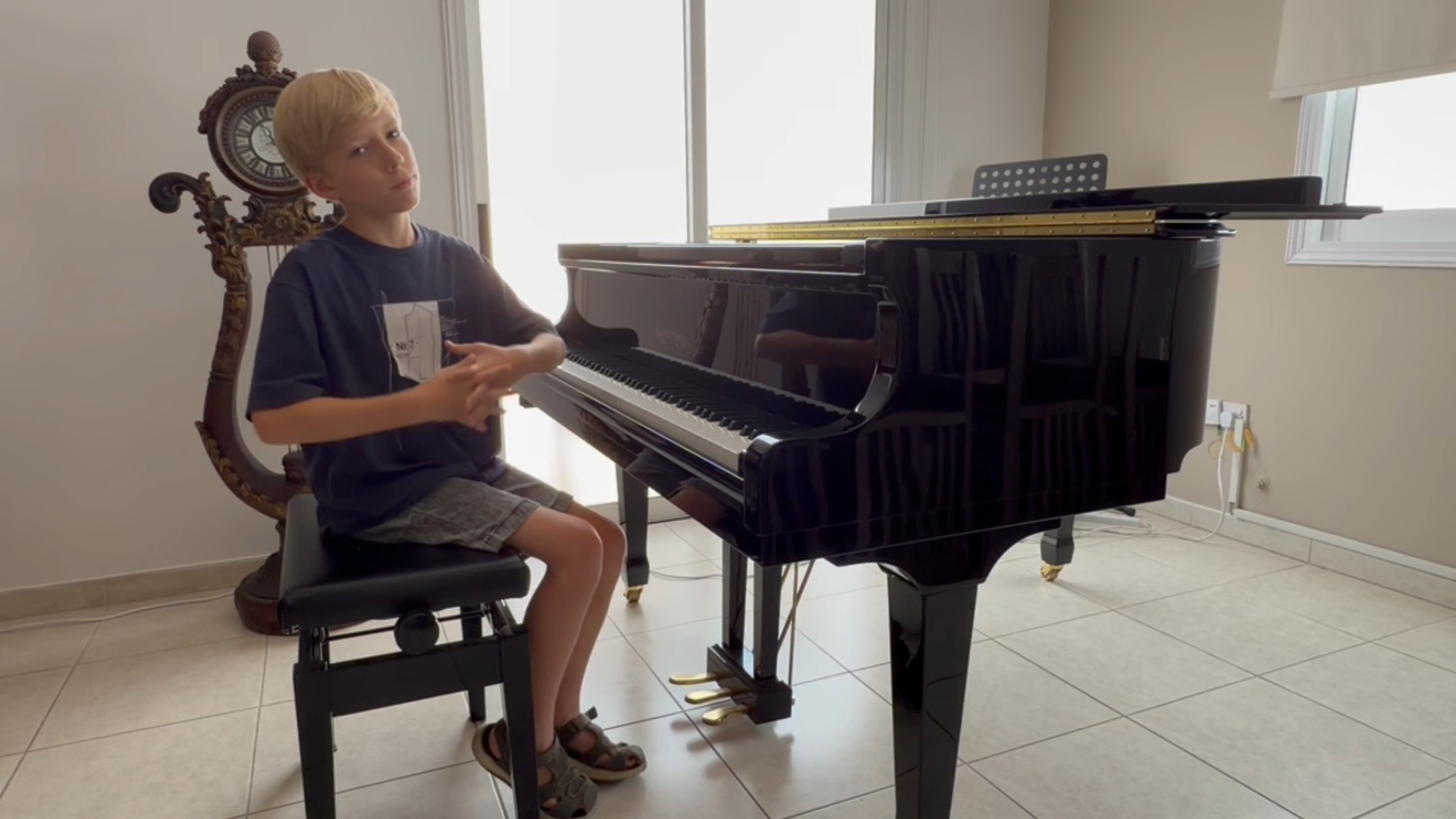
A Limassol-based schoolboy is already playing with the poise of a professional
There is something quietly remarkable about watching a 10-year-old walk onto a stage, bow to the audience and sit confidently at a grand piano that drowns him. There are no toys in sight, no nervous glances towards his parents and no sign that he is about to perform music that many adults would find intimidating.
Instead, Lev Nekhin places his hands on the keyboard and loses himself completely in the music.
For the next half hour, he performs some of the world’s most demanding classical works entirely from memory. Bach, Beethoven, Debussy and Chopin flow effortlessly from one piece to the next. When the final note fades, it marks not just the end of a performance but the culmination of years of determination, discipline and quiet ambition.
That recital earned Lev one of the highest honours available to young pianists. At just 10 years old, the Limassol resident passed the Associate of the Royal Schools of Music diploma, known as the ARSM, with Distinction. It is a professional level qualification that many talented musicians do not attempt until much later in life.
Ironically, Lev himself never expected such a result.
“I felt shocked and proud at the same time,” he says with a smile. “I never thought I would get a Distinction. I thought I would get below pass.”
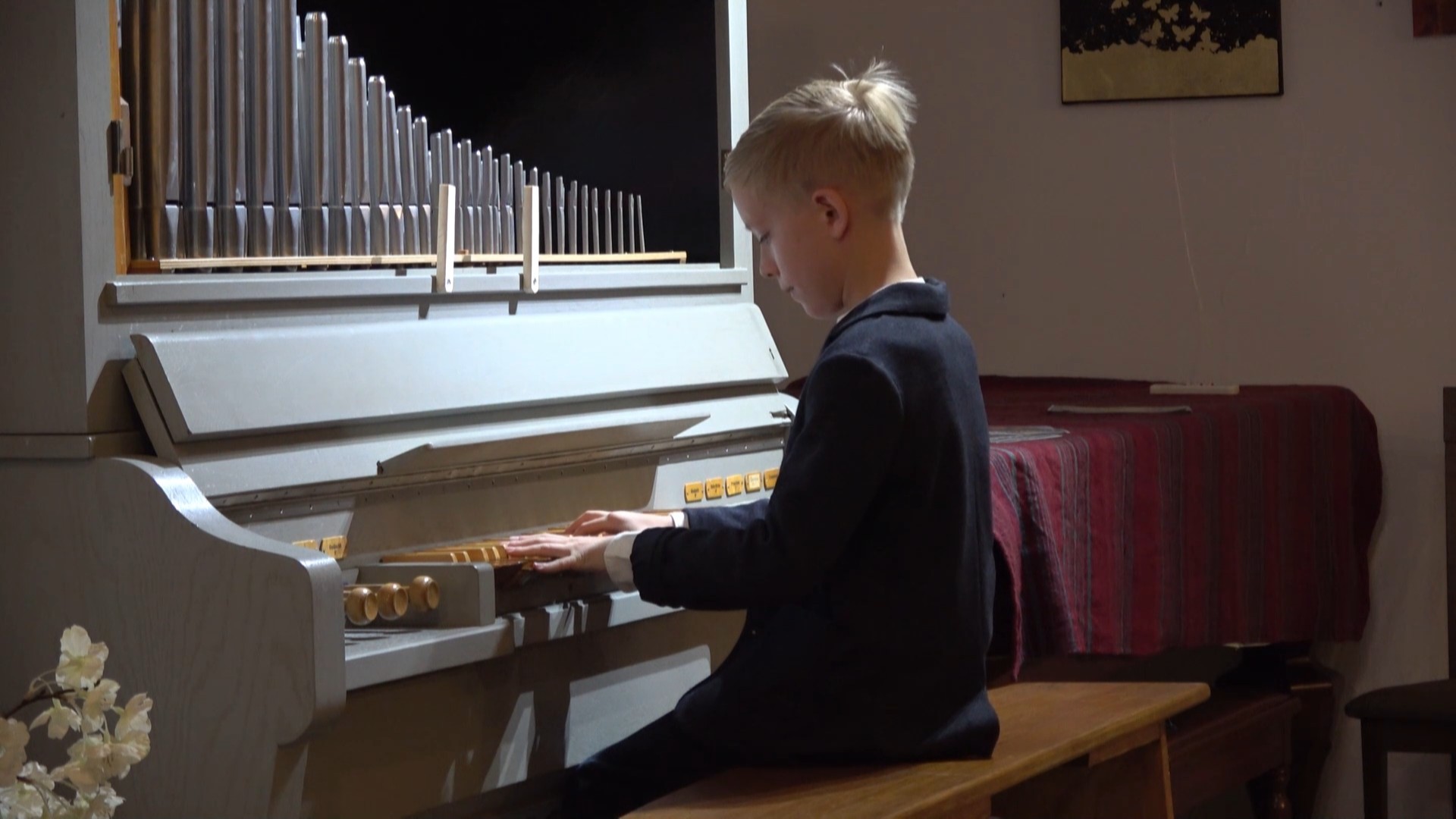
The reaction is surprisingly modest for someone whose achievement has attracted attention well beyond Cyprus. Lev is thoughtful, self-critical and far more interested in improving than celebrating.
Like many stories that change a person’s life, Lev’s began almost by accident. During the Covid 19 pandemic, families around the world suddenly found themselves spending far more time at home. For Lev, those long days led him towards an electronic piano that had been sitting quietly in the house.
“My babysitter played the piano,” he recalls. “I thought, ‘Why don’t I learn it too?’”
His father listens to classical composers while driving or relaxing at home. And athough Lev did not realise it, those melodies had become familiar long before he ever placed his own fingers on the keys.
Instead of formal lessons, his first teacher was the internet.
He searched for a beginner’s tutorial explaining how to play Beethoven’s Für Elise and before long he had managed to teach himself one of the most recognisable pieces in classical music.
His parents quickly realised this was much more than ordinary childhood curiosity. They enrolled him at a music school in Moscow, where the family was living at the time. It gave him a foundation, although Lev soon discovered that learning technique was only one part of becoming a musician.
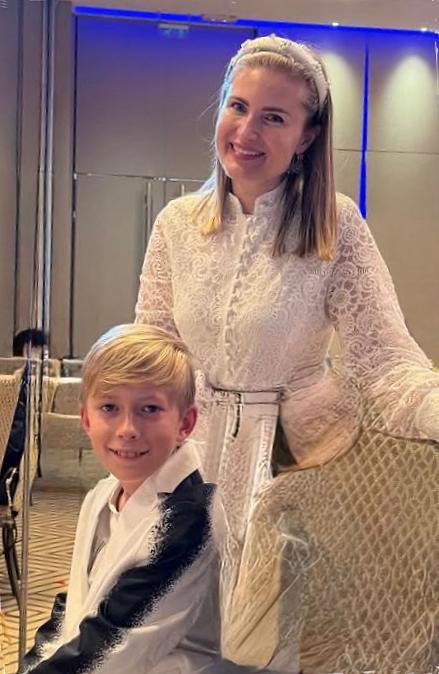
Not long afterwards, the family relocated to Cyprus, where Lev joined the Tatiana Stupak School of Music in Limassol. She recognised not only his technical ability but also his musical potential and encouraged him to work towards internationally recognised examinations.
Lev embraced the challenge and progressed through every level with remarkable speed. Within just three years he had advances to Grade 8, something that often takes students considerably longer.
The next milestone was unlike anything he had attempted before. The ARSM diploma is not simply another exam. Candidates must prepare a continuous recital lasting around 30 minutes, demonstrating technical control, musical maturity and artistic interpretation.
For Lev, the programme included Bach’s Prelude and Fugue No. 12, Beethoven’s Sonata Op. 2 No. 1, Debussy’s Clair de Lune and Chopin’s Nocturne No. 20 in C sharp minor.
To make the challenge even greater, he decided to perform the entire programme from memory. “It definitely was difficult,” he says. “Sometimes we had to restart recording because I forgot a few notes.”
Although every work demanded intense preparation, Beethoven proved the greatest obstacle. “The most challenging piece was Beethoven’s First Sonata because of its length. My hands also had to work very hard to play it.”
Achievements like these often create the impression that gifted children spend every waking hour practising. Lev’s routine is certainly demanding, but it is also balanced. He practises between one and a half and two and a half hours each day, but school remains a priority and he still makes time for friends and hobbies.
“My whole family is very organised, so I am very good at time management,” he says.
Even after countless hours of preparation, however, performing in public never becomes completely easy. “I do get nervous,” he admits. “When I start playing, I concentrate on the mood of the music and how I need to play it. Then I forget about being nervous.”
His favourite performance so far took place at the Russian House in Belgrade earlier this year. “I played almost perfectly,” he says. “I do not usually think I play badly, but I really liked how I played that time. That is quite rare when you are a pianist.”
Like many musicians, Lev is his own toughest critic. Rather than chasing perfection, he seems to chase improvement, always listening for what could be better the next time he performs.


Click here to change your cookie preferences