
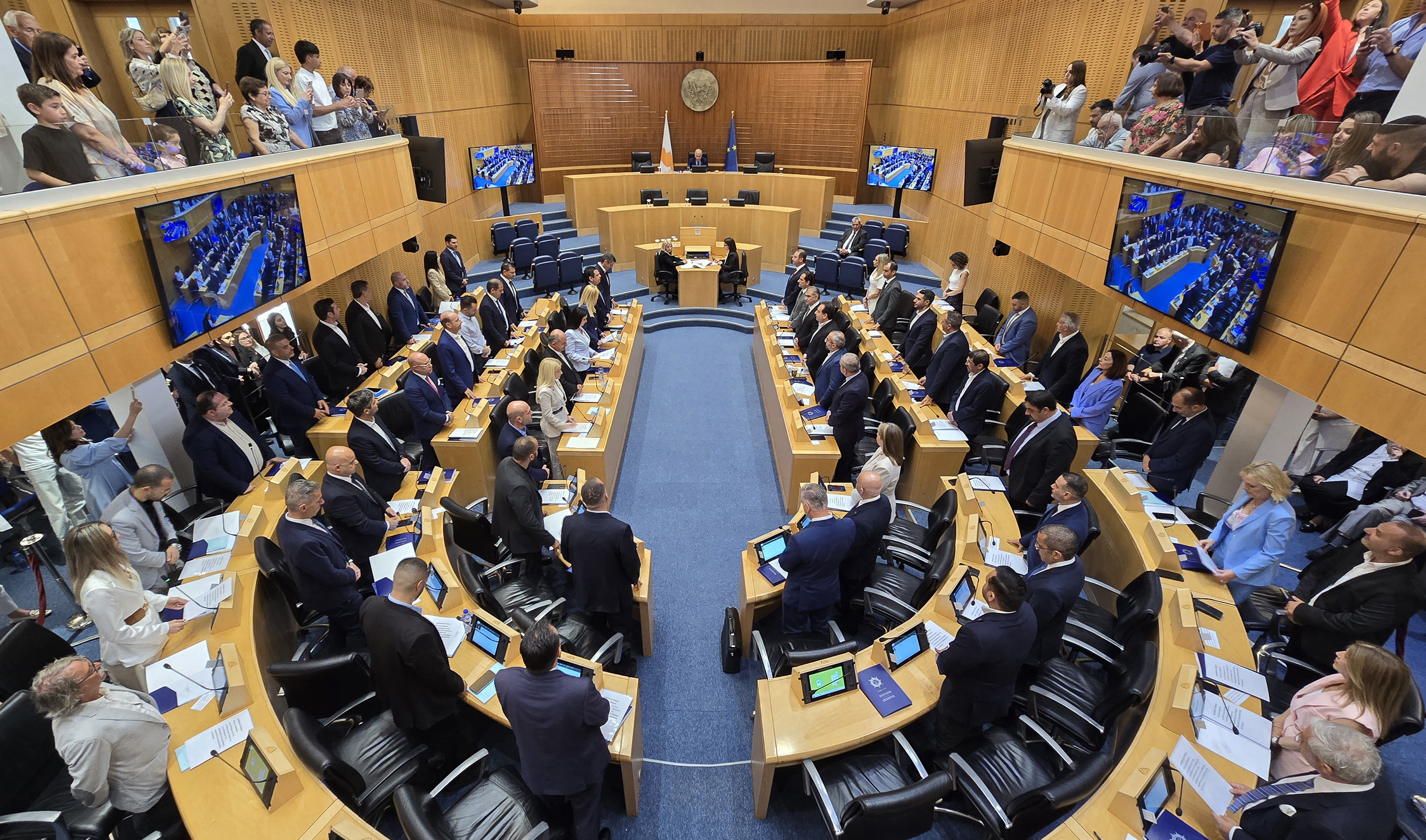
The new parliament that emerged from May’s elections has a demanding legislative agenda ahead of it when the session reopens at the beginning of September, with important bills and proposed legislation to be discussed and decided on.
These include judicial reforms, strengthening the anti-corruption authority, changes to the monetary system, promoting renewable energy sources, new legislation on immigration and issues that directly impact the public, such as the protection of tenants from excessive increases in rent.
The new MPs will also be dealing with a backlog of proposals from the previous parliament, such as the powers of the attorney-general, penitentiary system reforms, university clinics, the employment of nurses from third countries and the purchase of property by foreigners.
On judicial reforms, a package of bills was tabled on June 17, regulating fundamental aspects of justice, including the powers of the chief registrar and the operation of the Supreme Court and the Supreme Constitutional Court.
Amendments are also proposed for the ombudsman’s powers, particularly to exclude his authority over courts under the two supreme courts.
Alma has submitted two proposals for legislation to strengthen the powers of the anti-corruption authority, so that it will be able to authorise criminal investigations instead of only submitting a report to the attorney-general.
On June 25, Disy tabled a proposal for the same authority aiming at strengthening its institutional and operational framework.
As regards the financial sector, the finance ministry submitted a series of bills on July 9 concerning the monitoring and operation of banks, macroprudential supervision, the capital adequacy of investment firms, and supervising investment services and regulated markets.
Bills concerning the civil service were also tabled on July 9, with provisions concerning interdepartmental promotions and the evaluation of candidates for promotion and appointment.
The new parliament will also be discussing energy policy through a bill to promote renewable energy sources, which will harmonise Cypriot legislation with the EU’s acquis communautaire.
One of the pending bills is extending the term of the deputy minister for European affairs until December 31, after the plenum on July 9 threw out the request for it to be discussed urgently.
Social issues
Proposals with an immediate social impact with also be discussed, including the one tabled by Alma for the protection of tenants from excessive rent increases. The proposal provides for a proportionate framework of protection, without affecting existing contracts until they expire.
Disy MPs Andreas Constantinou and Michalis Koukounis also submitted a proposal for the faster nationalisation of athletes who represent of have represented Cyprus in European or international competitions, which would see evaluation procedures being concluded within three months.
Also from Disy, Fotini Tsirides proposed shortening deadlines for the examination of objections to taxation and for submitting a report to the tax council in the event of a hierarchical appeal.
Still on taxes, Elam proposed the taxation of capital gains, particularly to correct distortions concerning the deadline for completing the construction of a building in the context of exchanging property.
On migration, the interior ministry on July 14 tabled an amendment to the law with the aim of bringing Cypriot legislation in line with the European framework regarding the return of third country nationals who are illegally residing in member states.
Also on July 14, an amendment to the street and building law was submitted so public health and safety risks from dangerous buildings would be more effectively addressed, particularly in the historical centres of major municipalities.
Tsirides furthermore proposed the creation of a national library system.
Pending issues
Important issues pending from the previous parliament include a 38-bill package concerning the powers of the attorney-general, as well as the reform of the penitentiary system.
In the health sector, the new MPs will be dealing with legislation concerning nursing and midwifery, which has been linked to the ability to hire Greek-speaking nurses from third countries and the framework for university clinics and hospitals, where differences had been voiced, particularly concerning the involvement of private hospitals.
Reforms are also to be discussed concerning state health services Okypy, so that patients can be represented on the board of directors. Other issues pending have to do with biomedical laboratories, biobanks, blood donation, establishing the profession of nutritionists, and other professional and health regulations.
Another issue is the loss of use fund for the properties belonging to individuals displaced during the 1974 Turkish invasion. The previous parliament had not managed to bridge the gap concerning the manner in which the owners would be supported.
The purchase of property by foreigners is another pending issue, along with the framework for jointly owned buildings.
Social policy issues still pending are the child allowance, single-parent families, the minimum guaranteed income and unemployment benefits.
Larger reforms, including pensions and collective agreements, have yet to be tabled as complete bills.



Click here to change your cookie preferences