
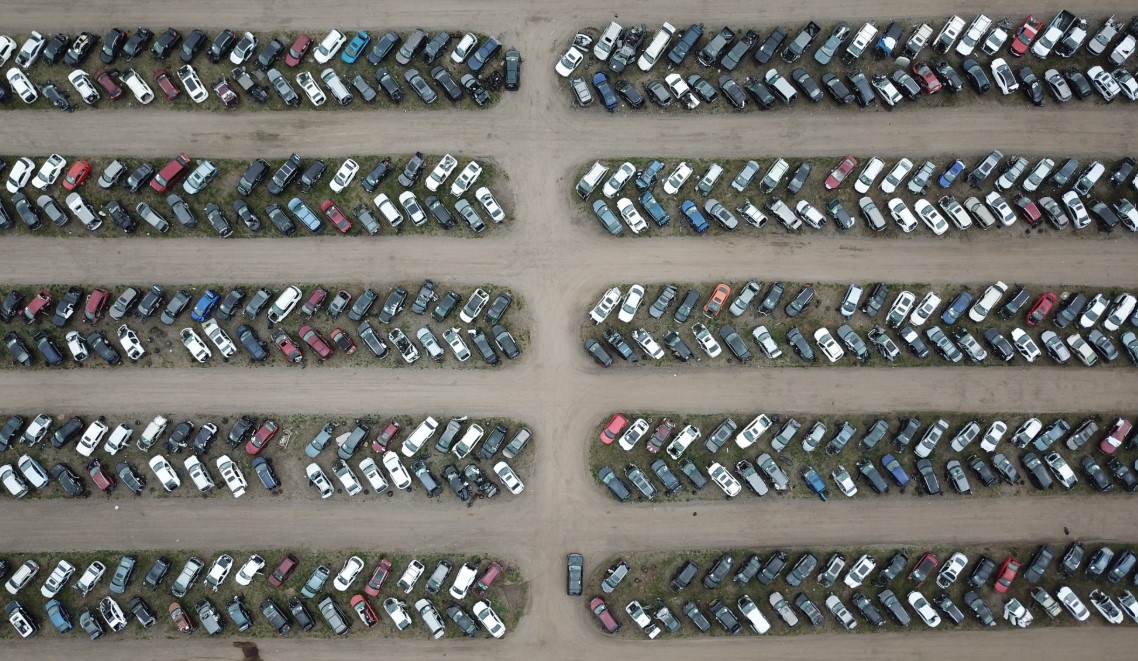
New European Union rules covering the design, production and disposal of vehicles entered into force this week, setting binding recycled-plastic targets and tightening controls on the export of used cars.
The new regulation seeks to recover more steel, aluminium, copper, plastics and critical raw materials from ageing vehicles, while making manufacturers responsible for what happens to their cars once they become waste.
Although the legislation has now entered into force, most provisions will apply from September 1, 2028, giving carmakers, recyclers and national authorities two years to prepare. Until then, the existing EU directive will continue to govern the treatment of end-of-life vehicles.
Around 10 million to 12 million vehicles reach the end of their useful life in Europe every year, according to the European Commission. Within the EU, about 6.5m are formally treated as waste, while an estimated 3.5m vehicles disappear from official records, often through illegal dismantling, abandonment or exports disguised as second-hand sales.
Under the new rules, cars will have to be designed so that parts and components can be removed, repaired, reused or replaced more easily. Manufacturers must also provide dismantlers and repairers with detailed digital information, while new vehicles will eventually carry a circularity passport setting out their material composition and recycling potential.
For the first time, the EU has also introduced binding targets for recycled plastics in new vehicles. Recycled material must account for at least 15 per cent of vehicle plastics from 2032, rising to 25 per cent from 2036.
Moreover, at least 20 per cent of that recycled content must come from end-of-life vehicles or used vehicle parts, creating a closed-loop market in which materials recovered from old cars return to automotive production.
The Commission will also examine targets for recycled steel, aluminium, magnesium and critical raw materials, which could begin applying from 2033. The automotive industry uses more than 7m tonnes of steel, 2m tonnes of aluminium and 6m tonnes of plastics each year in the EU, but continues to rely heavily on newly extracted materials.
Meanwhile, manufacturers will become financially and organisationally responsible for the collection and proper treatment of their vehicles across the bloc. This includes ensuring that owners can deliver a complete end-of-life vehicle to an authorised facility free of charge, even when it reaches the end of its life in another member state.
Authorised facilities will issue electronic certificates of destruction, allowing registration records to be cancelled and vehicles to be tracked more effectively. Clearer criteria will also determine when a damaged or abandoned vehicle must be classified as waste and can no longer be resold.
Controls on exports will be tightened from September 1, 2031, when only vehicles that are roadworthy and have not been classified as end-of-life will be allowed to leave the EU. Exporters will have to provide the vehicle identification number and evidence of its condition, with customs authorities eventually checking the information electronically against national registration databases.
The restriction is intended to stop severely damaged and highly polluting vehicles from being exported as usable second-hand cars, particularly to developing countries.
The regulation will apply fully to passenger cars and light commercial vehicles. From 2031, a more limited set of collection and treatment rules will also cover trucks, buses, motorcycles, trailers and special-purpose vehicles, which were largely excluded from the previous framework.
The changes are particularly relevant for Cyprus, one of the most car-dependent countries in the bloc. Eurostat figures show that the country had 670 passenger cars per 1,000 inhabitants in 2025, among the highest rates in the EU, while its registered car fleet grew by 16 per cent between 2020 and 2025.
The island also remains heavily dependent on imported second-hand vehicles. During the first seven months of 2026, 18,227 of the 26,841 passenger saloon cars registered were used, representing 67.9 per cent of the total, up from 60 per cent a year earlier. The tighter rules on vehicle status, second-hand sales and destruction certificates are therefore likely to have particular significance for local dealers, importers, dismantlers and public authorities.
Cyprus already regulates the disposal of old vehicles through the End-of-Life Vehicles Law of 2003, which requires them to be delivered to authorised treatment facilities. However, the directly applicable EU regulation will strengthen the existing system from September 2028 through greater producer responsibility, electronic tracking and wider coverage of vehicle categories.
European Commission executive vice-president Stephane Sejourne said the regulation was “not just about waste, it is about resilience and Europe’s industrial future”.
“It helps cut our dependencies on external suppliers, strengthens Europe’s economic security and keeps strategic resources within the EU,” he concluded.





Click here to change your cookie preferences