
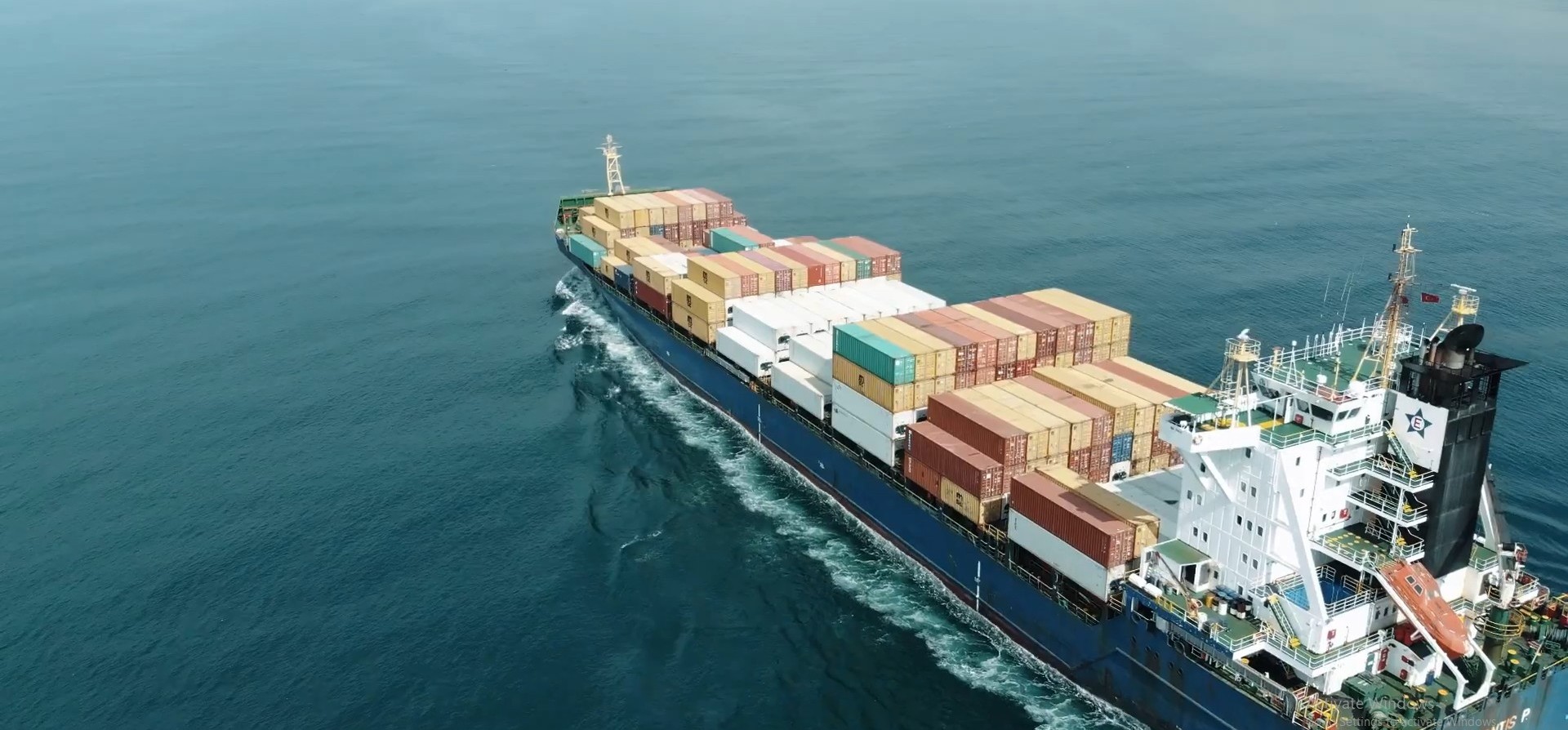
Euroseas has placed much of its future income beyond the immediate reach of a fall in containership rates, securing contracts for more than 95 per cent of its available fleet days for the remainder of 2026.
Coverage remains high further ahead, standing at 81 per cent for 2027 and 47 per cent for 2028, giving the Nasdaq-listed shipowner considerably greater certainty over its cash flows during the next two and a half years.
The company also has a direct connection with Cyprus. Its 21-vessel fleet includes the Synergy Oakland and Synergy Keelung, two 4,253-teu containerships sailing under the Cyprus flag, according to Euroseas’ fleet records.
The Synergy Oakland is chartered at $33,500 per day until March 2029, while the Synergy Keelung is earning $35,500 per day until June 2028, making the two Cyprus-flagged vessels part of the company’s longer-term revenue protection.
That forward cover was accompanied by another strong quarter. According to the company’s financial results, profit attributable to controlling shareholders rose to $33.2 million in the second quarter of 2026, from $29.9 million a year earlier.
Adjusted earnings before interest, tax, depreciation and amortisation increased to $40.1m, compared with $39.3m in the corresponding quarter of 2025.
Revenue, however, edged 1.2 per cent lower to $56.5m, largely because Euroseas operated an average of 21 vessels during the quarter, against 22 a year earlier.
The smaller fleet was partly offset by higher charter rates. Its average time charter equivalent rate increased by 3 per cent to $30,306 per vessel per day, from $29,420 in the second quarter of last year.
Profitability also benefited from the absence of vessel drydockings. Euroseas recorded only $0.2m in related costs for supplies ahead of future work, compared with $1.7m in the same quarter of 2025.
Aristides Pittas, chairman and chief executive, said the first two quarters of 2026 were “two of our most profitable consecutive quarters of the last fifteen years”, supported by “solid contracts at highly profitable rates” and low drydocking expenses.
On the company’s forward book, Pittas said the level of charter coverage would keep profitability strong “regardless of the levels at which expiring charters are renewed”.
For the first half of 2026, Euroseas recorded revenue of $112.3m and profit attributable to controlling shareholders of $65.7m. Adjusted EBITDA climbed to $81m, from $76.4m a year earlier.
The company is also using the strong market to accelerate the renewal of its fleet. Its newbuilding programme now covers 12 feeder and intermediate containerships, with deliveries scheduled between the third quarter of 2027 and the first quarter of 2029.
Four of those vessels have already secured employment extending into 2031 and 2032 at $35,500 per day, adding another layer of contracted income as the new ships enter service.
The investment is concentrated on smaller containership categories, where Euroseas believes the global orderbook is less threatening and the existing fleet is older than in the market for the largest vessels.
Management nevertheless acknowledged the risks. A return to regular Red Sea and Suez Canal sailings would reduce the longer routes that are currently increasing demand for ships, while the delivery of new vessels across the wider market could place pressure on charter rates.
Alongside its fleet investment, Euroseas maintained its quarterly dividend at $0.80 per share, payable on September 16 to shareholders on record on September 9.
By August 13, it had also repurchased 480,460 shares, equivalent to around 6.8 per cent of its outstanding stock, for a total of $11.36m.




Click here to change your cookie preferences