
The leaders of the European Union’s ‘Med9’ states on Wednesday called for both a comprehensive solution to the Cyprus problem and “mutually beneficial” relations with Turkey as they met in the Croatian seaside city of Split.
A joint declaration issued by the attending leaders stated that “we reiterate our commitment to a comprehensive settlement of the Cyprus question within the United Nations framework, as defined by the relevant UN security council resolutions”.
“The Cyprus issue is a European one. We express appreciation for the efforts of the UN secretary-general, including his recent visit to Cyprus, and welcome his intention to convene an enlarged meeting with all parties aimed at resuming negotiations within the agreed framework, based on the existing body of convergences,” it said.
It added that the nine leaders welcomed the European Commission’s appointment of Raffaele Fitto as its Cyprus problem envoy.
“Turkey’s concrete contribution to the swift resumption and successful conduct of negotiations remains crucial and is a key element in advancing EU-Turkey relations in line with the April 2024 European Council conclusions,” it said.
Those conclusions state that “the European Union attaches particular importance to resumption of and progress in the Cyprus settlement talks in further enhancing EU-Turkey cooperation”.
Wednesday’s joint declaration also said that the attending leaders “maintain that avoiding unilateral actions – including those in Varosha and along the ceasefire line – is essential to creating an environment conducive to the resumption of talks”.
Away from the Cyprus problem, the leaders said regarding the eastern Mediterranean region that they “underline the EU’s strategic interest in ensuring a stable and secure environment”.
Leaders call for ‘mutually beneficial relationship’ with Turkey
On this front, it said that the EU maintains an interest in “developing a cooperative and mutually beneficial relationship with Turkey in line with established conditionalities”.
“Turkey’s constructive engagement remains important in advancing the various areas of cooperation. In this context, refraining from unilateral actions in breach of international law and respecting the sovereignty and sovereign rights of EU member states [is] essential,” it said.
To this end, it added that “issues must be resolved by peaceful means and in full respect for international law, including the [UN convention on the law of the sea (Unclos)]”.
Reference was also made in the joint statement to Cyprus’ efforts to join Europe’s border-free Schengen zone, with the leaders “reiterating the importance of further strengthening the Schengen area with a view to Cyprus’ accession”.
Hope expressed for Cyprus to join Schengen area
“We welcome the positive outcome of the commission’s … Schengen country report of Cyprus and the start of the relevant discussions in the Council of the European Union,” it said, though Cyprus’ potential Schengen accession did not feature on the agenda of the most recent justice and home affairs (JHA) council summit last week.
Nonetheless, the statement said that the leaders “look forward to the timely completion of the remaining steps, recognising that Cyprus’ full participation will strengthen the Schengen area’s collective capacity and security”.
Additionally, the statement welcomed the establishment of the regional firefighting hub in Cyprus, describing it as an “important first contribution at [a] regional level to strengthening preparedness for and response to increasingly severe wildfires in the Mediterranean”.
The Med9 consists of the EU’s eight member states which have Mediterranean coastlines – Croatia, Cyprus, France, Greece, Italy, Malta, Slovenia, and Spain – and Portugal.
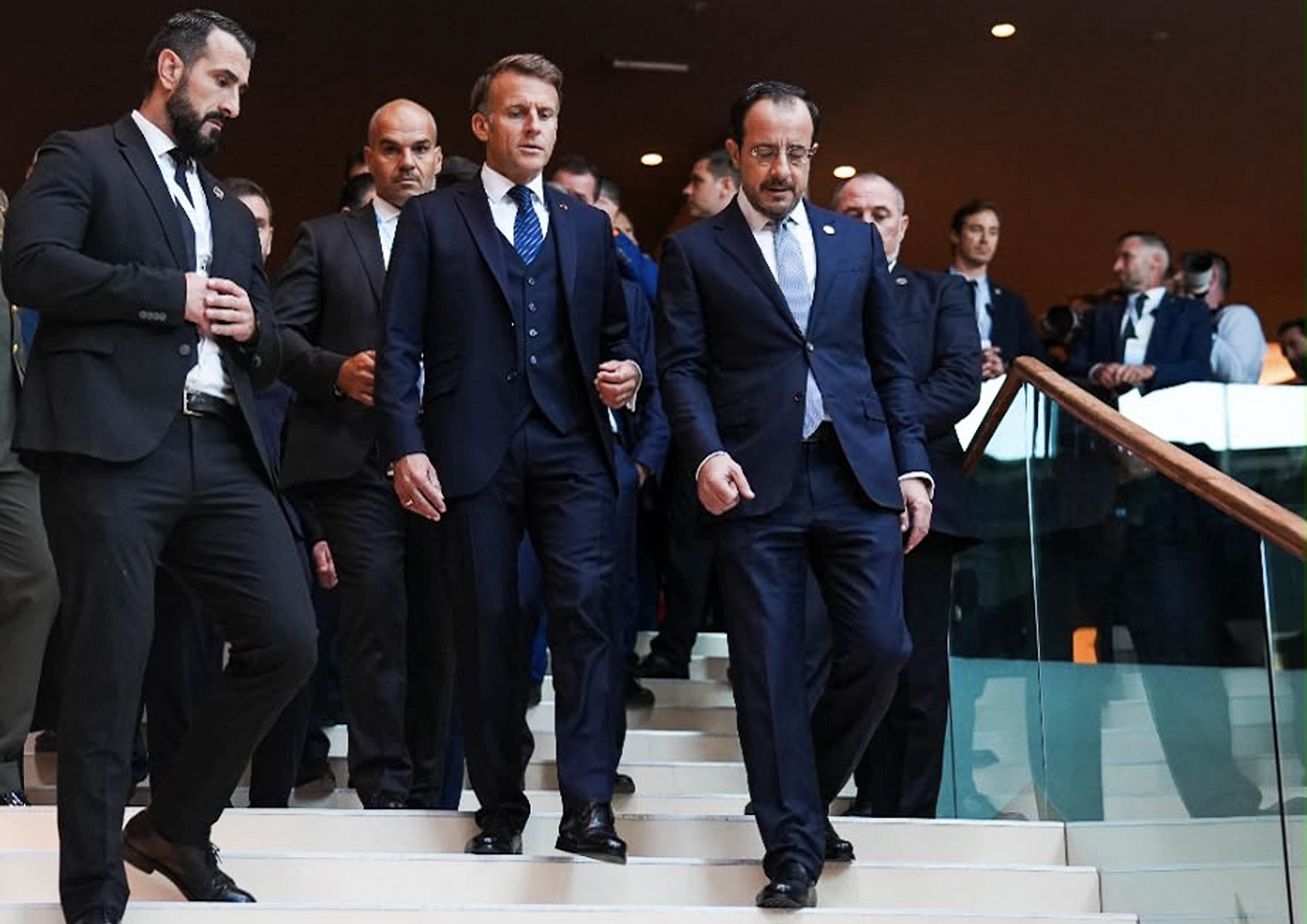
President Nikos Christodoulides represented the Cypriot government at the summit, and was joined in Split by Croatian Prime Minister Andrej Plenkovic, French President Emmanuel Macron, Greek Prime Minister Kyriakos Mitsotakis, Italian Prime Minister Giorgia Meloni, Maltese Prime Minister Robert Abela, Portuguese Prime Minister Luis Monteegro, and Slovenian Prime Minister Janez Jansa.
Spanish Prime Minister Pedro Sanchez did not attend the summit, having called a snap general election on Monday. In his stead, he sent his secretary of state for the European Union Fernando Sampedro.
In addition to the attendees representing those nine countries, the summit was also attended by Monaco’s Prince Albert II, Crown Prince Hussein of Jordan, European Commission President Ursula von der Leyen, and European Council President Antonio Costa.


Click here to change your cookie preferences