
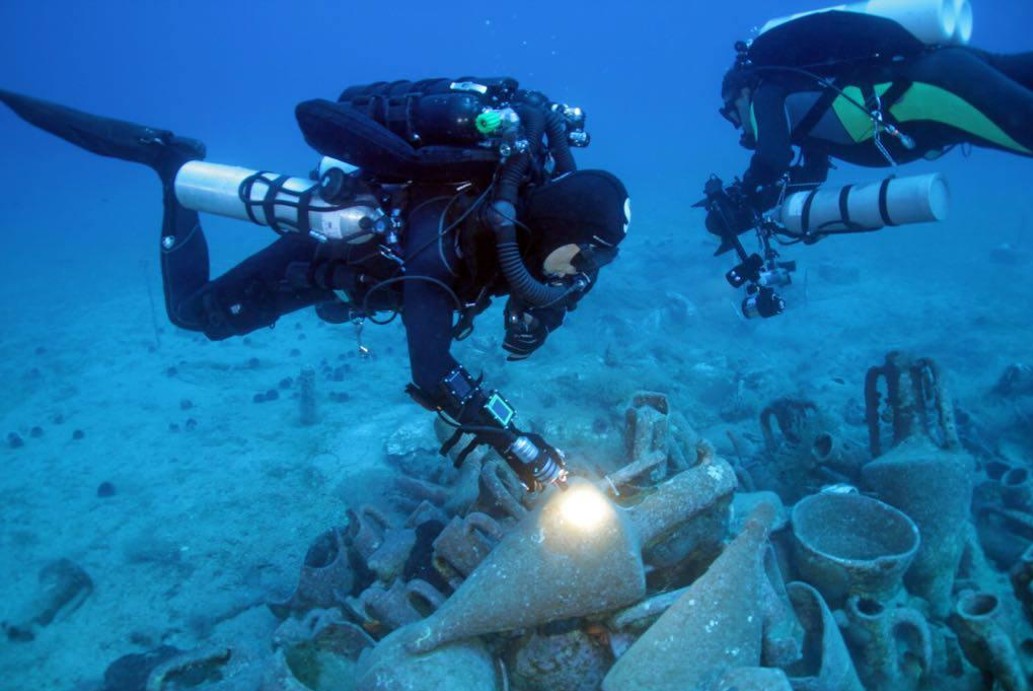
The wreck of the Napried is just one of several at the centre of an archaeological row
More than 150 years after she disappeared beneath the waves, the Napried holds a mythological status in the world of underwater archaeology.
The ship was carrying thousands of ancient artefacts excavated in Cyprus by Luigi Palma di Cesnola, the American consul whose plunder of antiquities from the island helped disperse a substantial part of Cyprus’ archaeological heritage abroad.
Napried Exploration, established specifically to search for the wreck, says its objective is to locate the vessel, recover the antiquities and return them to Cyprus.
“Ideally, I’d wish to see the ship and its holdings brought to the surface and serve as an exhibition piece in Cyprus,” founder Dr Charles Mazel told the Cyprus Mail.
While advances in deep sea technology have transformed what was once an impossibility in terms of recovery, the question is now focused on whether the wreck should remain buried in her watery grave or whether Cyprus should attempt to recover one of the island’s greatest lost collections.
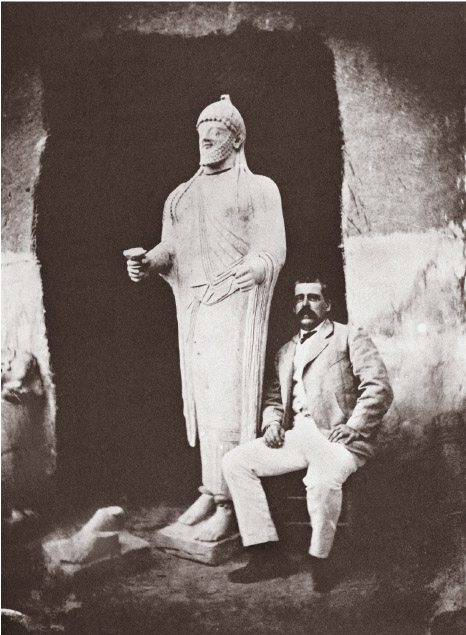
The methods of Cesnola, who later became the first director of the Metropolitan Museum of Art in New York, have subsequently attracted widespread criticism, with some viewing his activities as closer to antiquarian looting than archaeological excavation.
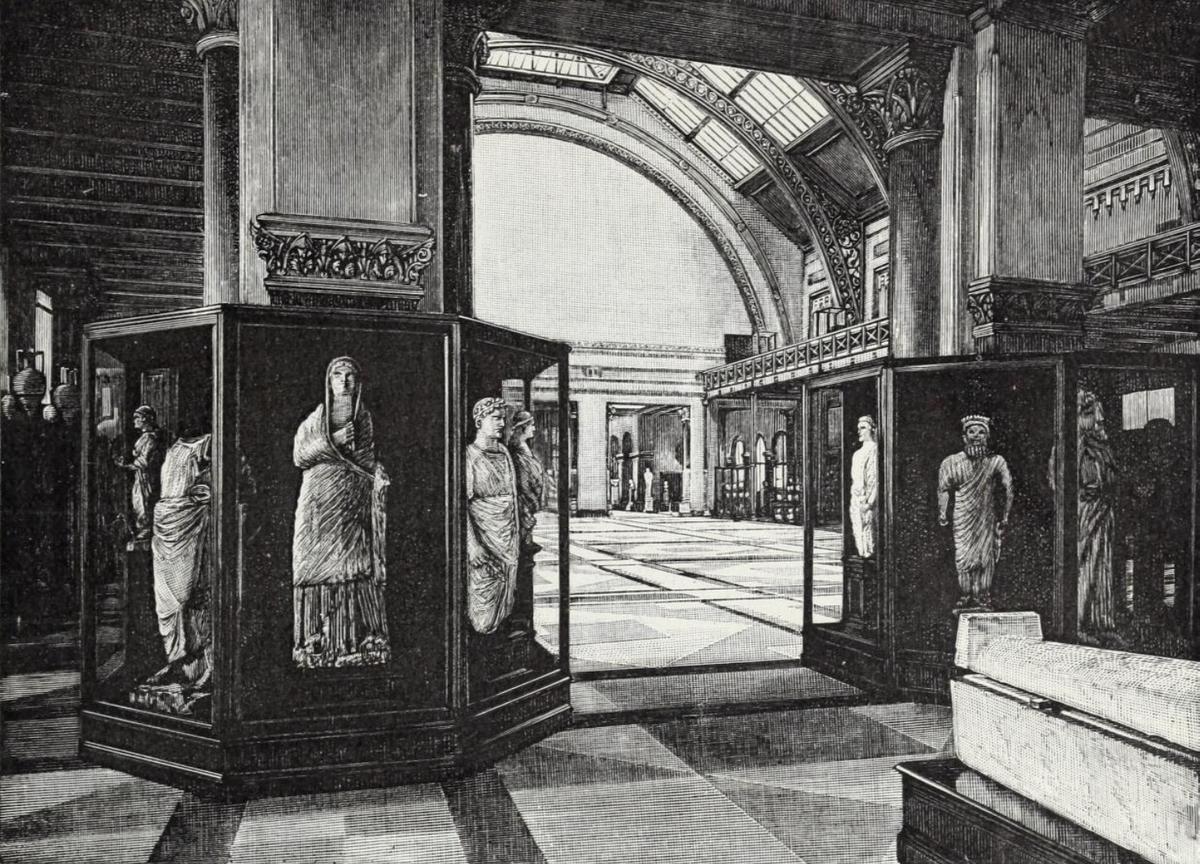
The Napried’s cargo represented only part of the collection he amassed, much of which ultimately reached New York, including 275 crates acquired by the Metropolitan Museum, whose surviving holdings include more than 6,000 works from Cyprus.
Bound from Beirut to Boston, the collection was lost when the vessel sank after catching fire in 1872.
Interest in the Napried has persisted amongst historians, nautical enthusiasts as well as private exploration groups.
Napried Exploration argues that although Cesnola may have operated legally under Ottoman law, modern archaeological ethics favour the repatriation of cultural heritage wherever possible.
Mazel described the search for the wreck as a decades long personal project and argued the vessel represents one of the clearest examples of the loss of Cypriot cultural heritage.
He believes recovering the wreck would ultimately be less about the commercial value of its cargo than the symbolic return of antiquities removed from the island during the19th century.
“It would stand as a powerful symbol of the repatriation of Cypriot antiquities,” he said.
Maritime archaeologist Stella Demesticha, associate professor at the University of Cyprus and director of its Maritime Archaeological Research Laboratory, said an attempt to locate the vessel would require careful consideration.
“In theory, an effort to locate the ship could certainly be explored,” she said.
“However, anything over 50 to 100 metres in depth is rather difficult to operate within. One has to employ machines and technology to survey such depths.”
For Demesticha, however, the central issue is not whether modern equipment can reach the wreck.
“The question is rather why one would invest such energy into an undertaking to locate this ship?” she said.
Mazel himself cautioned that any future recovery would indeed face practical challenges.
Around 4,800 antiquities packed into 62 crates were on board when the vessel sank, many already removed from their archaeological context before they ever left Cyprus.
He explained that with the fire that broke out aboard the vessel before it sank, coupled with more than 150 years on the seabed, both the condition of the ship and its cargo remain unknown.
Modern underwater archaeology has increasingly moved away from the idea of shipwrecks as sources of valuable objects to be recovered, but rather as archaeological sites whose importance lies in the information preserved beneath the seabed.
“Antiquities cannot be viewed as commercial objects with monetary value,” Demesticha insists. “Their value is priceless as part of our cultural heritage.”
Veteran technical diver Spyros Spyrou, one of Cyprus’ most experienced deep-water divers, sees the shipwreck through a markedly different lens.
Having spent decades working on underwater sites, he argues that the technology required to locate the Napried already exists and that the greater challenge is securing the capital needed for such an undertaking.
Heralding from Kalymnos, a Greek island with a centuries-old sponge diving tradition, Spyrou trained at the Historical Diving School under Jim Hutchinson, a former Royal Navy frogman who specialised in recovering Enigma encryption equipment from sunken German submarines.
He later received specialist archaeological training through a scholarship supported by the antiquities department, the Honor Frost Foundation and the Nautical Archaeology Society, a programme designed to connect underwater archaeologists with experienced technical divers capable of operating at greater depths.
Spyrou played a key role in the excavation of the Mazotos shipwreck off the Larnaca coast, discovered in 2006, a fourth-century BC merchant vessel lying some 45 metres beneath the surface.
The project has been directed by Demesticha and conducted by MARELab in collaboration with the antiquities department.
“I was surveying the site, recovering amphorae up to the surface and helped hide the ancient wreck from looters,” he said.
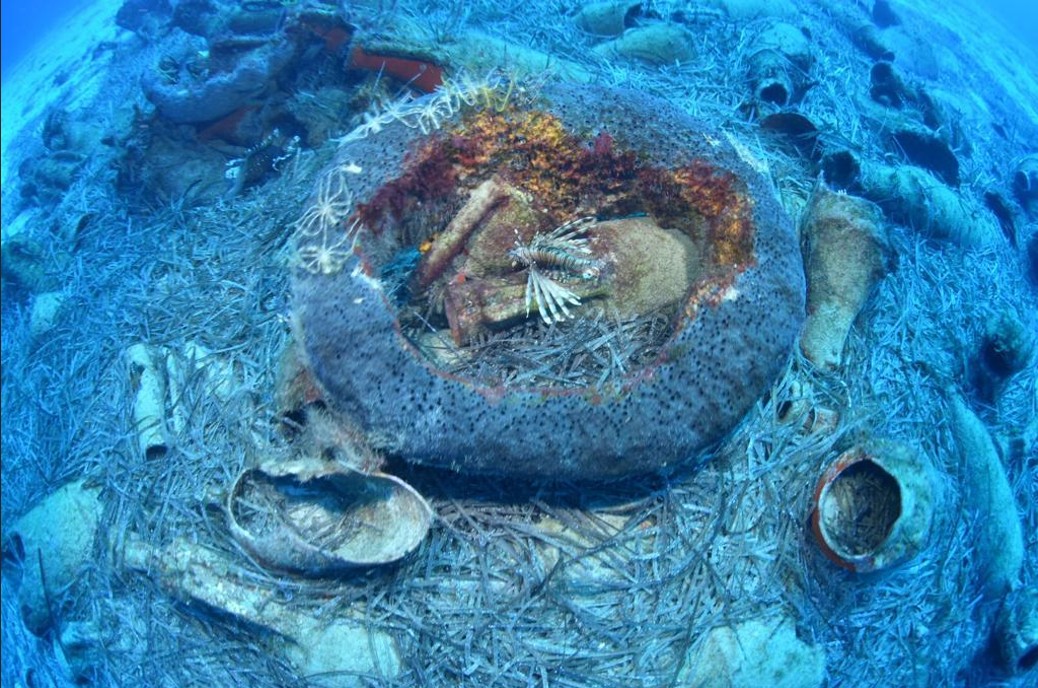
Then, in 2019, Spyrou and fellow volunteer diver Andreas Kritios themselves discovered a separate Roman shipwreck off Protaras. The antiquities department described it as Cyprus’ first undisturbed Roman shipwreck, still containing amphorae after almost 2,000 years underwater.
Those experiences have convinced him that locating the Napried is no longer beyond reach.
“With modern drone technology, now that most of the Levantine basin has been scanned and surveyed, such machines can go to extreme depths and trawl the ocean floor,” he explained. “It is then of course an entirely possible endeavour.”
For Spyrou, the obstacle is not the sea floor, but the resources required to search it.
“There are indeed billionaires with the equipment, the private collections, and most of all the intent on finding the Napried and its artefacts,” he said.
The capabilities available to private enterprises have transformed what is possible beneath the sea.
Even so, Mazel questioned whether the financial return alone would justify such an undertaking.
He suggested many of the artefacts themselves may hold limited commercial value as they have been in effect taken out of their context rather than preserved within their original archaeological setting, making the wider historical significance of the wreck itself potentially greater than its cargo.
Equipment originally developed for offshore oil and gas exploration is now routinely used to map vast areas of seabed with centimetre accuracy, while remotely operated vehicles can descend thousands of metres, transmitting high-definition images to research vessels on the surface.
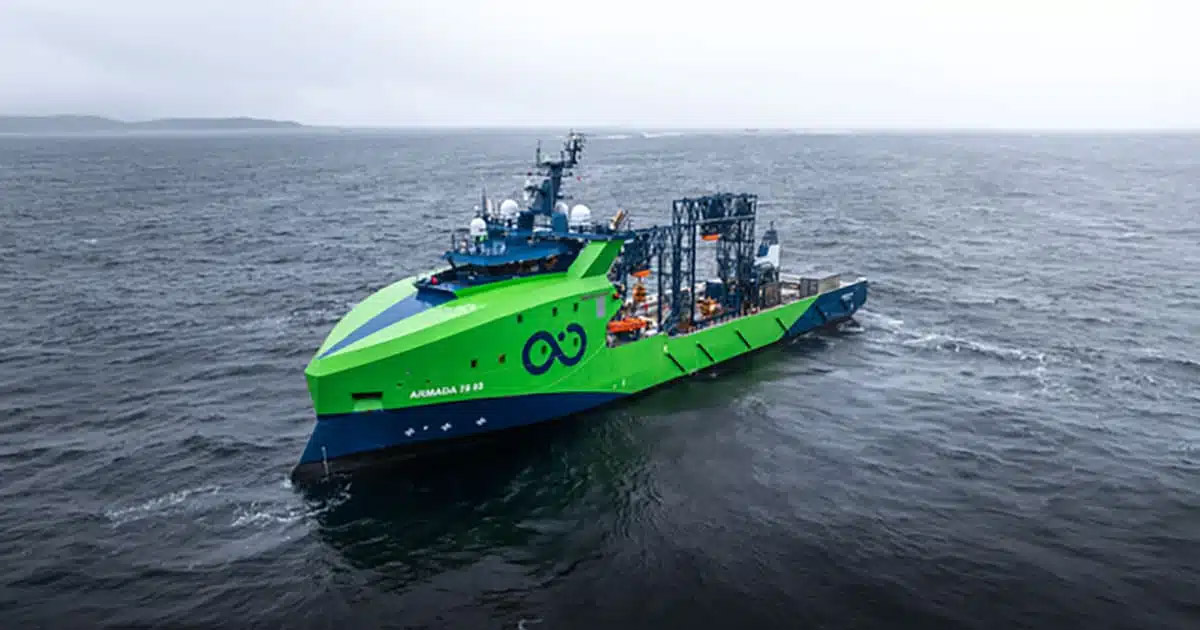
In 2019, police and the antiquities department launched an investigation after receiving information that marine robotics company Ocean Infinity had been conducting deep sea searches for historic shipwrecks, including the Napried, within Cyprus’ exclusive economic zone.
The case demonstrated quite clearly that interest in the wreck extends well beyond academic circles and that privately funded expeditions equipped with sophisticated technology may reach such sites before archaeologists do.
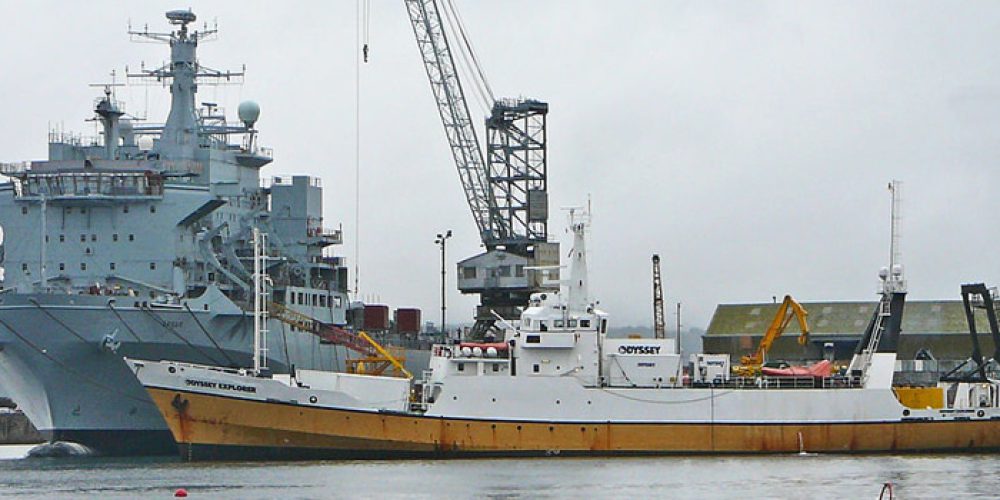
Another prominent dispute centred on Odyssey Marine Exploration, one of the world’s best known commercial deep sea exploration companies.
Odyssey investigated a 17th century Ottoman merchant vessel in Lebanese waters before artefacts recovered during the operation were confiscated by Cypriot customs after the research vessel entered Limassol.
The company maintained the excavation had been archaeological in nature and that the dispute stemmed from an administrative misunderstanding relating to cargo declarations.
The antiquities department has consistently maintained the recovery took place without the necessary archaeological authorisations.
The department told the Cyprus Mail that any coastal or underwater archaeological work within Cyprus’ waters is governed by the antiquities law and remains subject to its supervision throughout every stage of a project.
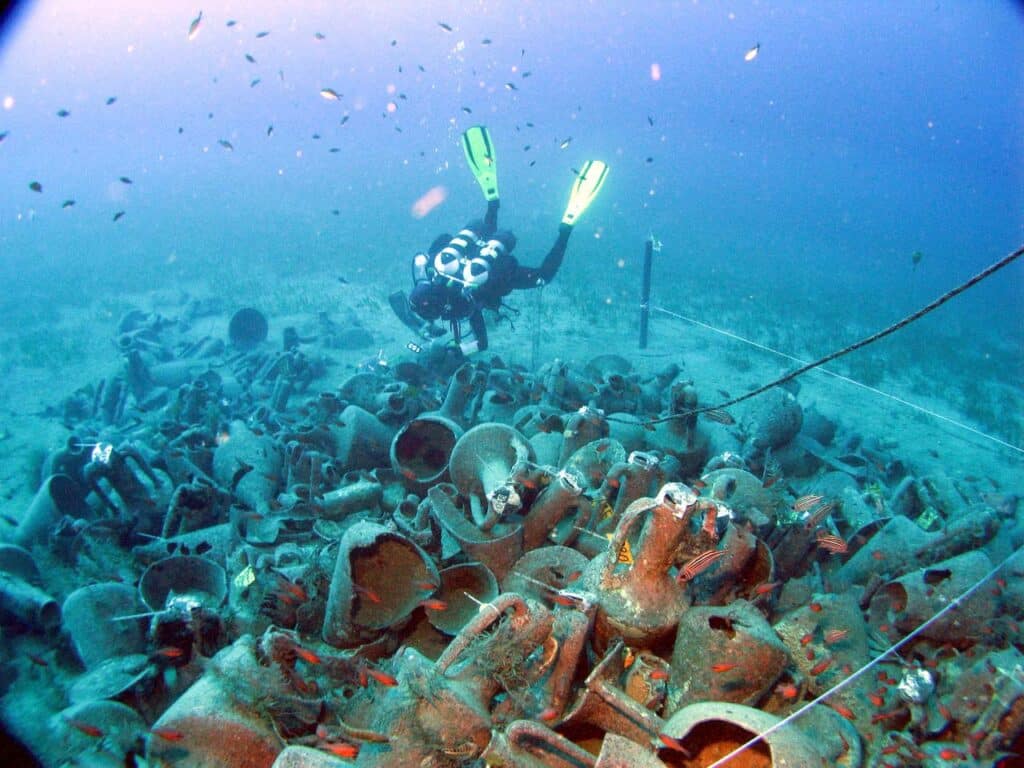
Before any excavation or development can proceed, a preliminary archaeological investigation must be carried out under the supervision of a qualified archaeologist, with all findings submitted to the department for assessment.
Any approval for maritime research or development ultimately depends on compliance with those requirements and the outcome of archaeological assessment.
For Spyrou, however, these cases illustrate the present reality that archaeology cannot ignore.
He argues that the technology, specialist vessels and the sheer capital needed for projects of this scale increasingly lie outside universities and government departments.
“If the state insists on working entirely alone, there are projects that simply will never happen.”
Spyrou believes Cyprus has already missed an opportunity to build a centre dedicated to the island’s maritime heritage.
He recalls that a Ukrainian antiquarian who had assembled an extensive collection of artefacts recovered from shipwrecks approached him to coordinate with the antiquities department for a proposal to salvage the Roman wreck Spyrou had discovered, donate the collection and establish a maritime archaeology museum in Cyprus.
According to Spyrou, the proposal included keeping both the collection and the vessel permanently on the island.
“They had all the finances and the means to establish a museum here in Cyprus, but the department refused,” he said.
“We lost the opportunity to create something unique. Instead of finding a way to work together under strict conditions, the proposal was rejected outright.”
Demesticha herself, however, refutes that approach entirely.
“Collaboration with treasure hunters is out of the question,” she said.
“We could not surrender part of our cultural heritage in some exchange, as this again creates the narrative of these objects holding monetary value.”
The divide reflects a presiding culture within underwater archaeology over the past half century.
Shipwrecks are no longer viewed as collections of recoverable artefacts but as archaeological sites themselves.
The 2001 Unesco Convention on the Protection of the Underwater Cultural Heritage reflects that same philosophy, encouraging submerged archaeological sites to remain in situ wherever possible.
Spyrou accepts the need to protect archaeological heritage but believes refusing to engage with the private sector risks ensuring the Napried remains beyond reach indefinitely.
For him, the technology already exists. The question is whether Cyprus is prepared to embrace a model of cooperation that many archaeologists reject.
“The only way the Napried or its cargo can be recovered is with the assistance of private contractors, who will of course want at least either some part of her holdings, or a share in a potential museum that could be established,” he said.
“Is this not the case with our natural gas or oil resources? We require private enterprise to extract the resources and we get a cut. In principle it should be the same, otherwise it’ll only be the fish who get to appreciate our history.”





Click here to change your cookie preferences