
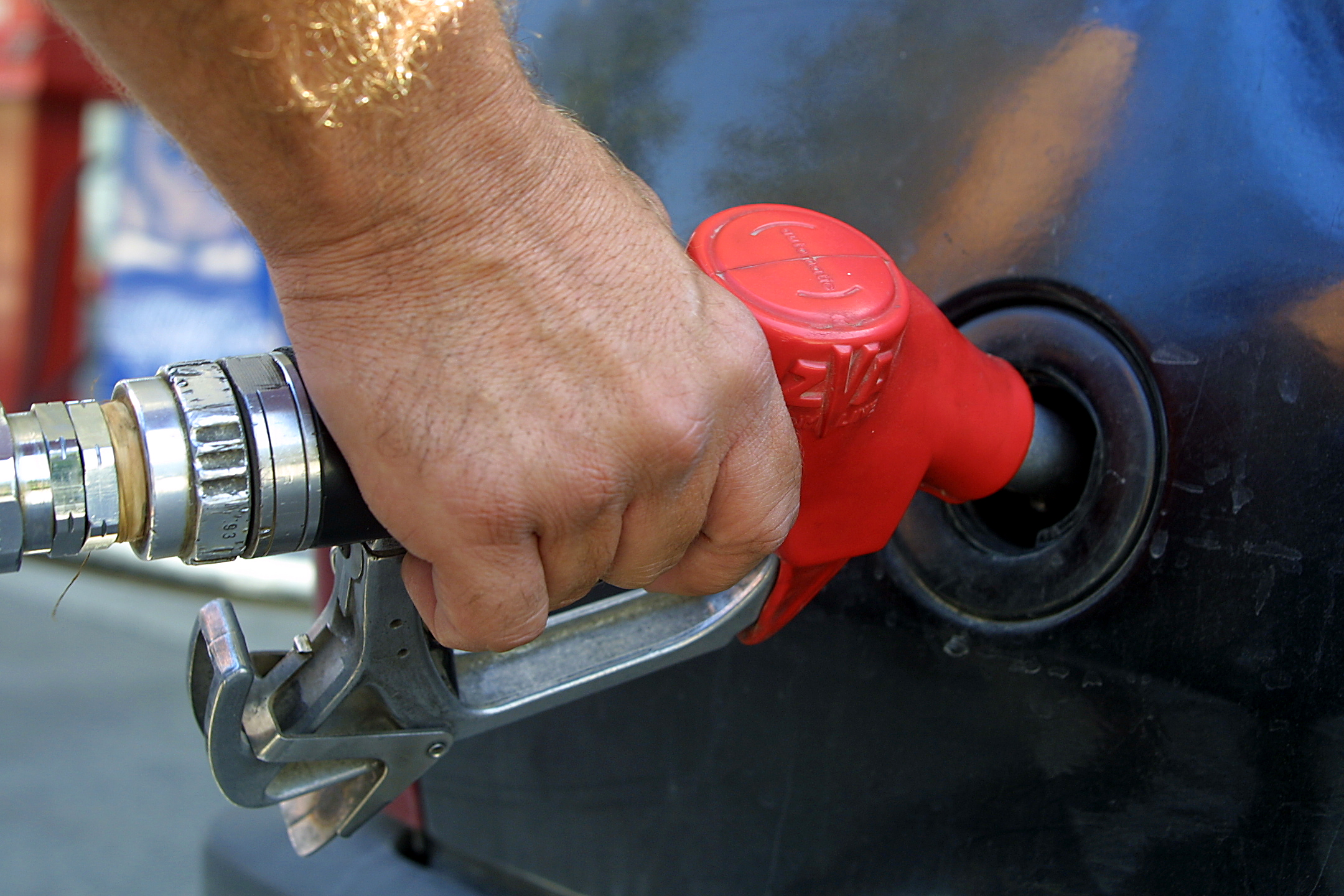
Cyprus’ petroleum product sales returned to annual growth in July, rising 1.3 per cent to 146,656 tonnes, according to figures released on Thursday by the state statistical service (Cystat). The result marked a clear turnaround from June, when sales fell 8 per cent year on year to 129,479 tonnes, while the monthly comparison was even stronger, with July sales increasing by 13.3 per cent.
The return to growth came during a month in which Cyprus’ fuel price growth slowed considerably, although prices remained higher than a year earlier. According to Eurostat, fuels and lubricants for personal transport were 9.9 per cent more expensive in Cyprus in July than in the same month of 2025, down sharply from annual increases of 18.6 per cent in June and 20.5 per cent in May.
Across the EU, by comparison, prices rose 16.9 per cent year on year, meaning Cyprus recorded a considerably smaller increase than the bloc as a whole. The island also registered some of the EU’s largest monthly price declines between June and July, with diesel prices falling 7.9 per cent, the steepest drop in the bloc, while petrol prices decreased 5.4 per cent, behind only Sweden’s 11.1 per cent fall.
Cystat recorded annual increases across most petroleum product categories. The sharpest percentage rise was seen in heavy fuel oil, where sales surged 166.9 per cent to 1,572 tonnes, while kerosene sales almost doubled, rising 93.6 per cent to 91 tonnes, albeit from a relatively low base.
Strong growth was also recorded in gasoil for agricultural use, where sales climbed 44.0 per cent to 2,283 tonnes, while light fuel oil increased 20.1 per cent to 5,551 tonnes. This was followed by liquefied petroleum gas, up 7.3 per cent to 3,928 tonnes, and unleaded motor gasoline, which rose 6.2 per cent to 34,129 tonnes.
Road diesel sales also increased, reaching 35,945 tonnes following annual growth of 5.5 per cent, while asphalt sales rose 4.4 per cent to 4,840 tonnes. In volume terms, however, aviation kerosene remained the largest individual category during the month, with provisions increasing 3.2 per cent to 41,993 tonnes.
Marine gasoil moved firmly in the opposite direction, with provisions falling 35.3 per cent to 11,786 tonnes. Heating gasoil sales were broadly unchanged at 4,189 tonnes, down just 0.1 per cent, while lubricant sales remained steady at 347 tonnes and aviation gasoline sales were unchanged at only two tonnes.
The monthly comparison presented an even stronger picture across several of the largest categories. Aviation kerosene provisions increased 25.1 per cent from June, while road diesel sales rose 13.3 per cent and motor gasoline sales increased 10.4 per cent. Marine gasoil was again the exception, with provisions falling 25.9 per cent from the previous month.
At the same time, petroleum product stocks increased 14.3 per cent at the end of July compared with the end of June. This reversed the 19.6 per cent monthly decline recorded in stocks at the end of the previous month.
The improvement was also evident at filling stations, where sales reached 66,187 tonnes, up 5.9 per cent from 62,497 tonnes in July 2025. Unleaded motor gasoline remained the largest category, with sales rising 6.2 per cent to 33,748 tonnes, while road diesel followed at 28,290 tonnes after increasing 4.2 per cent.
Together, petrol and road diesel accounted for more than 93 per cent of all filling-station sales during the month. However, the largest percentage increases were recorded in lower-volume categories, with kerosene sales rising 74.2 per cent to 54 tonnes and agricultural gasoil increasing 41.9 per cent to 1,631 tonnes.
Elsewhere at filling stations, lubricant sales climbed 11.3 per cent to 158 tonnes, while heating gasoil increased 2.9 per cent to 2,266 tonnes. Light fuel oil was the only category to decline, falling 16.7 per cent to 40 tonnes.
Looking beyond the monthly figures, total petroleum product sales during the first seven months of 2026 reached 880,590 tonnes, up 1.2 per cent from 870,170 tonnes during the corresponding period of 2025. Although marine gasoil fell sharply in July, it recorded the strongest growth over the seven-month period, with provisions increasing 20.5 per cent to 108,980 tonnes.
This was followed by asphalt, where sales rose 12.4 per cent to 25,543 tonnes, while kerosene increased 8.4 per cent to 6,628 tonnes and lubricant sales climbed 8.2 per cent to 2,149 tonnes. Liquefied petroleum gas sales were also 3.3 per cent higher at 35,875 tonnes, while motor gasoline increased 2.5 per cent to 201,950 tonnes.
Growth among the other major categories was more modest. Heating gasoil sales rose 0.8 per cent to 50,955 tonnes, road diesel edged up 0.4 per cent to 208,761 tonnes and aviation kerosene increased 0.3 per cent to 185,931 tonnes.
Several categories nevertheless remained weaker over the seven-month period. Light fuel oil recorded the largest decline, falling 37.0 per cent to 31,598 tonnes, while aviation gasoline dropped 25.0 per cent to nine tonnes. Heavy fuel oil sales were 7.7 per cent lower at 8,575 tonnes, despite their sharp increase in July, while agricultural gasoil fell 1.2 per cent to 13,636 tonnes.
Filling-station sales during the January-to-July period reached 410,520 tonnes, representing annual growth of 1.3 per cent. Within this total, unleaded motor gasoline sales rose 2.4 per cent to 199,925 tonnes, while kerosene increased 9.2 per cent to 4,897 tonnes.
Agricultural gasoil sales were 1.0 per cent higher at 9,455 tonnes, while heating gasoil increased 2.5 per cent to 29,996 tonnes and lubricants rose 6.4 per cent to 860 tonnes. By contrast, road diesel sales through filling stations edged down 0.3 per cent to 165,099 tonnes, while light fuel oil fell 9.4 per cent to 288 tonnes.
Although fuel prices fell during July, that decline did not continue into August. According to the Consumer Protection Service’s latest weekly bulletin, the average price of unleaded 95 petrol reached €1.595 per litre on August 17, while diesel stood at €1.804 per litre. Both prices nevertheless remained below the corresponding EU averages of €1.924 for petrol and €2.033 for diesel.
Based on the first three weekly readings of August, the average petrol price in Cyprus increased by 9.8 cents per litre, or 6.62 per cent, compared with July. Diesel recorded an even steeper increase, rising by 16.7 cents per litre, or 10.48 per cent.
Despite the renewed increase, the consumer protection service said in a separate official assessment that Cyprus had recorded smaller fuel price increases than the EU average between February and August. Petrol prices rose by 27 cents per litre in Cyprus, compared with 29 cents across the EU, while diesel increased by 36 cents in Cyprus against an EU rise of 44 cents.
Explaining the movement in pump prices, the service said that “the final cost paid by consumers is shaped by several factors, including the purchase price of petroleum products, existing stocks, insurance, transport, storage and distribution expenses, taxation, competition and international benchmark prices.”
It added that “the time between the purchase, import, storage and eventual sale of a fuel shipment must also be considered when comparing movements in international oil prices, with prices at the pump.”




Click here to change your cookie preferences