
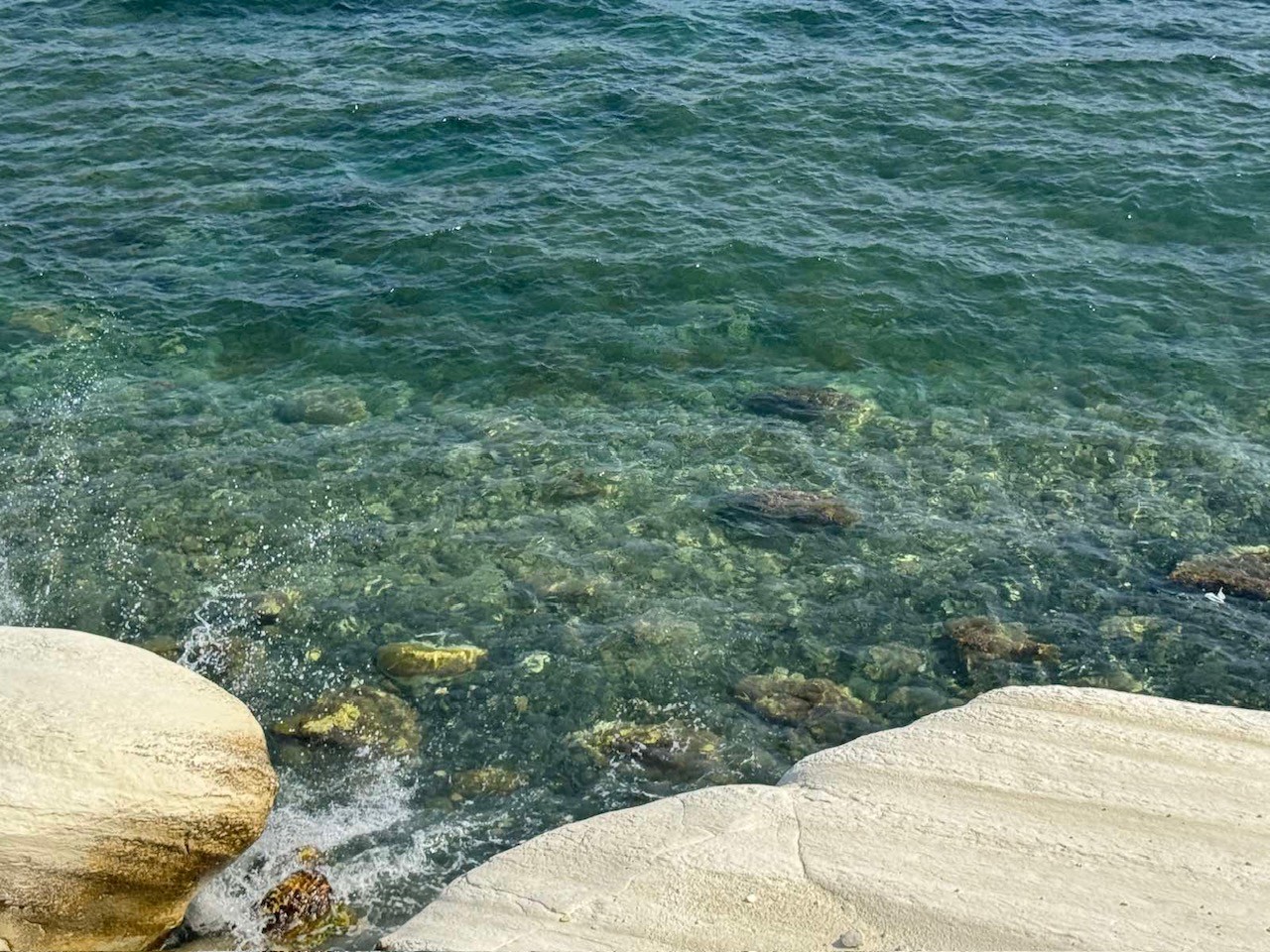
Disy and Akel on Friday called on the government to provide answers over recurring sea pollution concerns in Limassol, demanding greater transparency over laboratory findings and action to identify and tackle possible sources.
The statements follow a broad meeting held in Limassol on Thursday under Deputy Shipping Minister Marina Hadjimanolis, during which additional measures were agreed to strengthen inspections and improve the response to marine pollution incidents.
Hadjimanolis said Cyprus’ waters were clean, while the mayors of Limassol and Amathus raised concerns over repeated pollution incidents, calling on the state to assume its responsibilities and for the roles of the authorities involved to be clearly defined. Earlier this month, it was reported that sewage was overflowing into the sea at Moni in the Limassol district from the sewerage treatment plant.
In a statement issued by Disy’s government policy monitoring council, the party’s environment portfolio head Olympia Nisiforou said recent images and complaints from the Limassol seafront had caused “reasonable concern” and required clear answers.
She said it would be neither scientifically nor institutionally responsible to attribute the latest incident to any particular source before laboratory results were available, but added that it was equally problematic to treat each case as an unknown or unprecedented event.
“Marine pollution in Limassol has been investigated repeatedly for years,” Nisiforou said, pointing to previous studies, sampling, inspections and recorded incidents concerning different marine and land-based pressures.
“There is knowledge, there is data and there are previous findings. These must be made public.”
Disy said authorities should disclose exactly what had been detected and analysed, the full laboratory results and how they compared with findings from previous incidents and studies.
The party also called for clarification on which potential sources had been investigated and the evidence used to rule them out or keep them under consideration.
It further sought information on violations recorded over the years and subsequent action, enforcement of environmental and shipping legislation, and measures being taken to tackle pollution at its source rather than after it reaches the coastline.
Nisiforou cautioned against attributing pollution to natural phenomena or marine life without presenting evidence supporting such conclusions.
She also noted that the location where pollution appears along Limassol’s extensive coastline does not necessarily correspond with its source, as currents, wind and waves can transport material along the coast.
“What is needed today is not another announcement that the incident is being investigated,” she said, calling for the publication of results alongside previous studies and data.
Akel’s Limassol district committee separately accused the government of failing to adequately respond to growing public concern.
“The government cannot remain a spectator in the face of increasing public concern over marine pollution in Limassol,” the party said.
It pointed to complaints concerning foam, unpleasant smells, murky water, unidentified substances and waste along the coastline, saying these required immediate answers, effective inspections and transparency. Affected areas included Armonia beach in Ayios Tychonas, where a white substance covered the sea, while on August 15 people found themselves swimming among nappies, sanitary pads, waste materials and possible sewage or effluent.
Akel called for an end to what it described as delays and a piecemeal approach, saying that where there was a possibility of an impact on the environment and public health, people had a right to know what had happened, when authorities were informed, what laboratory analyses showed and what measures had been taken.
The party also raised questions over reports concerning the Moni wastewater treatment plant and the discharge of water into the sea through emergency pipelines.
It called on the government to provide full details about the reported incident “without evasions and without leaving room for doubt”.
Akel said all possible sources of pollution should be investigated and that the responsible authorities must have sufficient resources and personnel to respond immediately.
The recurrence of pollution incidents over the years showed existing mechanisms were inadequate, it added.
“The government must move from meetings to action,” Akel said, calling for a permanent response mechanism, stronger inspections and immediate public information.
“The sea of Limassol cannot be treated as a matter of secondary priority.”
Both parties called for a shift away from responding to pollution incidents individually towards identifying and addressing their underlying causes, while demanding the publication of evidence and greater accountability from the authorities.




Click here to change your cookie preferences