
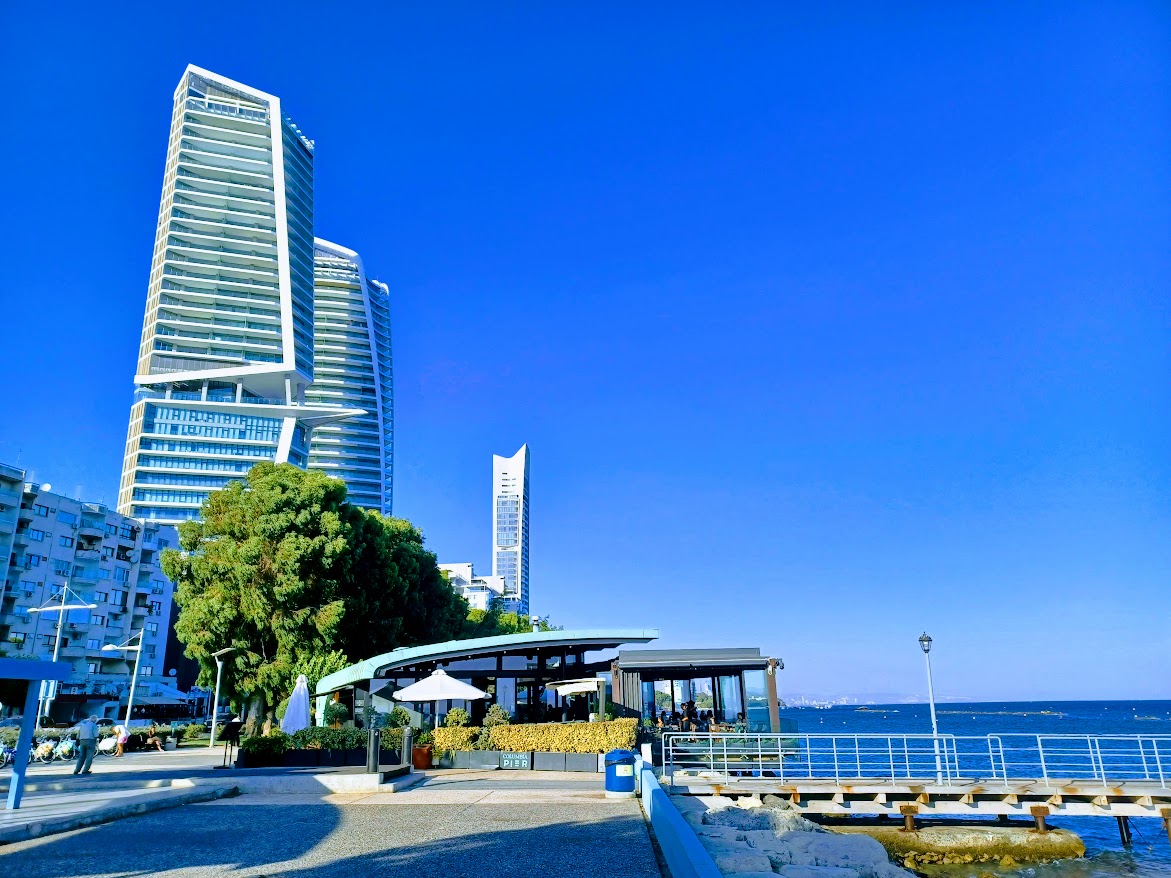
The sixth annual programme is being offered by the New York-listed company and its chief executive, Polys V. Hajioannou, under the company’s environmental, social and governance (ESG) policy.
The scholarships are open to Cypriot citizens, as well as Greek citizens permanently settled in Cyprus. They cover both students graduating from lyceums in Cyprus and those already attending universities in Greece, the United Kingdom and other countries abroad.
Recipients will be selected on academic merit and financial circumstances, with social criteria covering family or marital status and family income during the previous year.
Alongside his new responsibilities, he will remain chairman of the Cyprus Employers and Industrialists Federation (Oev), a position he assumed in May 2025.
Pantelides currently leads Deloitte Cyprus’ consulting businesses and serves as its chief strategy officer, while also sitting on Deloitte Middle East’s leadership team. His advisory experience spans local and international organisations, including work on mergers and acquisitions, business development and organisational transformation.
According to a statement from the authority, the meeting took place at its head offices, where the newly appointed minister was briefed on its strategic planning and development projects, with particular emphasis on upgrading Cyprus’ port infrastructure.
Discussions covered the prospects and planning for these projects, alongside their importance in strengthening infrastructure, improving the competitiveness of Cypriot ports and supporting the country’s sustainable development.
Tsolaki was also informed about the authority’s priorities and objectives, as well as progress in implementing its main development plans. She recognised the importance of the authority’s work on Cyprus’ ports and expressed her ministry’s support for the successful implementation of the planned projects.
During the visit to the chamber’s offices, Skourides presented the strategy to members of its Digitalisation Committee and heard their views on the proposals.
The chamber said it looked forward to continued cooperation with Skourides and the Deputy Ministry of Research, Innovation and Digital Policy towards its effective implementation.
The chamber’s Digitalisation Committee already examines technology and communications affecting shipping companies and vessel operations, including satellite links between ships and shore. The committee also follows the International Maritime Organisation’s (IMO) work on navigation, communications and search and rescue.
Christodoulides travelled to Astana in early June, making the first official visit by a Cypriot president to Kazakhstan.
In a post, the presidency said the two countries recognised “the significant prospects for concrete and tangible results”, highlighting opportunities for businesses in both markets.
It said Cyprus, as a member of the European Union and the eurozone with a stable business environment, could serve as a reliable gateway for Kazakhstan to the European market and the Eastern Mediterranean.
The Larnaca tourism board (Etap) said its action plan aims to strengthen year-round tourism, while emphasising the region’s distinctive identity and developing a more sustainable destination.
At Pervolia, the plans involve converting the lighthouse into a centre for marine knowledge, bringing together research, education and cultural activities.
An agreement announced in June 2025 involves the Cyprus Ports Authority (CPA), Dromolaxia-Meneou municipality, Etap and the Cyprus Marine and Maritime Institute (CMMI). The proposed lighthouse conversion includes interactive displays, exhibitions and workshops, with cameras and sensors intended to transmit live footage from the nearby seabed.
The overall industrial production index reached 117.6 units, against a base of 100 units established in 2021.
Across the first six months of 2026, industrial output rose by 1.2 per cent compared with the corresponding period of the previous year.
The manufacturing sector registered an annual increase of 0.6 per cent in June, while mining and quarrying recorded a stronger rise of 11.4 per cent.
Natalia Katona said that the project offers a three-way bargain, with up to 2.8 million tonnes of liquefied natural gas (LNG) a year expected from 2028. Cyprus gains an export route it cannot economically build alone, Egypt secures feedstock for infrastructure increasingly constrained by falling domestic production, and Europe gains another non-Russian source. However, the report cautions that technical, commercial and geopolitical risks could still derail the emerging corridor.
Egypt’s need for new gas sources is becoming urgent. Natural gas production fell 7 per cent year on year to 109.3m cubic metres a day in the second quarter of 2026, extending a decline that began after national output peaked in 2021. The deterioration remains concentrated in the offshore Mediterranean, while stronger production in the onshore Western Desert has been insufficient to reverse the trend.




Click here to change your cookie preferences