

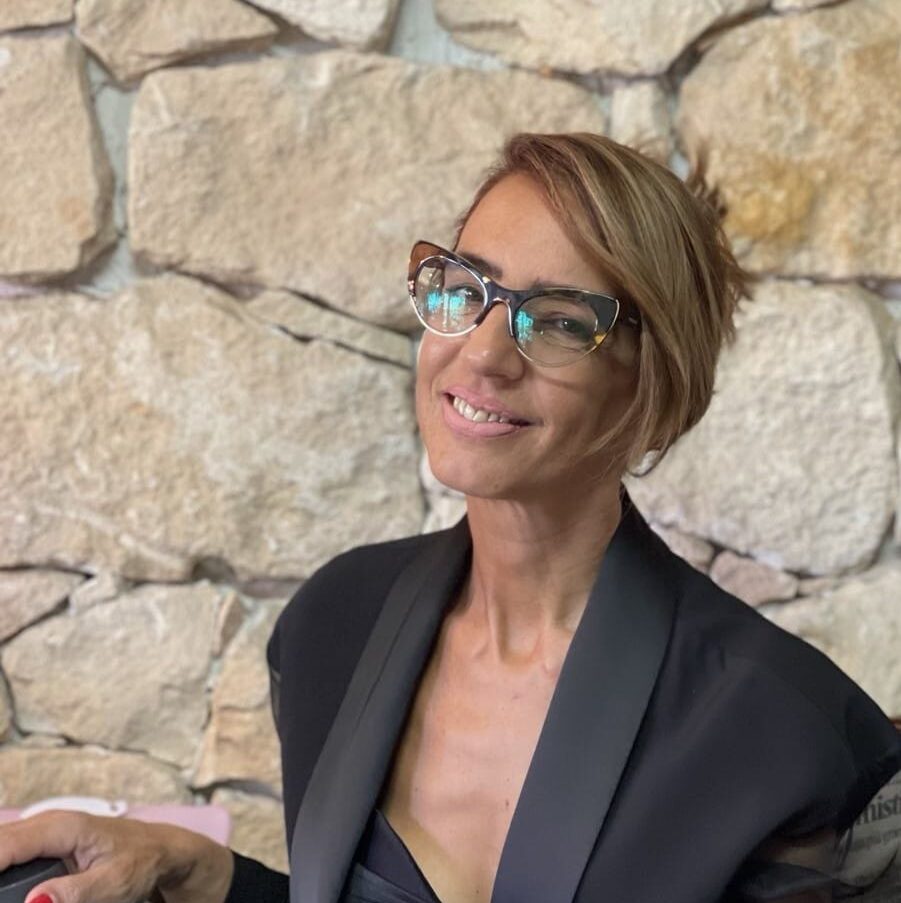
Cyprus should focus not on being the biggest in artificial intelligence, but on being “the most agile”, while placing citizens and trust at the centre of its ambitions, according to National AI Taskforce member Orfhlaith Ni Chorcora.
Ni Chorcora is a senior IT executive with more than 30 years of international experience, including senior roles at Oracle and Equinix. Her work has focused on digital transformation, ecosystem development and building strategic partnerships across Europe, the Middle East and Africa.
Commenting on the AI strategy, she said one of its ambitions is “to promote research and innovation using AI and to ensure Cyprus continues to hold its competitive position as an innovation hub in the Eastern Mediterranean”.
Central to the success of that vision, she explained, is the belief that such innovation thrives where there is a diverse ecosystem of players, including researchers, funders, founders, technology providers, innovation hubs and exceptional talent, combined with friendly regulation, ease of doing business and a culture of trust.
Ni Chorcora noted that “Cyprus is not new to ecosystems”, pointing to its impressive track record of nurturing a maritime ecosystem, a financial services ecosystem and, naturally, a tourism ecosystem, each an example of how to create optimal conditions for an ecosystem to thrive. In many respects, she added, “ecosystems are part of Cyprus’ DNA”.
This time, however, Cyprus is not leaving that to chance, as “it’s built into the strategy by design”. Ni Chorcora said the strategy establishes a Government Innovation Hub to allow ideas and requirements for sovereign capabilities to be prototyped and tested before they reach citizens, as well as an AI Industrial Centre of Excellence to carry innovation out of the laboratory and into real industry use and prepare for agentic AI adoption.
At the same time, Pharos-CY, the country’s AI Factory antenna, is designed to connect Cyprus to the wider European innovation network rather than build in isolation.
On the entrepreneurship side, Ni Chorcora said “there is genuine machinery behind the ambition too”, including startup incubation, shared testbeds and sandboxes, and structured industry-academia-government partnerships designed to turn research into companies, not merely papers.
However, she stressed that none of this functions as a mere checklist of institutions. Instead, “it only works if these bodies engage meaningfully with one another, and if founders, researchers and citizens trust that the doors being opened lead somewhere real”.
With the advent of AI, Ni Chorcora said Cyprus is called upon once again to create the right conditions and attract the diversity needed to thrive in the AI era. As she explained, “it is not about being the biggest – greatness can be short-lived in an era of high-speed innovation, but about being the most agile”.
This means attracting talent from abroad while nurturing home-grown talent to lead Cyprus through the next era of innovation and disruption. It is also about placing citizens at the centre of that ambition and building trust, “not only with external partners and providers but also with its own people”.
Moreover, Ni Chorcora said it is about building strategic partnerships, both within Cyprus and beyond its borders, to deliver on that strategic intent, including partnerships for infrastructure, service delivery, know-how, commercial terms and regulation.
According to Ni Chorcora, the openness and ease with which Cyprus nurtures its ecosystems can become a significant advantage, “but only if trust is built alongside them”.
An ecosystem, she said, is nothing without the players willing to plug into it, while researchers, founders and citizens will only do so if they trust the rules governing their data, their ideas and the way AI is used in decisions that affect their lives.
Trust, therefore, is not a separate theme running alongside the ecosystem story. Rather, she explained, “it is the condition on which the ecosystem depends”.
Ni Chorcora said citizen centricity and the building of trust, integral to that ecosystem mindset, were top of mind as the AI Taskforce published the strategy for consultation. A strategy, she continued, is ultimately “a direction of travel”, making it important to point the compass in the right direction.
At the same time, the strategy states intent and will become an important means of driving accountability for those tasked with implementing it.
Explaining what this could mean in people’s daily lives, Ni Chorcora said that, for one citizen, it may mean knowing that an AI-supported public service decision can be challenged. For another, it may mean knowing that an AI system used in a hospital has been properly tested and that a human remains accountable.
Meanwhile, for a young person entering the workforce, it may mean knowing that AI will expand rather than diminish their opportunities. While these may seem like very different concerns, she said they have something fundamental in common, namely “confidence that innovation is being developed and deployed with people, rather than simply for them”.
One clearly stated intent is that the strategy will be aligned with the EU AI Act. Ni Chorcora said people may be hearing a great deal about the legislation at present, noting that it is a key reference point in the Cyprus National AI Strategy 2032 “by design”.
Explaining why citizens should care, she said the Act, in essence, sets rules around how certain AI systems are developed and used, including requirements for transparency, human oversight and the protection of fundamental rights.
For citizens, this means greater assurance that AI is being introduced in ways that respect their rights and, in certain circumstances, give them meaningful information about how AI is being used in decisions that affect them. Ni Chorcora said the Act “places trust at the centre of AI deployment”, while the EU framework describes this ambition in terms of trustworthy AI.
This, she explained, is why the Taskforce focused on citizen-centricity in the strategy, as “it is the people of Cyprus, not the technology, that must be at the centre of any strategy”. It is also why governance in both the public and private sectors that upholds the principles of the EU AI Act remains so front of mind.
Ni Chorcora acknowledged that the technology moves quickly and the law can at times take longer to catch up. Nevertheless, the principles of the EU AI Act are already helping to shape strategies beyond Europe and are influencing how AI is introduced into schools, hospitals, ministries and workplaces.
While the law may, in places, be cumbersome and unwieldy, she said it “is, and will remain, a work in progress”. Its principles are nonetheless already a guiding reference for those developing AI for consumers in Europe.
This matters, Ni Chorcora explained, because companies want access to a European market of around 450 million people, while Europe welcomes that engagement on its own terms. The EU AI Act, she added, provides the framework by which those terms are increasingly being set.
Finally, Ni Chorcora encouraged people to take part in the consultation, particularly “to test aspects such as citizen centricity and trustworthiness”. This, she said, would allow as many voices as possible to be heard at this critical juncture and help “build trust around a strategy shaped by Cyprus’ priorities and on Cyprus’ terms”.



Click here to change your cookie preferences