
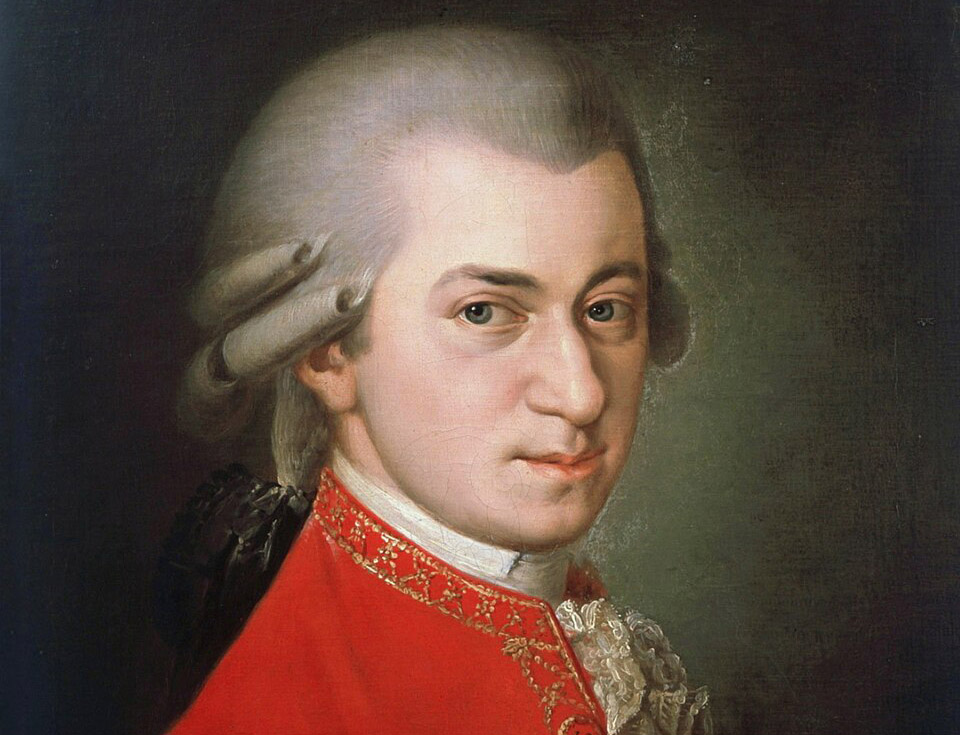
Suffering is not denied; what is rejected is vengeance as the answer to suffering
This summer, my wife and I attended Mozart’s The Magic Flute (Die Zauberflöte) at the Aix-en-Provence Festival in southern France. The performance began at 9.30pm in the sweltering heat of the open-air Theatre de l’Archeveche – the magnificent courtyard of the former Archbishop’s Palace, enclosed by centuries-old walls.
As daylight faded and Mozart’s mixture of fairy tale, comedy and Enlightenment philosophy unfolded beneath the night sky, an unexpected thought came to me.
I had seen this story before. I had seen it in Cyprus.
First performed in Vienna in 1791, just over two months before his death, the opera begins as an apparently straightforward tale of injustice. Prince Tamino, a young man searching for his way in the world, encounters the mysterious Queen of the Night. She is a grieving mother whose daughter, Pamina, has been taken from her by Sarastro, the powerful leader of another realm. The Queen shows Tamino a portrait of Pamina. He immediately falls in love with her image and accepts the mission to rescue her. He is accompanied by Papageno, an earthy bird-catcher far less interested in enlightenment than in food, companionship and, eventually, finding a wife.
The moral landscape initially appears perfectly clear. Pamina is the innocent captive; the Queen, the bereaved mother; Tamino, the heroic rescuer. And Sarastro, who has taken a daughter from her mother, must surely be the villain.
Then Mozart turns the story upside down.
As Tamino enters Sarastro’s world, he discovers that the account he has been given is not the whole truth. Sarastro is not the monster he expected. He has abducted Pamina and holds her against her will to protect her from her mother’s influence and prepare her for another moral order – one founded, however imperfectly and paternalistically, upon reason, justice and fraternity. The Queen’s grief, meanwhile, has hardened into anger, hatred and, finally, vengeance.
Tamino consequently undergoes a transformation quite different from the rescue mission he first imagined. He questions what he has been told, learns to distinguish appearance from truth and eventually emerges with Pamina into the light.
I could not escape the Cyprus analogy.
Pamina was Cyprus herself: beautiful, divided, claimed and passionately loved.
The Queen of the Night evokes the profound Greek Cypriot grief over 1974 and its political afterlife. Passed from generation to generation, it has hardened into an organising narrative of reckoning and retribution. One need only read contemporary political commentary and social-media exchanges to recognise the continuing depth of anger and yearning.
And Sarastro? Sarastro evokes Turkey, portrayed overwhelmingly as the power that invaded, occupied and divided Cyprus. The evidence rests in the Queen’s original accusation: Sarastro took Pamina; therefore, Sarastro is evil.
But The Magic Flute asks us to examine what preceded the apparent abduction.
The events of July 1974 did not occur in a historical vacuum. Cyprus had experienced constitutional breakdown, years of intercommunal violence and the confinement of many Turkish Cypriots within enclaves, eventually followed by the junta’s coup against President Makarios.
Nor was the decision to intervene taken by a militarist. It was ordered by Prime Minister Bulent Ecevit – a social democrat, intellectual and poet whose political instincts generally favoured diplomacy and accommodation. At the age of 22, Ecevit had written his Turkish–Greek Poem (Türk-Yunan Şiiri), imagining two equally beautiful nations joined by the “blue enchantment” of the warm Aegean and expressing the hope that its golden age might one day be reborn through them.
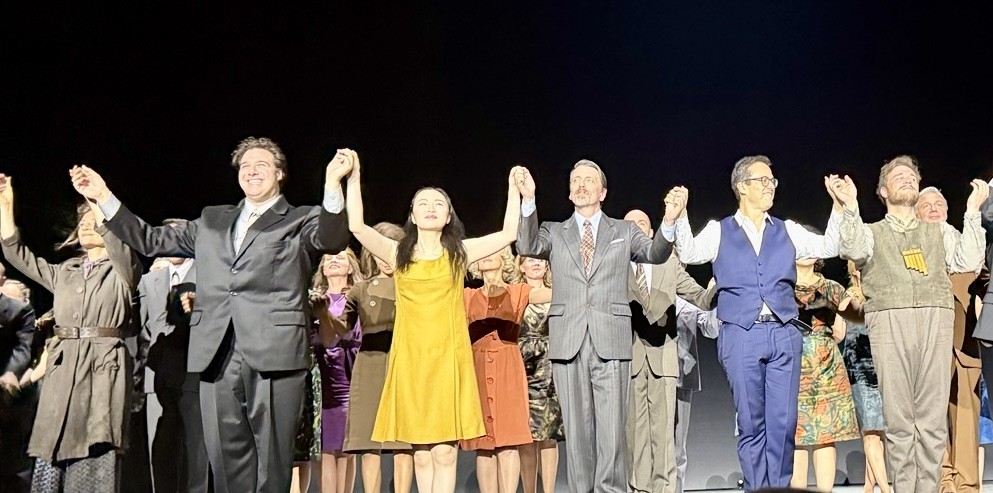
Like Ecevit’s poem, Mozart’s opera offers us something deeper. Sarastro declares that within his sacred halls vengeance has no place. That is the opera’s moral turning point: Suffering is not denied; what is rejected is vengeance as the answer to suffering.
Likewise, Tamino’s great trial is not military. He does not conquer Sarastro. He listens, questions and learns that the story with which he began his journey was incomplete.
Before Tamino begins his journey, he is given a magic flute; Papageno receives a set of magic bells. These are extraordinary instruments precisely because they are not weapons. When danger approaches, the flute does not destroy the enemy: its music transforms the emotional world around it. Fear subsides and hostility softens. The bells similarly turn aggression into something comically absurd: those preparing for violence find themselves enchanted by music and begin to dance.
For more than 60 years, Cyprus has had soldiers, barricades, buffer zones, resolutions, peacekeepers and negotiations. A settlement must create a conciliatory and adaptive political order spacious enough for both memories to coexist. Perhaps what it lacks is the equivalent of Mozart’s magic flute – something capable of changing the emotional tenor of the conflict.
The Queen of the Night’s great aria, “Hell’s vengeance boils in my heart” (Der Hölle Rache kocht in meinem Herzen), is one of the most memorable moments in all opera: vengeance made terrifyingly intoxicating. She orders Pamina to murder Sarastro. Pamina refuses because she is horrified by murder and cannot accept her mother’s demand for revenge.
Yet Pamina does not renounce her mother. She pleads with Sarastro not to punish her. Sarastro responds in one of the most profoundly resonant bass arias in all opera “Within These Sacred Halls” (In diesen heil’gen Hallen):
Where one human being loves another,
No traitor can lie in wait,
Because even an enemy is forgiven.
Whoever takes no joy in such teachings
Does not deserve to be called human.
Pamina thus becomes the opera’s true moral bridge. She protects Sarastro from her mother’s vengeance while seeking mercy for the mother who demanded murder. She rejects both submission and retaliation.
Papageno also matters because he is not searching for victory. Like most ordinary citizens of Cyprus, he wants companionship, food, laughter, happy children and the pleasures of an ordinary life.
What Cyprus needs is peace without vengeance, justice without domination, security without fear – and discourse without prejudice, so that both communities may recognise that the happiness of one need not require the unhappiness of the other.
Sitting beside my wife beneath the Provençal night sky, listening to the masterpiece Mozart composed during the final months of his short, extraordinary life, I found myself thinking of Cyprus, 1,500 miles away.
After more than 60 years, Cyprus needs Mozart’s magic flute – and, most certainly, Papageno’s bells!




Click here to change your cookie preferences