
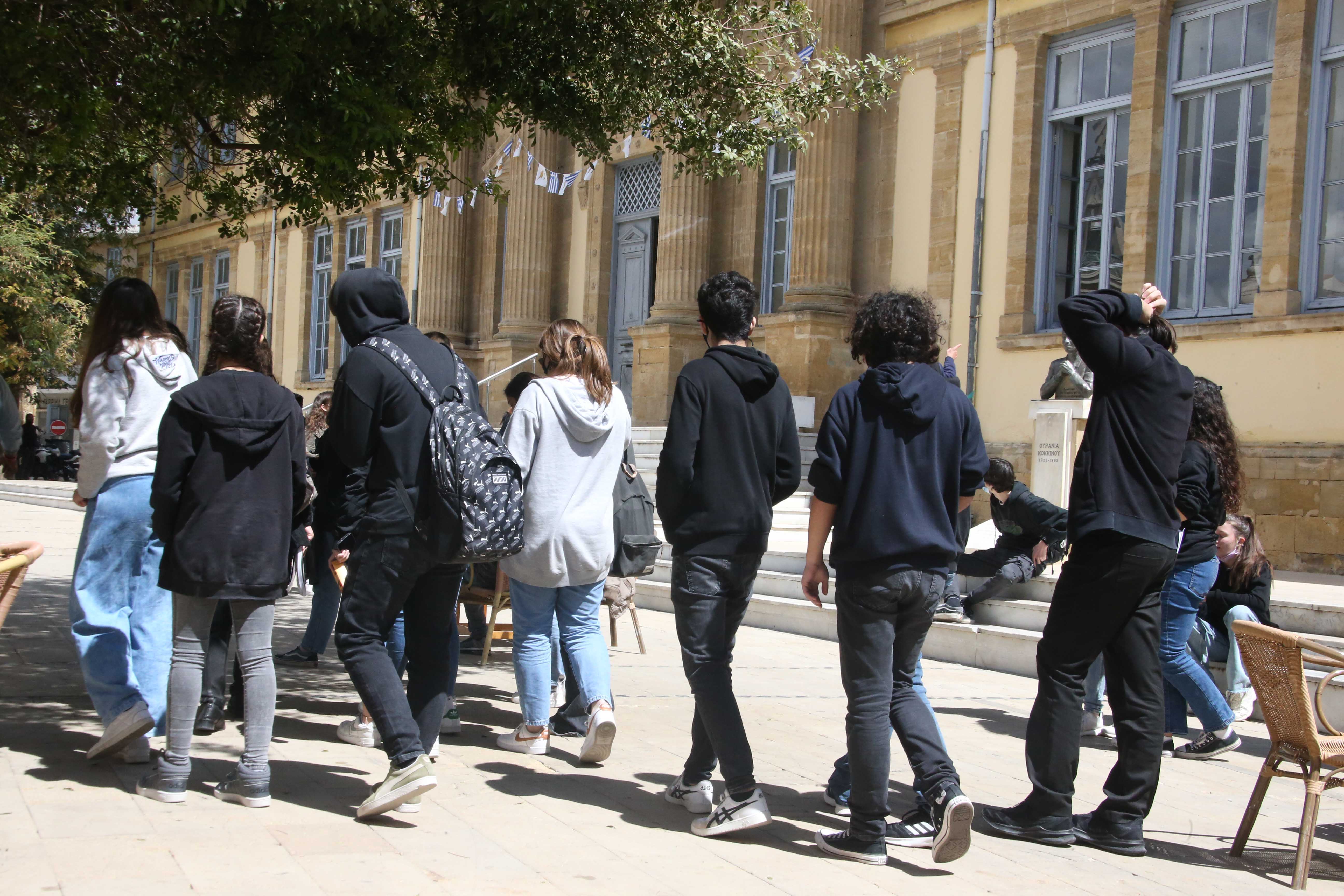
Cyprus spends more of its public budget on education than most EU countries, but its pupils continue to record some of Europe’s weakest results.
According to European Commission and OECD data published on Tuesday, education accounted for 13.2 per cent of Cyprus’ total public expenditure in 2024, compared with an EU average of 9.7 per cent.
Spending amounted to 5 per cent of GDP, or €1.8 billion.
The share of public expenditure devoted to education increased by 2.5 percentage points between 2014 and 2024, the largest increase recorded among EU member states over the period.
A large proportion of that spending goes towards salaries, as Cyprus had the second-highest share of education expenditure allocated to staff pay in the EU, behind Belgium.
Teachers also receive comparatively high salaries as they progress through their careers.
Data for the 2023/24 school year puts the annual starting salary for Cypriot teachers at €26,600.
After 15 years, the figure rises to €50,576, while teachers at the top of the salary scale can earn €66,323.
The commission’s analysis places Cyprus among countries with strong salary progression, with teachers’ salaries potentially increasing by up to 149 per cent over a career.
The pupil performance figures present a markedly different picture however, for in the OECD’s PISA 2022 assessment, Cypriot 15-year-olds scored 418 points in mathematics, 381 in reading and 411 in science.
EU averages were about 472, 468 and 480 respectively.
Cyprus therefore trailed the EU average by more than 50 points in each subject.
The results also represented a substantial deterioration from the previous PISA assessment.
Mathematics scores fell by 32 points, reading by 43 points and science by 28 points.
The figures do not in themselves establish that teacher salaries are responsible for the results, and the commission has stressed that pay is only one factor affecting teacher recruitment and retention, alongside working conditions and professional support.
Other factors affecting pupil performance include curriculums and the allocation of resources between schools.
Education Minister Athena Michaelidou said on Tuesday that the new school year, set to begin next week, would bring changes to teacher evaluation, recruitment, special education and the teaching model, with greater emphasis on skills and new technologies.




Click here to change your cookie preferences