
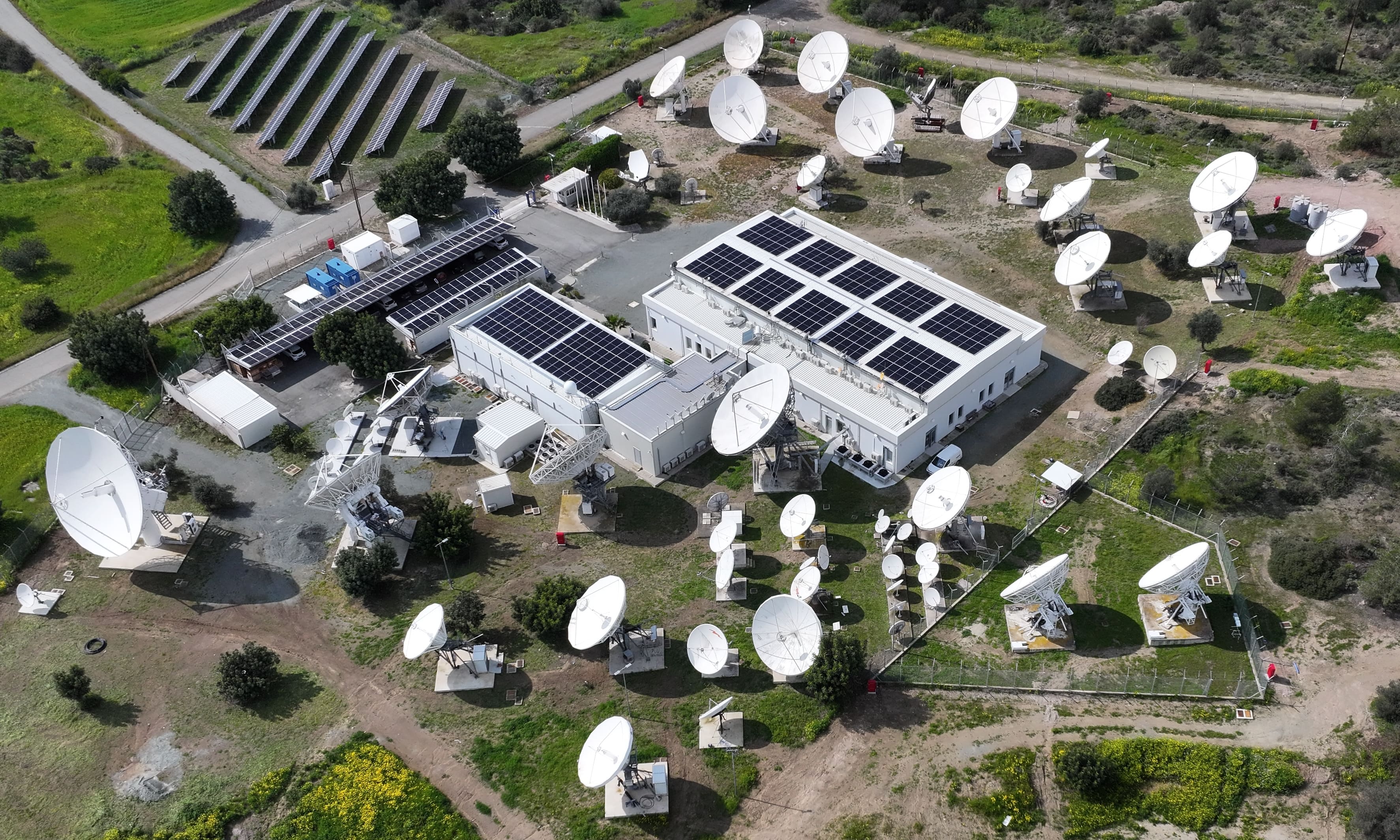
Cyprus gains new protection through quantum-secure satellite link
Cyprus and Greece have established their first quantum-secure satellite data connection, Sparkle and Hellas Sat announced on Wednesday, in a development aimed at protecting communications against future cyber threats.
The connection links Sparkle’s data centre in Metamorfosi, Athens, with Hellas Sat infrastructure in Cyprus, following earlier successful testing of a secure IPsec connection between two data centres in Greece.
The latest trial extends that protection to a live satellite connection between the two countries, with data travelling approximately 72,000 kilometres through the satellite system, including the uplink from Cyprus to the satellite and the subsequent downlink to Greece.
The companies described it as the first time this type of quantum protection has been applied to a satellite connection between Greece and Cyprus.
The system uses Sparkle’s Quantum Safe Interconnect (QSI) technology, which is designed to protect sensitive information from the so-called “store now, decrypt later” threat, where encrypted data is stolen today and held until more powerful computers can potentially break it in the future.
QSI uses secure transmission and automatic switching of encryption keys, while its software-based design allows it to be integrated with existing networks and security systems.
This means businesses can gradually strengthen their security across multiple locations without having to replace their existing infrastructure.
“The extension of QSI to satellite communications with Hellas Sat demonstrates in practice that this technology can be applied everywhere, on terrestrial networks, satellites and across different environments,” said Antonella Sanguineti, Sparkle’s head of Networking, Cloud, Security & Identity Solutions.

“This opens new prospects for protecting communications for organisations and companies that require highly secure and resilient connectivity in remote areas,” she added.
For Cyprus, the development is particularly relevant given Hellas Sat’s satellite infrastructure and its role in providing communications services from the island.
“This new achievement is a milestone in our cooperation with Sparkle,” said Constantinos Kassianides, Hellas Sat’s director of Ground Operations.
“By combining our satellite infrastructure with Sparkle’s QSI solution, we are able to explore the commercial availability of quantum-secure satellite services for businesses operating in difficult-to-access, remote and critical locations,” he added.
Hellas Sat operates three geostationary satellites, two of which are positioned at 39 degrees east, as well as telecommunications facilities in Greece and Cyprus covering 15,000 square metres and 30,000 square metres respectively.
The company is licensed by the Greek and Cypriot states for exclusive access to and use of the 39 degrees east geostationary orbital position and its associated radio frequencies.
Its satellite network and facilities provide satellite and terrestrial services to government and defence authorities worldwide.
Sparkle Greece operates four data centres, including three in Attica and one in Chania, all connected to the Sparkle Group’s fibre-optic network.
The company provides colocation, cloud and international connectivity services and has a 40 per cent share of the Greek cloud and data centre market, serving more than 150 customers including telecommunications providers, organisations and domestic and multinational companies.
The latest achievement builds on successful tests carried out in Greece earlier in 2026 and further highlights the country’s role in developing next-generation telecommunications security technologies.




Click here to change your cookie preferences