
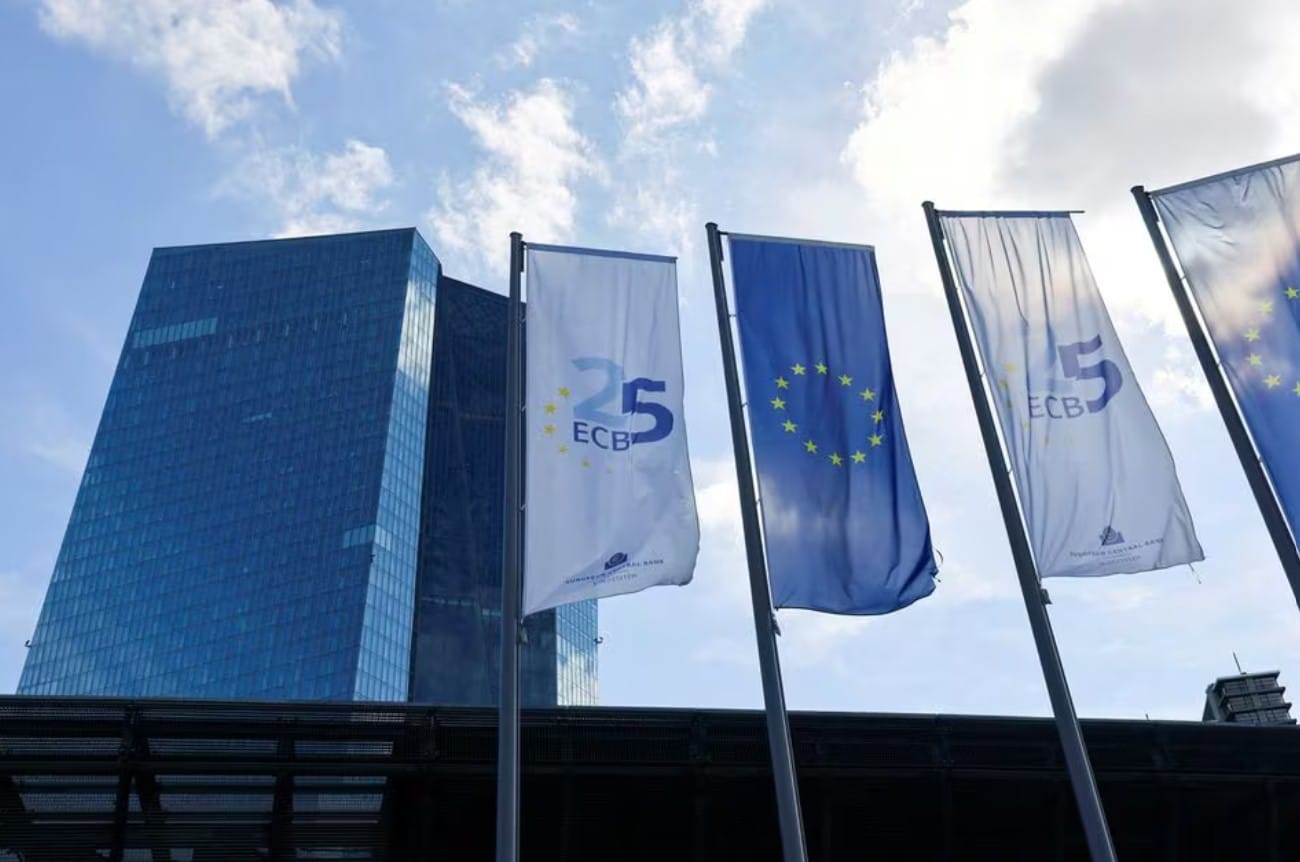
The European Central Bank (ECB) is expected to raise interest rates on September 10 for the second and final time in its shortest cycle of rate increases in 15 years, according to a Reuters poll of economists.
The poll, conducted between August 31 and September 3, found that most economists believed higher energy prices were unlikely to trigger broad-based inflationary pressures, despite the renewed escalation of the war in the Middle East.
Analysts monitoring the central bank also maintained that the ECB would be reluctant to apply further pressure to an already vulnerable economy, even as global bond yields rose sharply over the past week.
Eurozone inflation accelerated to 3.3 per cent in August, moving further away from the ECB’s 2 per cent target.
The increase was largely driven by energy costs, however, strengthening the case for a rate increase in September while leaving economists unconvinced that a third increase would be necessary.
That view contrasted with interest-rate futures, which were pricing in a third rate increase.
All 65 economists surveyed by Reuters predicted that the ECB would raise its deposit rate by a quarter of a percentage point next week to 2.50 per cent.
That represented a stronger consensus than in the August poll, when 83 per cent had expected a September increase, and before the July policy meeting, when 72 per cent had predicted a move.
The ECB kept rates unchanged at its July meeting, while its most recent rate increase came in June.
Around 91 per cent of economists expected the deposit rate to end this year at 2.50 per cent.
A further 78 per cent expected the rate to remain at that level through the middle of next year.
The latest expectations came despite a renewed deterioration in the geopolitical environment and a sharp increase in borrowing costs in global bond markets.
Economists nevertheless appeared to judge that the energy-driven rise in inflation would not necessarily develop into wider price pressures requiring a prolonged period of monetary tightening.
The expected September move would therefore bring the ECB’s latest rate-increase cycle to an end, according to the overwhelming majority of economists surveyed.





Click here to change your cookie preferences