
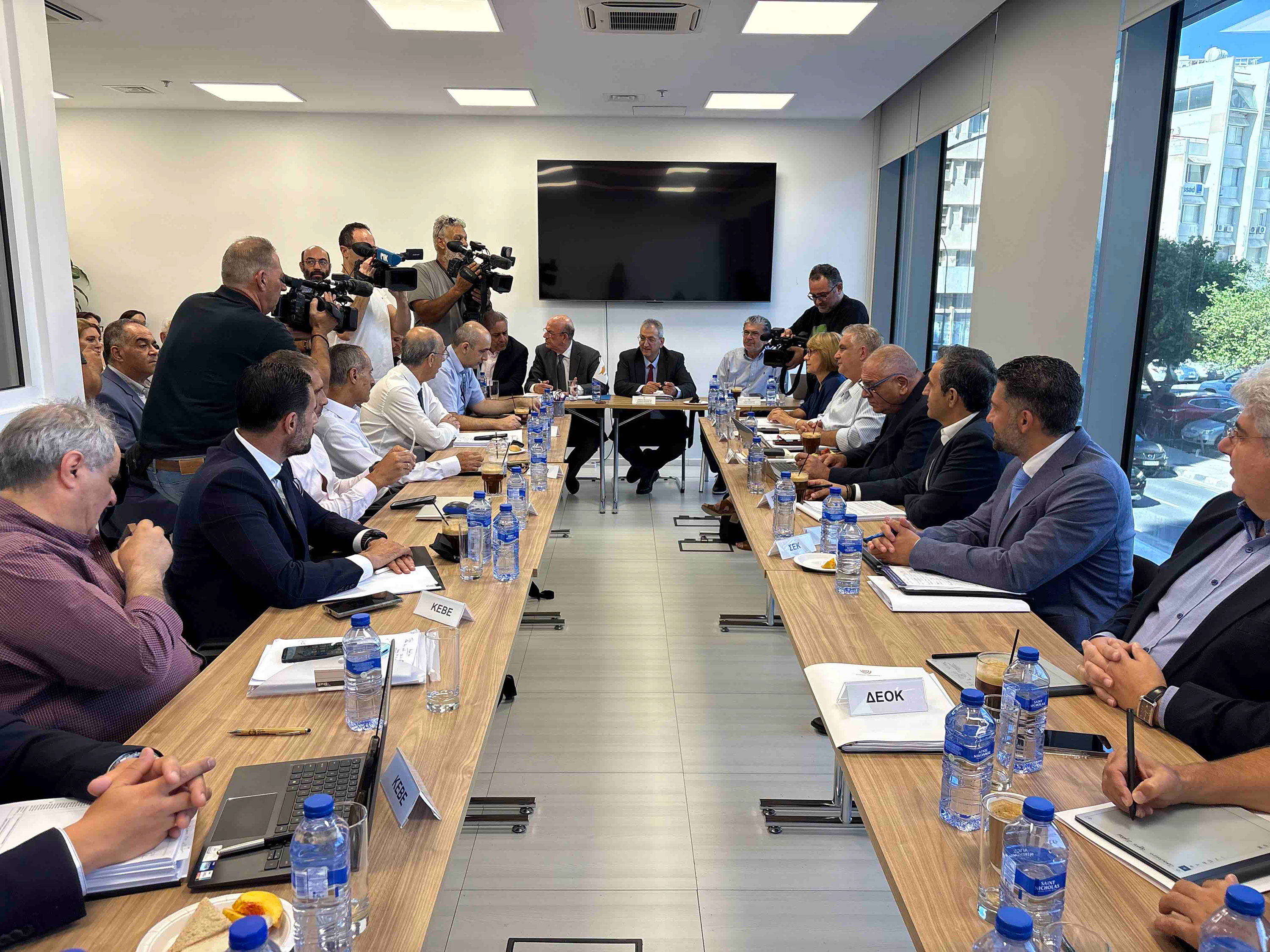
Pension reforms aimed to come into effect on January 1, 2027, should include safety valves to ride out crises, Finance Minister Makis Keravnos said on Monday, following a labour advisory body meeting, during which employers’ organisations and trade unions disagreed on the retirement age.
Keravnos did not go into detail about the “safety valves”, but said the priority should be the long-term sustainability of the social insurance fund and that the process was in its final stages, after which it will be handed over to an expert for scrutiny.
Monday’s meeting with Labour Minister Marinos Mousiouttas and the social partners discussed the financial aspects of pension reforms where it was agreed that clarifications, where necessary, would be given over the next few days so that the procedure could move forward with a specific timetable.
Keravnos said the government’s initiative in the context of the first pillar of reforms focused on increasing low pensions, while at the same time safeguarding the economy and fiscal balance.
He added that solidarity was the key, with current workers contributing to the social insurance fund so that pensioners could be paid now and to secure pensions for the future.
Keravnos said a proposal had been submitted by the labour ministry in collaboration with International Labour Organisation experts, which was then studied by the finance ministry, which in turn said it could support it without disrupting the fiscal balance.
Various proposals tabled by the employers’ organisations and trade unions would alter the overall cost of the reforms – recently calculated at €50 million per year – and these, according to Keravnos, were still under discussion.
Speaking after the meeting, Mousiouttas said this was the first time in 46 years that pension reforms were being promoted and that in the centre of planning were the viability of the social insurance fund and public finances, as well as the financial stability of the state.
He added that the first aim was for low-income pensioners to enjoy a better quality and dignified life.
Discussions, he said, were proceeding according to schedule, with the aim being the implementation of reforms on January 1, 2027.
Employer’s organisation (OEV) general director Michalis Antoniou said the reforms should not place public finances at risk. If contributions to the fund were to be increased, he said, then the retirement age should also increase.
Cyprus chamber of commerce and industry (Keve) general secretary Filokypros Rousounides agreed with OEV and said public finances and the viability of the fund should be safeguarded along with socially fair reforms.
Deputy general secretary of SEK Panicos Argyrides, PEO general secretary Sotiroula Charalambous and Deok president Stelios Christodoulou all said that for the trade unions increasing contributions and raising the retirement age were not up for discussion.
Pasydy deputy general secretary Alexis Alekou said the civil servants’ trade union would first await clarifications from the two ministers before commenting publicly.
The next meeting will be held on Thursday.




Click here to change your cookie preferences