
Cyprus needs an independent regulatory and economic audit of the entire electricity value chain
The debate over Cyprus’ high electricity prices has increasingly focused on renewable energy producers and, in particular, whether commercial solar parks are earning excessive returns. This is a legitimate question and should be examined. But the evidence suggests that concentrating on solar parks returns alone risks missing the much bigger picture.
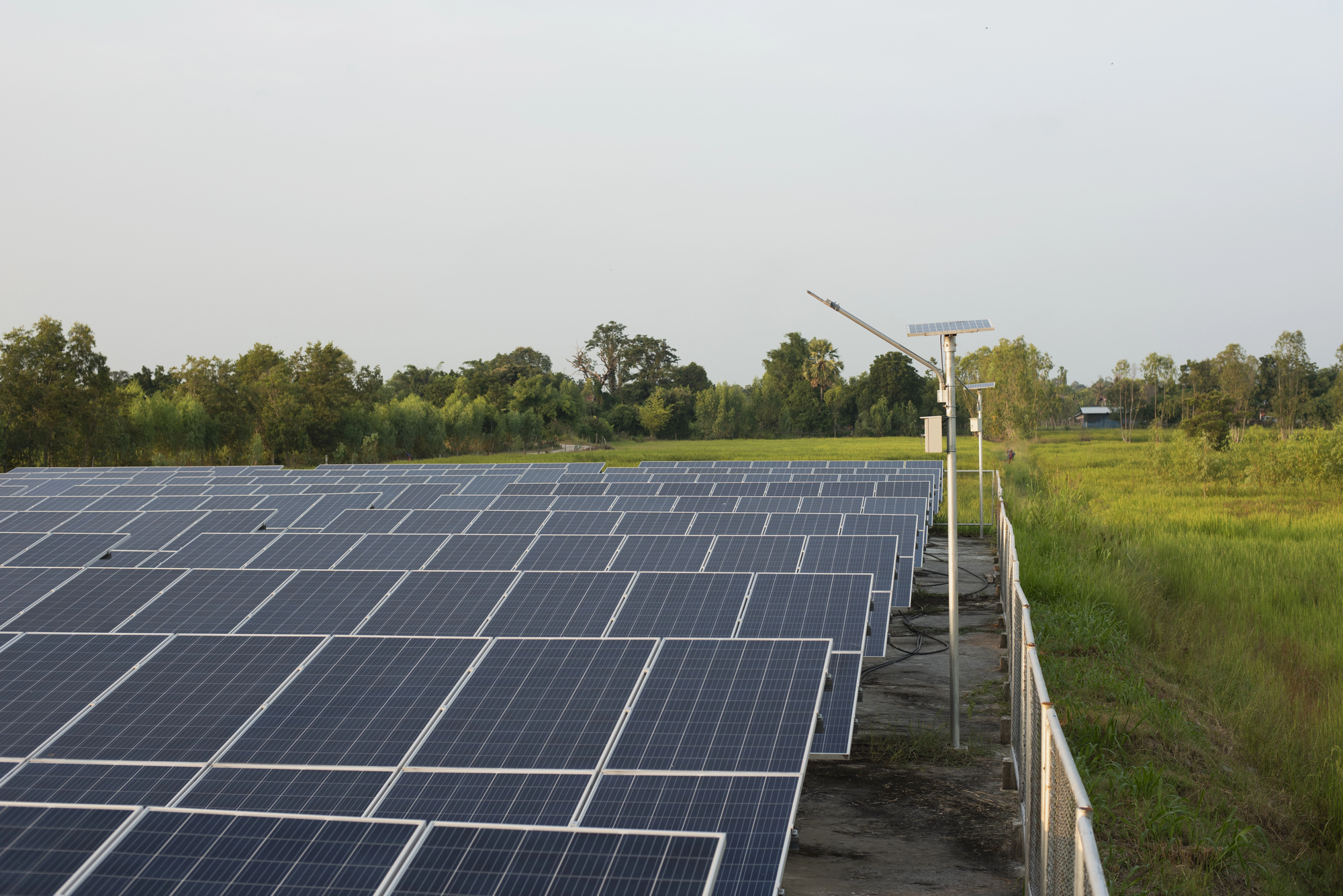
Cyprus now has more than 1,055MW of photovoltaic capacity, of which 450MW is rooftop solar. According to official Energy Service data for April 2026, 471.5MW is under net metering, 158.3MW under net billing, 76MW under feed-in tariffs and 20MW belongs to EAC. But about 326MW relates to projects intended for the competitive electricity market.
This immediately reveals something important. Almost 60 per cent of installed solar capacity operates under schemes intended primarily for self-consumption, although not all the electricity produced is necessarily consumed directly on site.
Understanding who benefits from solar therefore requires looking at the entire electricity value chain, not just commercial producers.
Solar electricity does not have one price
There is no single price per kilowatt hour of solar electricity in Cyprus.
Rooftop solar is consumed immediately, avoiding buying that electricity from the grid. A commercial or industrial consumer with its own PV obtains a similar benefit.
Other renewable installations sell under regulated arrangements, in some cases at around 11cents/kWh.
The position of commercial solar parks is more complicated. Their electricity may be sold through bilateral or forward contracts, through the Day-Ahead-Market or through combinations of these arrangements, with deviations ultimately settled through the market.
This distinction is important. Figures cited recently by the Electricity Market Association indicate that commercial solar represented about 6.4 per cent of electricity traded since the competitive market opened, with an average Day-Ahead price of about 14.5cents/kWh. But this should not be interpreted as the price received for all electricity generated by the approximately 326MW commercial solar fleet.
Much of this electricity continues to be supplied through bilateral arrangements between renewable producers and independent suppliers, predominantly serving commercial and industrial customers. Based on market data and the physical output possible from the commercial solar fleet after curtailment, an estimated 400GWh – about 30 per cent of the total in 2025 – was being supplied through such arrangements immediately before the competitive market opened.
These contracts are commercially important because their prices are not generally public.
There are also indications that independent suppliers are typically offering commercial and industrial customers electricity at around 10 per cent below the corresponding EAC tariff. Where renewable producers and suppliers belong to the same economic group, focusing only on the price notionally paid to the generating company can therefore be misleading.
The relevant question becomes how much the integrated producer-supplier group receives from the final customer, after deducting genuine generation, network, balancing, supply and other costs.
This may tell us considerably more about renewable returns than the Day-Ahead price alone.
Some solar projects may indeed be earning excessive returns, particularly older projects with low capital costs. That is precisely why returns should be independently examined.
Curtailment changes the economics dramatically
There is another major factor. Commercial solar parks are being subjected to increasingly severe curtailment.
About 306GWh of renewable electricity from the affected distribution connected fleet was curtailed in 2025, 83 per cent more than in 2024. Residential PV accounted for about 10 per cent of that. The situation has worsened further in 2026.
Curtailment means that an investor may have sufficient capacity to produce substantially more electricity than is actually permitted to enter the system. The relevant economic calculation is therefore not simply market price multiplied by theoretical production, but the revenue actually earned from electricity delivered after curtailment.
Cyprus is simultaneously installing more cheap solar capacity while preventing increasing quantities of its potential output from replacing expensive conventional generation. That is economically inefficient.
The biggest opportunity remains conventional generation
The greatest potential saving for Cyprus comes from using substantially more low-cost renewable electricity to displace expensive oil-fired generation.
Every additional usable renewable kilowatt hour can potentially avoid fuel, carbon allowances and variable thermal generation costs.
But Cyprus cannot simply eliminate conventional generation. Solar and wind are variable. Batteries can shift solar electricity from midday into the evening and provide important system services, but conventional four hour batteries cannot guarantee supply through several consecutive days of poor renewable production.
Cyprus must therefore distinguish between reducing thermal energy production and eliminating firm generating capacity.
Over time it should be possible to reduce thermal generation substantially, perhaps eventually by 40-60 per cent from present levels as renewable penetration, storage, grids and demand management improve. But considerable dispatchable capacity will still be required for nights, prolonged renewable shortfalls, peaks and emergencies.
That strengthens the case for replacing old oil-fired generation with efficient, flexible gas-fired capacity rather than assuming renewables and batteries alone can provide reliable electricity 24/7.
With adequate storage, flexible gas generation, stronger grids and eventually an electricity interconnector, renewables could supply a much larger share of annual demand.
What Cyprus really needs to investigate
The debate over renewable profits has raised a legitimate issue, but it requires a much wider investigation: Cyprus needs an independent regulatory and economic audit of the entire electricity value chain.
The audit should establish transparently actual returns earned by renewable producers; benefits received by self-consumers; conventional generation costs and efficiency; fuel and carbon expenditure; curtailment losses; network and system costs and supplier margins.
Crucially, it should also examine bilateral renewable contracts. This should include the electricity volumes involved, producer prices, final prices charged to commercial and industrial customers, network and balancing costs, curtailment allocation and supplier margins.
Where producers and suppliers are under common or related ownership, the audit should examine their consolidated economic return rather than simply the internal price at which electricity passes between them.
This is essential. Cheap solar generation does not automatically mean cheap electricity for consumers. If renewable electricity costing substantially less to produce is ultimately priced to customers primarily by reference to the EAC tariff, much of the economic benefit could remain within the electricity value chain rather than being passed through to consumers. Whether this is actually happening, and on what scale, should be established from the data rather than assumed.
Commercial solar returns should therefore be scrutinised. But so should bilateral contracts, vertically integrated producer supplier groups, self-consumption arrangements, networks, EAC costs and market behaviour.
The real prize is much larger: reducing fuel and carbon expenditure by using substantially more of the renewable electricity Cyprus already has, while retaining enough firm generation to guarantee reliable electricity 24/7.
The question Cyprus should be asking is: “Why, with more than 1GW of solar already installed, are consumers still paying so much for electricity, and what changes would ensure that the benefits of cheap solar actually reach them?”
That is the question an independent electricity sector audit should answer.




Click here to change your cookie preferences