
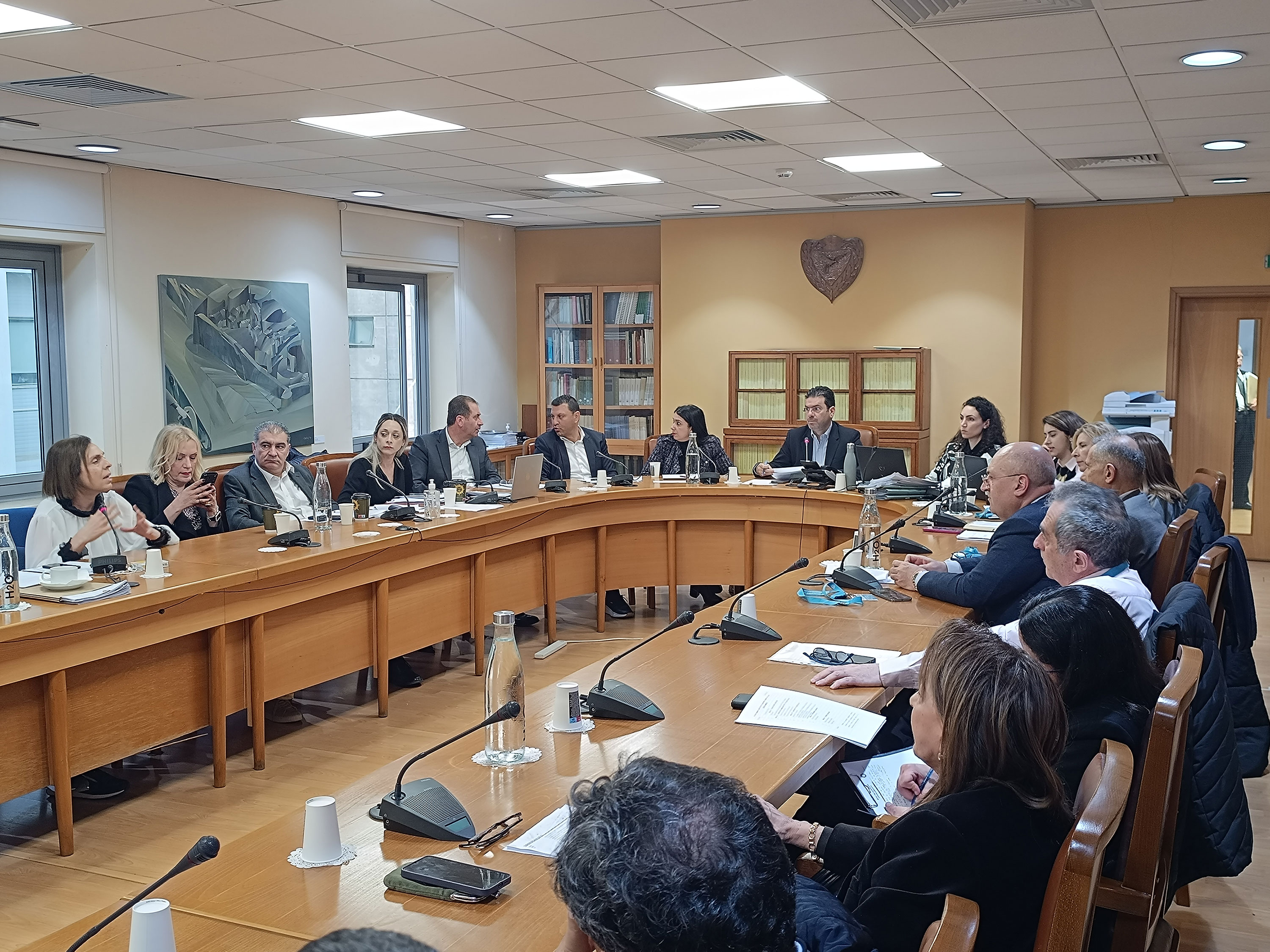
People who “should not be hospitalised in psychiatric hospitals” are currently inpatients at the Athalassa psychiatric hospital, House health committee chairwoman Savia Orphanidou said on Thursday.
Addressing the day’s committee session, she decried a “lack of protocols” as well as an “absence of adequate community structures”, which she said leads to people being hospitalised who under ordinary circumstances would not be.
Those people, she said, include “children and adults with autism, people with eating disorders, and the homeless”.
As such, she called for a “different structure” for “the treatment of these individuals” both inside and outside the hospital, as well as “the development of structures in the community”.
In line with this, she said that existing legislation should be “amended”, and added to this end that she expects “changes to the legislation on hospitalisation decrees and psychiatric hospitalisation, as well as on community care and the creation of relevant structures, by the end of the year”.
She also spoke of the “stigma faced by people who leave psychiatric hospitals”, while also making reference to the issue of support for the families of those impacted by mental illness and efforts to prevent it
To this end, she called for psychologists to be “present in schools”, and for the creation of a “national 24-hour hotline” for people suffering from mental illnesses.
She said that she had been informed by the government that such a national hotline could be implemented as early as the first quarter of next year.
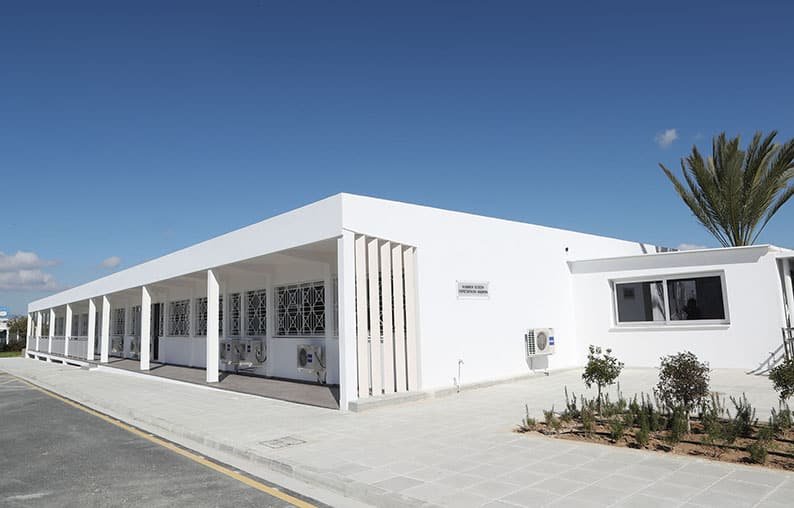
Akel MP calls for more staff to be hired at Athalassa
Akel MP Marina Nikolaou, meanwhile, decried a “prolonged situation of underfunding, understaffing, overloading, and abandonment of mental health services”.
She said that the Athalassa hospital has been “operating at its limits for some time”, and spoke of “overcrowding, a lack of sufficient beds, delays in the development of community structures, and an inability to rehabilitate and reintegrate patients”.
This inability to reintegrate patients into society, she said, creates a “vicious cycle which burdens both patients and staff”.
In addition, she said that the staffing of child psychiatry units is “not sufficient to cover the needs of children throughout Cyprus with safety and quality”.
She then called for “immediate decisions” to be made to improve the quality of service offered, saying that the completion of the second and third phases of renovations at the Athalassa hospital is “imperative”, as well as calling for the hiring of more staff at the hospital.
To this end, she called for the “reinforcement of staffing based on real needs”, as well as the “full operation of therapeutic teams at Athalassa” and the “reinforcement and reoperation of community services”.
“Mental health cannot be treated as the poor relative of the public health system,” she said.
Cyprus has faced nursing shortages for years
Shortages of staff, and nurses in particular, have been a running issue for health services in Cyprus for years, with nurses’ union Pasyno having previously described staff shortages as the “gangrene of the health system”.
“The nursing staff strives to offer the best care to all patients, despite experiencing the consequences of chronic understaffing, having as a principle the oath they took that they will not leave any patient helpless and alone,” the union said at the time.
Prior to that, the union had complained that nurses “live every day in miserable working conditions, in understaffed hospitals, with serious shortages”.
Akel, too, has previously shared these concerns, saying that “chronic understaffing, precarious working conditions and inadequate remuneration outside collective agreements have led to burnout, high rates of resignation and migration of nurses”.
As far back as 2024, state doctors’ trade union Pasyki warned that some hospital departments could be forced to close “due to severe understaffing”, while pharmacists at the Limassol general hospital once went on strike, also complaining of understaffing.
At the time, trade union Pasydy’s nursing branch said that nurses are “often treated with contempt” by those in power in relation to staffing levels, while the Pancyprian nurses’ and midwives’ association (Pasynm) called on Cyprus’ political leadership as well as nurses’ employees to protect the nursing and midwifery professions and invest in them.
The union added that this should be done to “create and improve support mechanisms concerning these people’s welfare, ensuring health and safety at work, and respecting their rights.”
Additionally, it said that strategies should be developed to attract, recruit, and retain nurses and midwives to address “the significant shortages currently being seen in our country”.



Click here to change your cookie preferences