
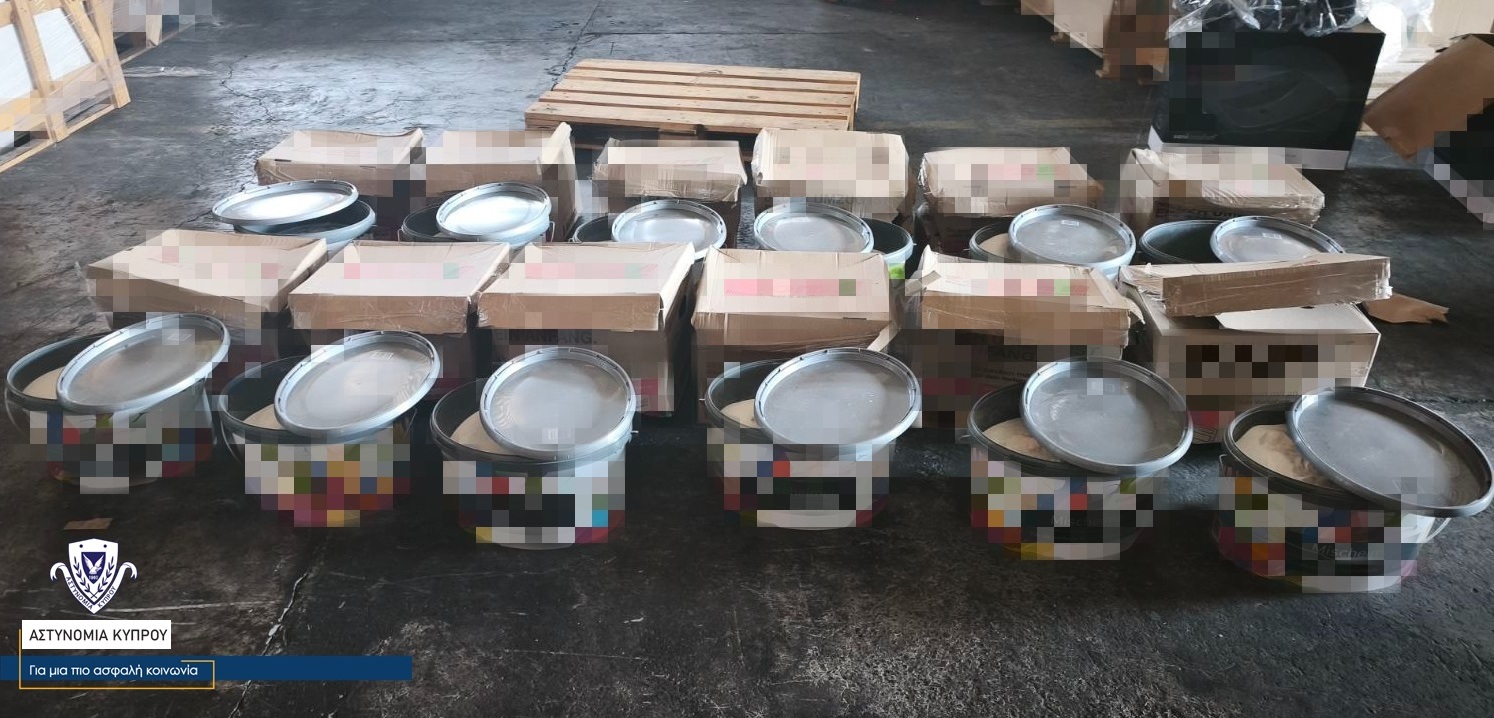
The 390 kilograms of ketamine seized in Limassol amounts to approximately 790,000 doses, drugs squad (Ykan) chief Christos Andreou said on Tuesday.
Andreou said the operation began after information was evaluated and acted upon by the agency, initially leading to the discovery of 127 kilograms of the substance.
Following further information, a second quantity of 263.5 kilograms was located in a warehouse in Limassol.
Four people have been detained in connection with the case, and Andreou said the investigation remains ongoing, including whether the seized quantity is linked to any earlier shipment.
He described ketamine as a relatively new substance on the Cypriot market, saying that from 2022 until now only some 220g had previously been detected.
He added that agencies in other European countries have reported a similar upward trend in ketamine usage.
Ketamine, an anaesthetic with dissociative effects, is sought after for its psychoactive properties, producing a sense of disconnection from the body and surroundings, with larger quantities capable of causing intense sedation, known colloquially as a K-hole.
The substance has become a key ingredient in a drug known as dosa, or which has gained significant popularity in Israeli nightlife in recent years, often combining ketamine with stimulants or hallucinogens such as MDMA and caffeine.
The drug’s spread in Israel has been attributed in part to its significantly lower cost compared with cocaine, now selling for roughly half the market price according to Israeli media.
Police believe the group behind the Limassol seizure formed part of an organised network smuggling drugs into Cyprus from Israel using luxury yachts docked at marinas in Limassol and Larnaca, with buyers reportedly limited to Israeli residents in Cyprus.

Click here to change your cookie preferences