
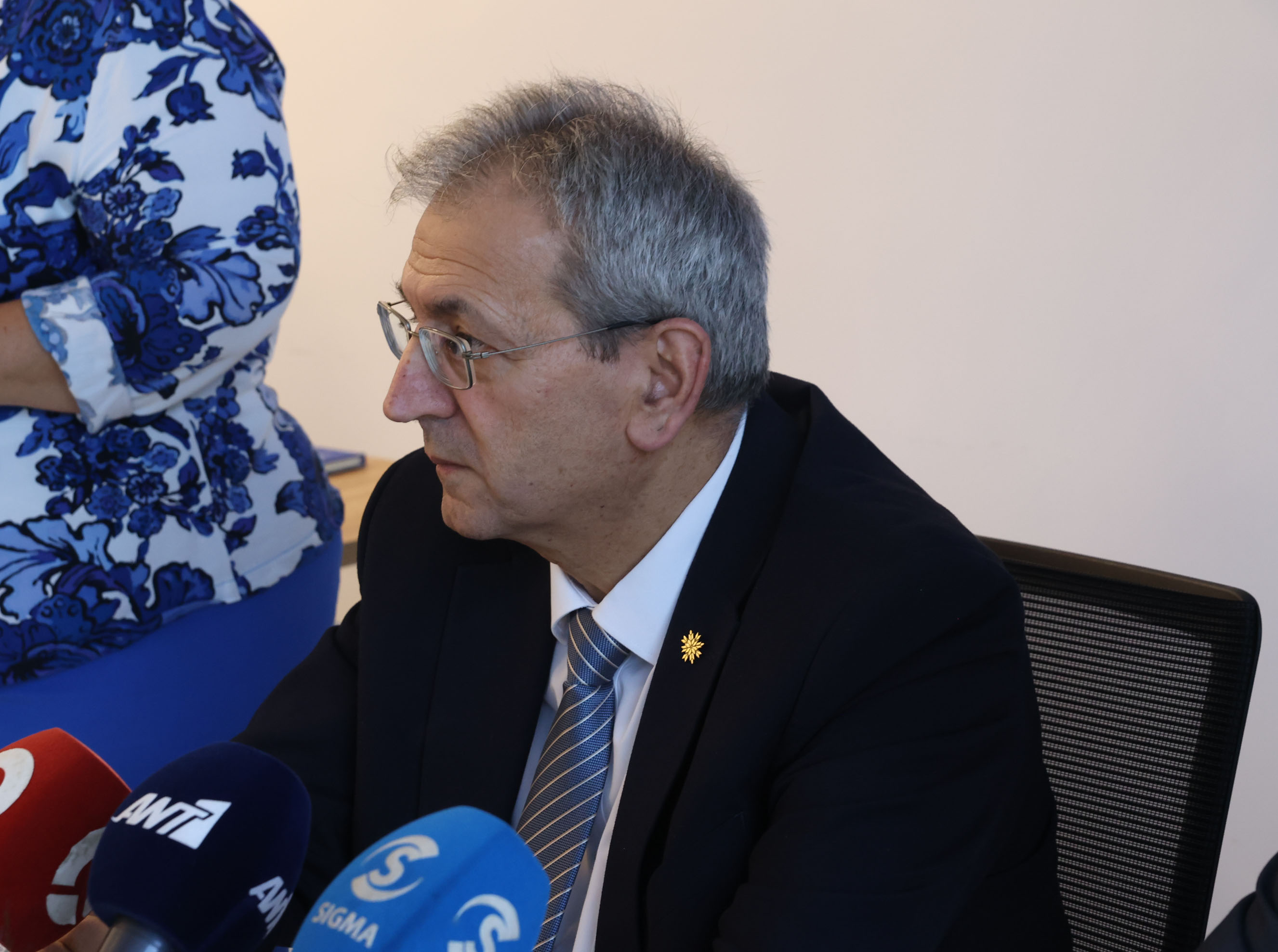
The fiscal cost of the planned overhaul of the pension system will tally at “considerably more” than €50 million a year, Labour Minister Marinos Mousiouttas said on Thursday, while insisting that January 1 of the new year remains the target for rolling out the reform.
Mousiouttas was speaking to media after the latest meeting of the labour advisory board – currently coming together twice a week to review the government’s proposed pension reform.
He said the annual cost of the reform was discussed, but refused to be drawn on specifics.
When a journalist recalled that an expert earlier estimated the cost at €50 million a year, the minister commented: “It will be considerably more.”
Mousiouttas stressed that the timetable remains unchanged – by September 30 the government bills on pension reform will be submitted to parliament.
“The goal is to be able to implement the reform as of January 1, 2027, so that people can feel the difference as of February 1,” he noted.
Meanwhile the labour advisory board is set to continue discussions up until October 10.
A day earlier, speaking at another event, Mousiouttas gave a rundown of what the reform consists of.
He said the changes would see approximately 123,000 retirees get an increase on their pension.
Over 50,000 people would see a rise of more than €100 a month, while over 8,000 would get an increase of €200 – over a five-year period.
“Depending on the case, the increases range from five to 55 per cent.”
Noting that the reform was drawn up with input from the UN’s International Labour Organisation, Mousiouttas summarised its three objectives: “To ensure adequate income for those who worked a lifetime, to restore justice among the generations, and to keep the Social Insurance Fund standing for decades to come.”
A key change relates to how the basic pension is calculated.
“It will no longer depend on complex calculations which few can grasp, but rather something that is simple and easy to understand – it will depend on the total time that a person is registered and insured.
“And here is the big change: counting toward this time are not just the contributions you made, but also the contributions subsidised by the state for periods of your life which, up until today, the system had read as gaps.”
At the same time, the statutory retirement age remains at 65.
But, added Mousiouttas, people will have the option to continue working until the age of 67.
In addition, he stressed, the contribution percentage to the Social Insurance Fund (SIF) will not go up.
Regarding the 12 per cent ‘penalty’ on those retiring early, the minister clarified that it would be reduced, but not scrapped entirely.
Abolishing the ‘penalty’ altogether would threaten the viability of the SIF. Instead, it would be cut from 12 per cent currently to around 7.5 per cent.
Moreover, under the reform each and every pensioner currently insured with the SIF is guaranteed a minimum increase of €30 a month; this concerns people on pensions up to €600.
“I know that the €30 might sound too little. But for a household where every euro counts when they visit the pharmacy, it’s not,” the minister argued.
“It comes to €390 extra a year. And this is the threshold, not the ceiling, since for pensions on the lower end the total boost will be far greater.”
The total increase in pensions will be paid out over the 2027 to 2031 period. However, during the first two years beneficiaries will receive up to 60 per cent of the increase.
Mousiouttas cited an indicative example: a person who worked all their life and today gets €504 in pension, would see an overall bump of about €250 across the five-year period.
As to the SIF, the minister reiterated that the state would cease the decades-long practice of borrowing from it.
“No more borrowing from the fund, the annual surpluses will from now on be deposited into an investment fund, and provisions have been made to gradually repay the current debt, taking into account the state of the economy.”
To date, the state’s debt to the SIF is around €12 billion.
This would be paid back over a 40-year period. Meantime, actuarial studies indicate the SIF will generate surpluses over the next four decades.
The minister linked the coming pension reform to the prior overhaul of the tax system, saying the two should not be seen in isolation.
He said the tax reform left people more disposable income.
“Two reforms, one logic: that growth only has meaning when a family sees the results on the table.”




Click here to change your cookie preferences