
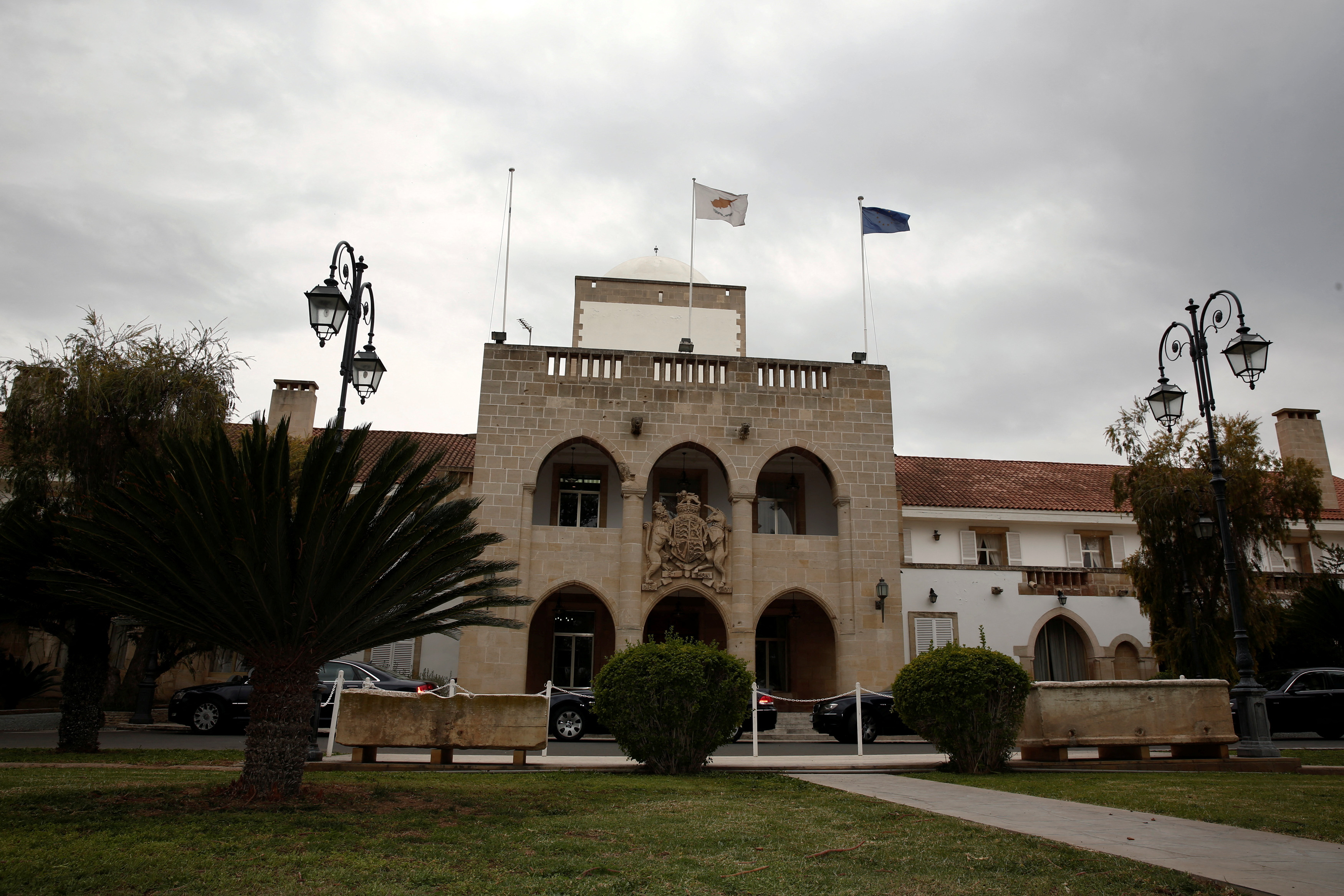
President Nikos Christodoulides appears to have acquired a new expertise – mediator in labour disputes. On Wednesday morning he called the representatives of unions representing government workers on hourly pay for a meeting at the presidential palace, after which a 24-hour strike scheduled for Thursday was called off.
At the meeting it was decided the industrial action would be suspended “in order to give time for the dialogue to reach final decisions,” said government spokesman Konstantinos Letymbiotis. The union representatives would return to the palace for another meeting with the president on September 28 and among the topics of discussion would be “how to improve the wages of hourly government personnel,” said Letymbiotis.
Although nobody mentioned it, the meeting was a presidential vote of no confidence in Finance Minister Makis Keravnos, who had represented the government in the negotiations. The exasperated Keravnos said there had been five official meetings and two sessions of the joint labour committee to discuss the matter, but there was no agreement. Had the president stepped in as negotiator because Keravnos had failed to do the job?
Speaking on the day before the palace meeting, the minister put the cost of the unions’ demands for the 6,500 workers, over the three-year period under negotiation, at €50 million. There is a general pay increase for these workers of 8 per cent, which if extended to cover all public sector workers, would add €300 million to the annual payroll, which, Keravnos said, the state could not afford.
Government workers on hourly pay are not poorly paid as the unions are claiming. The median wage of hourly staff is €2,113 above the national median wage of €1,968.
What will the president bring to the negotiating table that his minister failed to bring? We can only speculate that he would be more inclined to give in to union demands, because in 18 months he will be standing for re-election. A more responsible approach would have been to keep his distance from the negotiations and allow the finance minister to deal with the matter as he had been doing.
The president’s intervention was completely unnecessary as he has no industrial relations expertise that would assist the process reach a successful conclusion. On the contrary, with elections just 18 months away, and the search for votes already in progress, he is in a very weak position and would be much more inclined to give in to union demands than Keravnos.
This was why the responsible thing for the president to have done was to stay out of the negotiations and allowed the finance minister to deal with the unions. By intervening he has created a bad precedent. From now, until the elections, any interest groups that wants something from the government will demand to do see the president, confident that it will get what it wants.


Click here to change your cookie preferences