
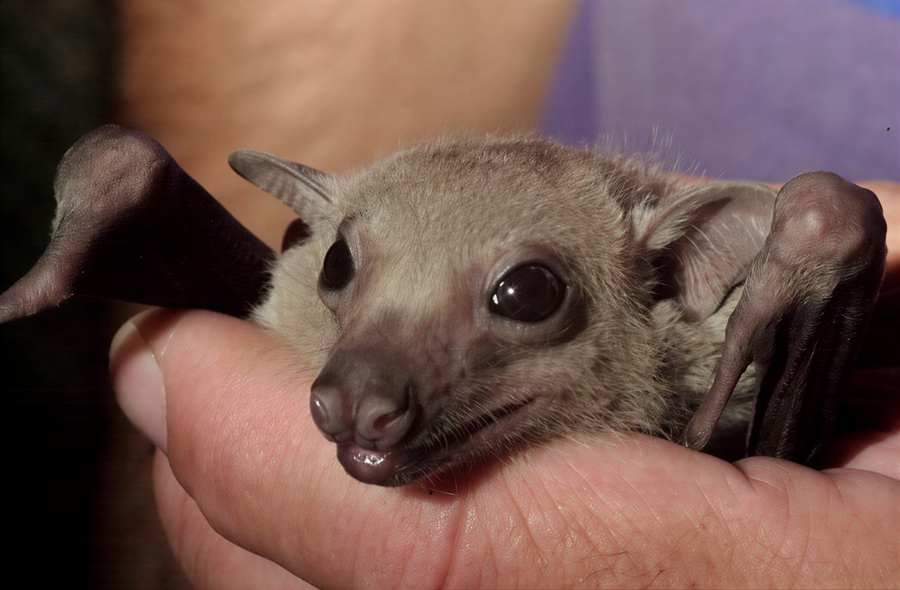
The University of Nicosia is participating in the largest study to date combining bat genomes and fossils, published today in the scientific journal Nature. The author team includes Dr Myrtani Pieri, Associate Professor in the Department of Life Sciences, School of Life and Health Sciences.
The study suggests that bats most likely originated in Europe before spreading across the world. It also strengthens the view that echolocation, the ability to navigate using sounds and their echoes, emerged early in their evolutionary history, as did flight. Beyond providing answers about bats’ past, the research creates a valuable foundation for investigating the genetic features associated with the exceptional longevity and disease resistance of certain species.
The research was carried out through the international Bat1K consortium, involving more than 130 researchers from universities and organisations in over 30 countries. The team analysed the genetic material of 103 bat species, representing all 21 recognised bat families, and drew on evidence from 44 extinct species known from fossils. By combining this information, the team revised the bat evolutionary tree, clarifying relationships among species and answering questions that had remained unresolved for decades.
A better understanding of these evolutionary relationships is also important for studying bat physiology. Some species live far longer than would be expected for their small size, while others can harbour viruses without showing obvious signs of disease. By comparing the genetic material of different species, scientists can now investigate more systematically how these traits arose. This knowledge can help shape new research questions about ageing, immunity and human health.
The study also includes an analysis of 188 families of microRNAs, small molecules that help cells regulate protein production from their genes. They act like light dimmers: they can “turn down” the production of specific proteins, adjusting how cells function. The researchers identified similarities and differences among species, providing insights into how this regulation evolves. These findings offer a starting point for investigating whether, and how, such differences are linked to the distinctive biology of bats.
This interdisciplinary approach, which combines palaeontology with molecular and computational biology, connects the evolutionary history of bats with the study of their genetic material. In doing so, it lays the groundwork for investigating their distinctive biological traits, which are also of interest to human health research.
“What excites me about a collaboration like this is that we bring together knowledge and data that no single laboratory could gather on its own,” said Dr Pieri. “As a physiologist, I am interested in how studying other mammals can help us ask better questions about the human body, health and disease. For us in Cyprus, participating in these networks means actively contributing to the creation of this knowledge and to the international scientific dialogue.”
This work represents the first phase of Bat1K, which aims to study the genetic material of all living bat species. Through this international collaboration, the University of Nicosia’s School of Life and Health Sciences contributes to fundamental scientific knowledge that can provide a starting point for new studies in human physiology and health.
Dr Pieri added: “By studying mammals such as bats, we gain a better understanding of how life works and evolves, and build the knowledge on which tomorrow’s medical advances can be based. At the same time, of course, we come to understand a little more about the complexity of life around us and discover its wonders.”




Click here to change your cookie preferences