
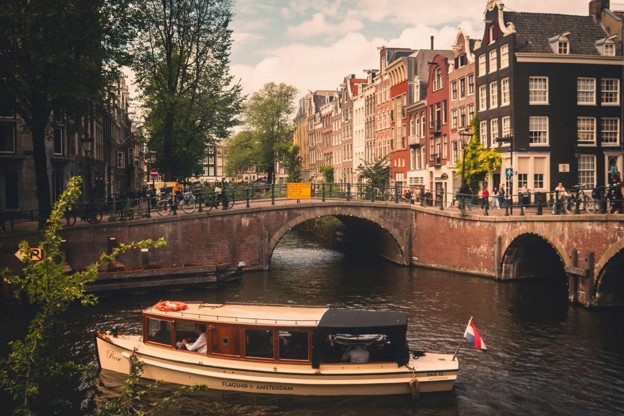
The Netherlands continues to attract workers from elsewhere in the European Union for a fairly straightforward reason: employers still have more jobs to fill than much of the rest of the bloc.
In the second quarter of 2026, the Netherlands recorded a job vacancy rate of 4.1 per cent, the highest among EU member states for which comparable figures were available, according to Eurostat. The EU average was 2.0 per cent, while Cyprus recorded a vacancy rate of 2.6 per cent.
The figures do not suggest an economy where every worker can simply arrive and choose between competing offers. Dutch labour demand has cooled from the exceptional tightness seen after the pandemic. But it remains strong enough to explain why the country continues to look beyond its own workforce.
Demand goes well beyond one industry
The Dutch labour shortage is spread across large parts of the economy rather than being confined to highly specialised professions.
Statistics Netherlands, known as CBS, counted around 387,300 unfilled vacancies at the end of the second quarter of 2026. Wholesale and retail accounted for 73,400 of them, while health and social work had 70,500. Business services, manufacturing, construction, hospitality, transport and storage also recorded tens of thousands of openings between them.
The Dutch Employee Insurance Agency, UWV, paints a similar picture. Its list of occupations offering good employment prospects includes jobs across construction, energy and installation technology, transport and logistics, healthcare and hospitality. Many have appeared on its shortage lists for years rather than months.
This broad demand matters for European mobility. A labour market dominated by a handful of specialist vacancies would mainly attract people with particular qualifications. The Dutch market instead has gaps at several skill levels.
For people considering a move, however, finding an employer is only one part of the calculation. That helps explain the practical appeal of jobs with accommodation in the Netherlands for EU citizens, particularly when arranging somewhere to live before arriving can remove one of the biggest uncertainties associated with taking work abroad.
Housing is hardly a minor consideration. Dutch government figures say there are already about 400,000 migrant workers from central, eastern and southern Europe in the country, while demand for temporary and permanent accommodation for this group is expected to remain high.
EU workers have a relatively simple route into the labour market

For an EU national, the legal barrier to taking a Dutch job is considerably lower than it is for somebody arriving from outside the bloc.
Citizens of EU countries can work in the Netherlands without a work permit. They need a valid passport or identity card and have the same basic employment rights as Dutch workers. Those intending to live in the country for more than four months must register with their municipality, while shorter-term workers generally register through the non-residents records system.
That freedom of movement gives Dutch employers access to a labour pool extending from Cyprus and Greece to Poland, Spain and the Baltic states without the lengthy immigration procedures attached to most non-EU recruitment.
There is also a clear wage floor. Since July 1, 2026, the statutory minimum wage for employees aged 21 and over has been €14.99 an hour before tax. Collective labour agreements can set higher minimum rates in individual industries.
Pay alone, however, does not determine whether moving countries makes financial sense. Rent, transport, health insurance, working hours and the amount of guaranteed work all affect what remains at the end of the month.
That distinction has become particularly important in the Netherlands because employment opportunities coexist with an unusually difficult housing market.
The housing shortage is the other side of the story
The Netherlands may have jobs available, but finding somewhere affordable to live can be considerably harder.
CBS estimates that the country was short of almost 400,000 homes in 2025, equivalent to about 4.8 per cent of the housing stock. Although new homes continue to be built, the statistical office says housing supply has not kept pace with demand and both rents and house prices have risen.
For a worker arriving from another EU country, this changes the value of an employment offer. A vacancy may look attractive on paper but become difficult to take up if the worker has to enter a tight private rental market immediately after arrival.
It is one reason employers and employment agencies sometimes arrange housing themselves. The Dutch government explicitly encourages municipalities, landlords and employers to provide suitable and affordable accommodation for EU migrant workers.
But employer-provided housing also requires caution. Dutch rules introduced additional protections because tying a person’s job too closely to their home can leave migrant workers vulnerable.
For tenancy agreements dating from July 1, 2023 onwards, a migrant worker’s tenancy agreement must be separate from the employment contract. Government guidance states that ending the job should therefore not automatically mean that the tenancy ends at the same moment.
Where housing costs are deducted from wages, further conditions apply. Workers must give written consent, deductions must appear on the payslip and qualifying accommodation must meet recognised quality requirements. The government is also gradually phasing out the system under which housing costs can be deducted directly from wages, with the aim of reducing workers’ dependence on employers.
These protections are important because accommodation can be both a solution to the Dutch labour shortage and a source of risk if the terms are unclear.
The Dutch pull has not disappeared
None of this means that the Netherlands is immune from the wider cooling seen in European labour markets.
CBS reported a slight fall in vacancies during the second quarter of 2026, while unemployment stood at 3.9 per cent. Even so, there were still 95 vacancies for every 100 unemployed people, an indication of how tight the labour market remains by historical standards.
The country’s attraction to workers from elsewhere in Europe therefore rests on several factors working together. Employers continue to need staff across a wide range of sectors. EU citizens can enter the labour market without a work permit. Statutory wage protections provide a minimum floor. And in parts of the market, employers are prepared to help with one of the most difficult aspects of relocation, finding somewhere to live.
The limitations are equally clear. Housing is scarce, living costs matter and workers who accept accommodation through an employer need to understand exactly what they are paying for and what happens if the job ends.
For Cyprus, the Dutch experience is also a reminder that labour mobility within the EU is not driven simply by unemployment in one country and vacancies in another. Cyprus itself continues to have a vacancy rate above the EU average.
Workers move when the overall offer makes sense.
For the Netherlands, the continuing challenge is not merely creating jobs. It is making it practical for the people needed to fill them to live there too.



Click here to change your cookie preferences