
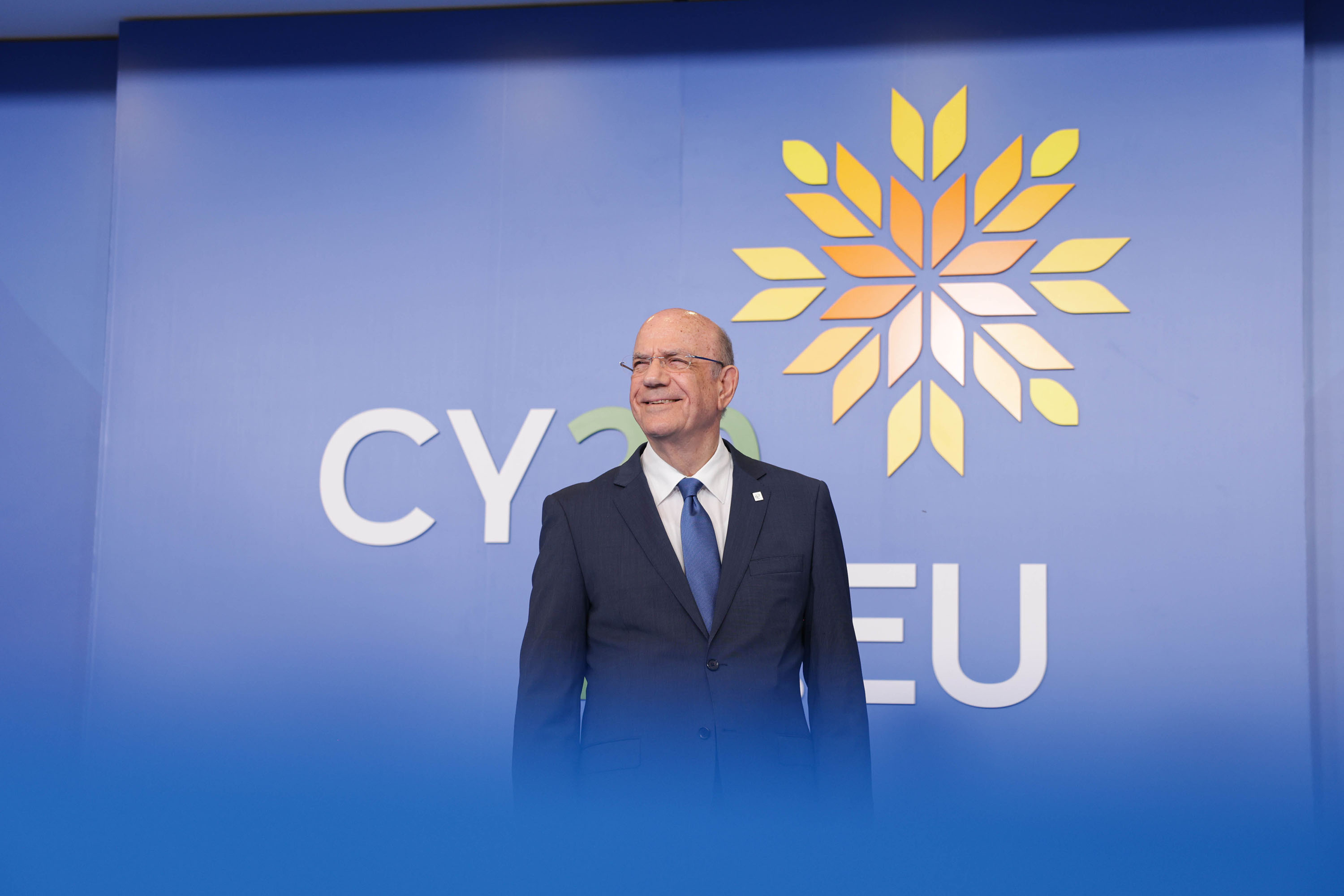
Finance Minister Makis Keravnos on Monday promised that “new measures” will be put before cabinet when it meets later this week to ease the rising cost of living.
“The government is working on some measures and there will be a package before the next cabinet meeting. We are constantly working on and evaluating the situation,” he said following a meeting with trade union representatives.
He added that “the government will continue to do what it has been doing for so long – strengthening all social strata, especially the working classes and vulnerable groups, especially during this period of crisis”.
Asked about the nature of the planned measures, he said the government plans for them to be “targeted”, but that “of course, in cases where it is possible, they may also serve as across-the-board measures, because some problems concern everyone”.
“My assessment is that in Cyprus, a member state of the European Union, with the measures we implement and the social policy we practice, we have surpassed many other countries in whatever measures they implement, and Cyprus could be a model in terms of dealing with the cost-of-living crisis,” he said.
He was then asked about the possibility of a price cap, with Italian state-controlled energy company Eni having announced that at its petrol stations in Italy, it would sell diesel for no more than €2.19 per litre and petrol for no more than €1.99 per litre.
At the same time, Azerbaijani state oil company Socar, which owns Italiana Petroli, announced that Italiana Petroli petrol stations would also have their prices capped, but did not state what its own cap would be.
Keravnos said of this possibility that “we have been taking measures for two years which are much more improved than any measures taken by any other European government”.
IMF has previously warned Cyprus against across-the-board measures
The reference to “targeted” and “across-the-board” measures comes after the Cypriot government had earlier this decade faced criticism from the International Monetary Fund, with the fund’s mission chief for Cyprus Alex Pienkowski having in 2024 called on the Cypriot authorities to “resist” any expansion of “non-targeted reductions in excise taxes”.
Fears of price increases have come with the price of diesel reaching €2 per litre this week, and the price of petrol hovering at around €1.68 per litre in Cyprus, following an expansion of Yemen’s Iran-backed Shia militant Houthi movement’s control and actions in the country.
The Houthis now control almost the entire western coast of Yemen, including the eastern half of the Bab al-Mandab strait, a crucial chokepoint between the Gulf of Aden and the Red Sea, and have also attacked Saudi Arabia’s east-west oil pipeline.
Around five per cent of global oil supplies passed through the Bab al-Mandab strait in February, typically passing northwards towards the Suez Canal and the Mediterranean beyond.
These issues have caused the price of oil to rise, adding pressure to the economy and onto people’s household expenses.




Click here to change your cookie preferences