
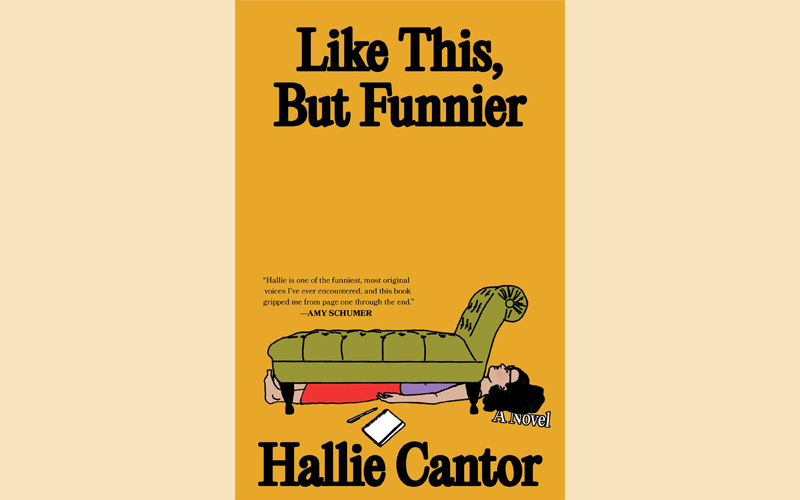
Book review: Like This, But Funnier by Hallie Cantor
It’s a brave but not uncommon thing to write a novel about the world of comedy, especially when you’re a successful comedy writer yourself. Such a novel’s existence makes at least two promises to its reader: juicy insider insight, and laughter. Like This, But Funnier isn’t a bad book. But it also doesn’t fully deliver on its promises, especially the laughter. Maybe Cantor’s playing with some next-level metafictional irony and this is actually the whole point of the book, but really I absolutely would like a novel that’s like this one, but funnier.
If you’re married to a psychologist (or know what a psychologist is), then you know that you shouldn’t read their case notes then divulge confidential information from those case notes to TV executives who might choose to commission a TV series based on that information. Whether you’re married to a psychologist or not, you know that stalking someone and engineering a meeting and subsequent friendship with them under false pretences in order to get details for the TV show you’re writing about their confidential information without their consent, is a bad thing to do.
Caroline Neumann knows both these things. But since she’s a TV writer with a flagging career and the personality of an over-indulged and egomaniacal six-year-old, she does both of them anyway.
Then she tries to make things better by deliberately undermining the show so it never gets made. She fails and, inevitably, disaster strikes.
It’s a good premise. The idea is funny. And the writing, while not sharp or witty enough to be actually funny most of the time, is still sharp and witty enough to be consistently readable. Cantor even manages to make Caroline mostly relatable and even sympathetic (though I suspect there will be readers who disagree with me). And to give credit where it’s due, there are some funny lines, especially towards the end of the development process when Caroline is asked to add in more sexual assault alongside the reminder to ‘keep punching the comedy!’
But to compound the lack of funniness, Cantor’s ending feels hollow. Caroline does bad stuff. She wallows narcissistically in the bad stuff. Endlessly. There’s a threatened comeuppance. And then, all of a sudden, everything turns out amazingly well; Caroline reconciles herself to fate she dismissed a short while before despite us seeing no character development that would account for the shift. And there’s a hint at a rosy future that works to attempt to resolve the sub-plot around Caroline’s (lack of) desire for a baby, but really doesn’t manage it.
So, to revise my opening. This isn’t a bad book. But it’s not funny enough for what it wants to be. And I’d like a better ending too.





Click here to change your cookie preferences