
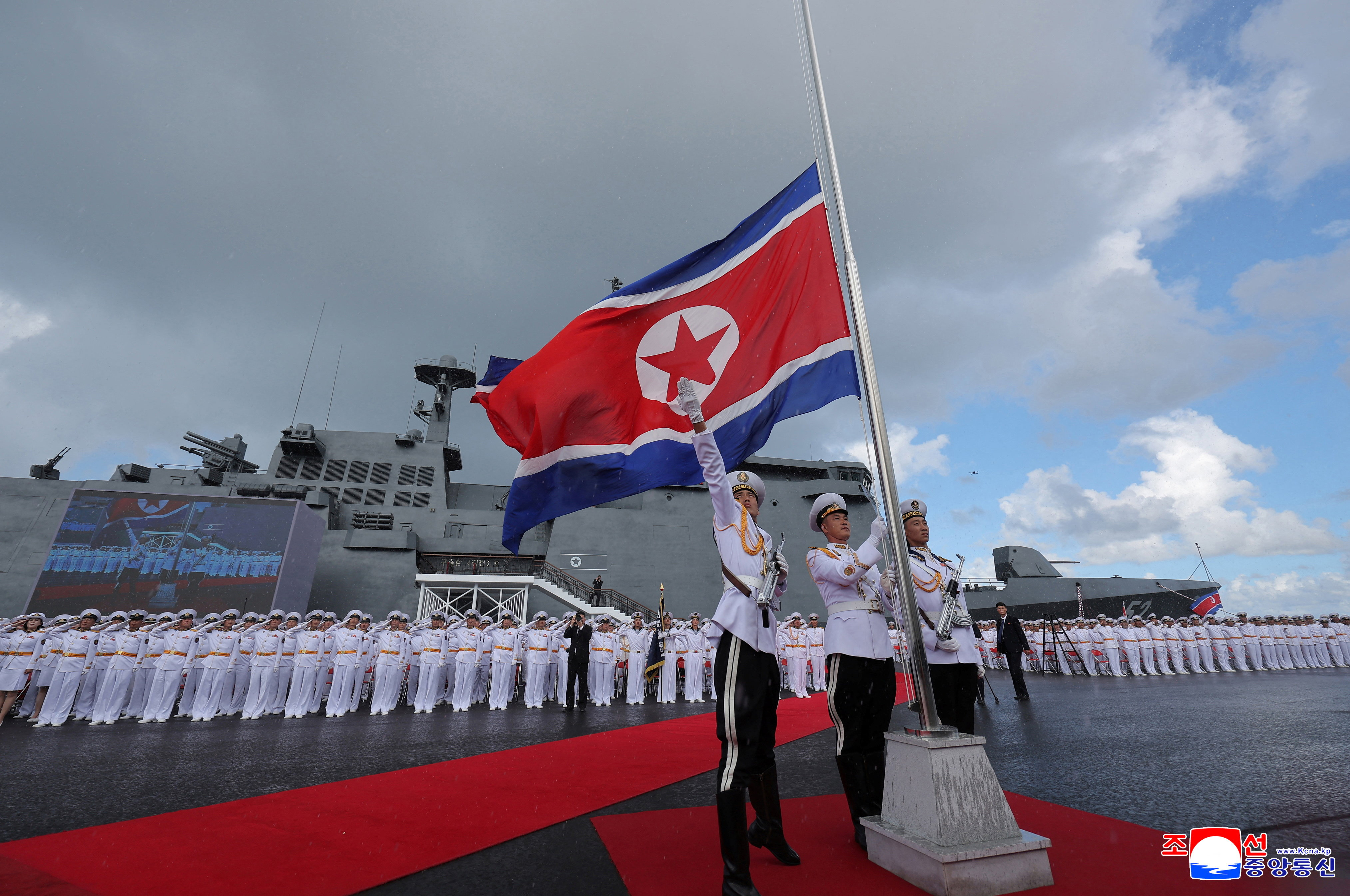
“I would not like to call this an incident. Let’s say it’s a diplomatic misunderstanding,” said Ukrainian Minister of Foreign Affairs Andrii Sybiha. But the South Korean president definitely sees it as a serious incident, and he has already gone public with it.
“If (Ukraine’s) refusal to acknowledge the facts and issue a public apology continues, we will take additional measures,” President Lee Jae-myung wrote on X. He probably means cutting the non-military aid South Korea gives to Ukraine. (There is no military aid, since its constitution bans Seoul from providing arms to a country actively involved in a war).
What monstrous misdeed did the Ukrainian government commit to deserve such harsh words from a country that is generally sympathetic to Ukraine’s struggle against its giant neighbour? Have the South Koreans discovered Ukrainian spies in the Blue House? No, it’s what we professionals call a ‘spat’.
That is to say, two people, two groups, or even two entire countries behaving like four-year-olds arguing over who’s to blame for breaking the toy. We see it every day, we generally deplore it unless we are directly involved, and we think no more about it. Perhaps we should.
The Seoul-Kyiv spat began with Ukraine taking two North Korean soldiers alive. This was unusual despite the fact that Pyongyang has sent more than 10,000 North Korean soldiers to help the Russians conquer Ukraine. Rather than surrender when the combat situation becomes hopeless, the North Korean soldiers are under orders to commit suicide.
This is not a medieval tradition in Korea, like seppuku (harakiri) was for the warrior class in Japan. It is the North Korean totalitarian state demanding a pointless but ultimate sacrifice from its subjects as confirmation of their loyalty. It probably reassures the Kim dynasty that it is safe.
Most North Korean soldiers obey the order and kill themselves when the only alternative is surrender, probably because their families are held hostage for their behaviour and very bad things will happen to them if their son fails to obey orders. But often in battle soldiers are captured while severely wounded or unconscious and therefore unable to follow orders.
We do not know when or how the two North Korean soldiers in question were captured, but what makes them special is that they requested to be ‘repatriated’ to South Korea. The Ukrainian government agreed, but asked the South Koreans to keep it quiet.
Why? Because otherwise the Ukrainian government would face a backlash from people who thought the North Koreans should be traded to Russia in return for Ukrainian prisoners-of-war. Seoul agreed, because it had some delicate negotiations going on with Pyongyang that would come off the track if the defection of the North Korean soldiers became known.
Well done, everybody!… and then Ukraine’s President Volodymyr Zelenskiy chose the UN General Assembly in New York last month to boast that Ukraine had transferred two North Korean soldiers to South Korea. Pyongyang went ballistic, of course, but so did Seoul.
President Lee Jae-myung accused Kyiv of “attempting to provoke a war on the Korean Peninsula” and of injuring “the dignity of the Korean people and the nation”. The opposition in Seoul accused Lee of covering up the transfer to appease Pyongyang. And Zelenskiy denied that there had ever been an agreement to keep the transfer secret.
Four-year-olds all, and like most kid spats it will probably get sorted out without bloodshed. But there’s a lot of chest-beating, a lot of synthetic outrage, and very occasionally a slide into violence. It is a hell of a way for eight billion human beings to run an entire planet, and it’s no better in Washington and Moscow than it is in Seoul and Kyiv. Maybe worse.
We are clearly a species in transition. We have a long past of chronic warfare between small bands of people behind us. We now live in groups many millions strong in relative peace most of the time, but our technologies are so powerful that even minor relapses into our old behaviours can have catastrophic results.
And our future? If it goes wrong, then it will not be due to terrible wars or climate disaster or mass famines, although all those things may come to pass. It will be because we failed to develop a level of social cooperation that would enable us to deal with those entirely soluble threats.
If I were given the job of fixing the system, I would decree that everybody seeking political office must take and pass a year-long course in anthropology, including a lengthy period learning how other primate societies and our own hunter-gatherer ancestors behaved.
It helps to know where you come from, so you can figure out how not to stay there.
Gwynne Dyer’s new book is Intervention Earth: Life-Saving Ideas from the World’s Climate Engineers. The previous book, The Shortest History of War, is also still available


Click here to change your cookie preferences