
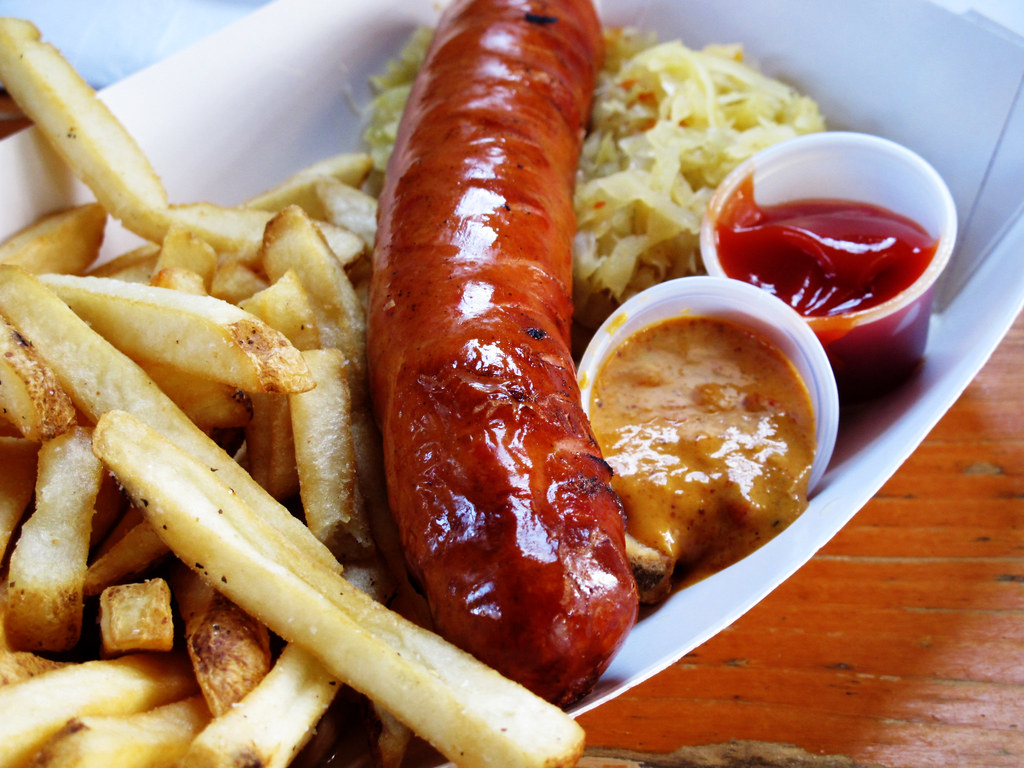
Bratwurst – the seasoned German sausage cooked by grilling or pan frying – has origins stretching back to medieval butchery traditions across the German speaking regions of Central Europe.
It is believed that early forms of bratwurst emerged as far back as the fourteenth century, when rural communities developed methods of preserving minced meat using salt, herbs and spices encased in natural casings.
Different regions of what is now Germany began to develop their own distinctive versions, shaped by local ingredients and culinary customs, leading to a remarkable diversity of styles that persists today.
Nürnberg bratwurst, Thuringian bratwurst and other regional varieties each reflect different spice blends, meat textures and cooking methods, from fine grained pork sausages to coarser, more rustic preparations often grilled over open flames.
Over time, bratwurst became closely associated with German festivals, markets and communal eating, particularly during autumn and winter when hearty foods were most valued.
It is now a staple of street food culture across Germany, often served in a crusty bread roll with mustard, and has also become a popular export.
In Cyprus, bratwurst has found a place within the island’s growing appreciation of European cuisines, appearing in German restaurants and at informal barbecues where it is often paired with local salads, grilled vegetables and cold beer.
From its medieval origins as a practical method of preserving meat to its modern status as a symbol of German culinary identity, bratwurst continues to evolve while remaining firmly rooted in tradition and shared social experience.
Traditional preparation of bratwurst involves carefully balanced seasoning mixtures that vary by region, with butchers often guarding their spice combinations as closely held secrets passed through generations. Cooking methods also vary, from grilling over charcoal at open air markets to pan frying at home.
In Germany, bratwurst is often enjoyed with mustard, sauerkraut or potato salad, reflecting the country’s preference for simple but hearty accompaniments that balance the richness of the sausage.
Today, bratwurst remains one of Germany’s most recognisable culinary traditions, enjoyed in both everyday settings and festive occasions. Its regional diversity reflects the country’s varied history, with each style preserving local identity while contributing to a shared national food culture that continues to evolve in modern German cuisine today.





Click here to change your cookie preferences