

Here are the top business stories in Cyprus from the week starting October 5:
Indian High Commissioner Manish Manish, emphasising the outcome of a series of maritime engagements held in Cyprus from September 28 to October 1, said preparations for both initiatives were discussed as the two countries seek to expand commercial and institutional links in shipping.
The programme followed the first India–Cyprus Joint Maritime Committee meeting, held in Limassol on September 29 under the bilateral Agreement on Merchant Shipping signed in 2017.
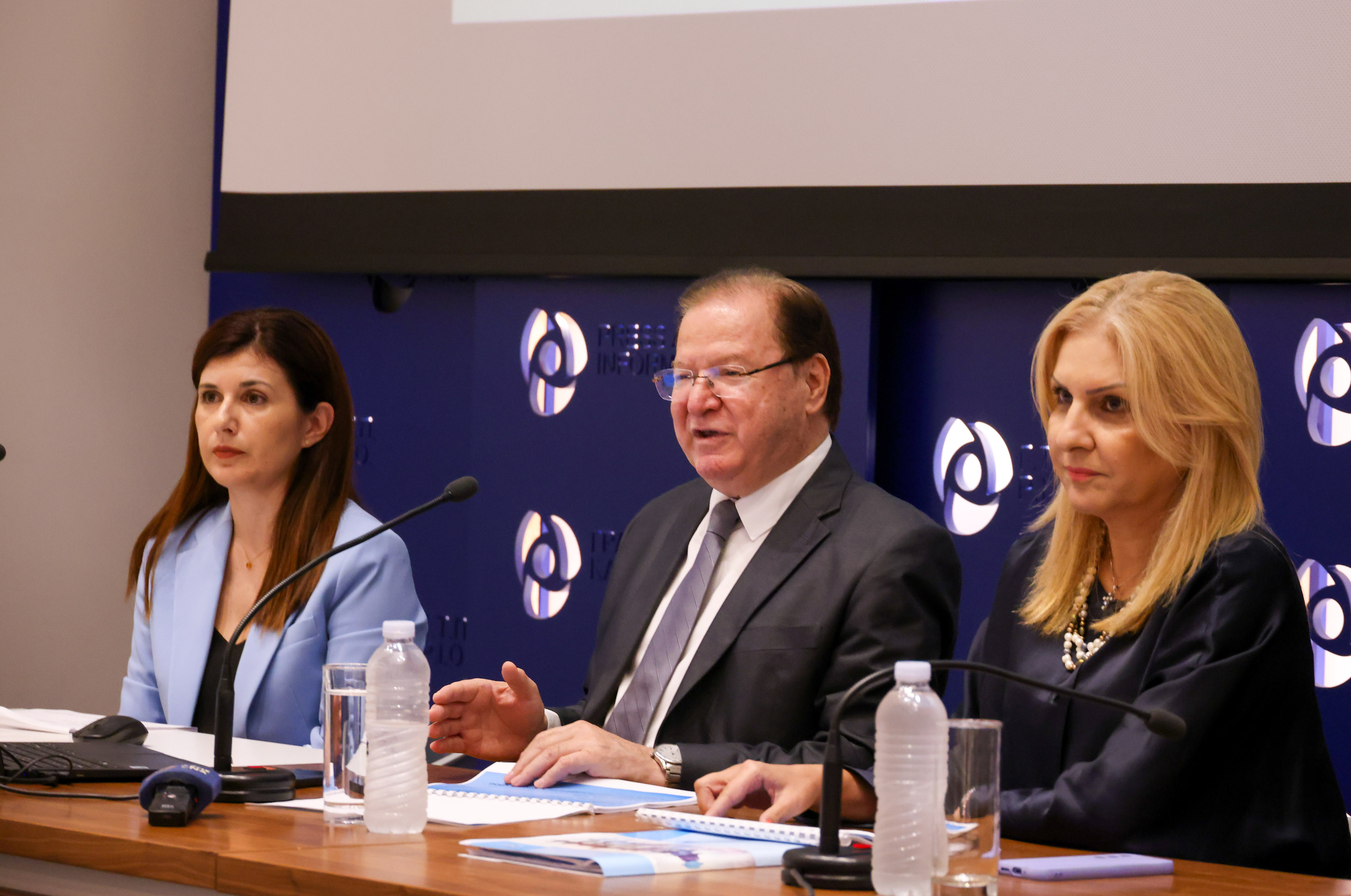
Speaking to Greek tourism and business representatives during a recent event in Athens, Kringou highlighted the close travel links between the two countries and argued that Nicosia could offer Greek visitors a combination of short city breaks, cultural experiences, food, nature and professional travel.
More than 12,000 visitors from Greece travelled to Cyprus in July 2026, while more than 80,000 Cyprus residents travelled to Greece during the same month, according to figures from the Cyprus Statistical Service (Cystat) cited by Kringou.
In an interview with Forbes Cyprus, ahead of the first Forbes Next Gen Banking & Fintech Summit, which will be held at the Four Seasons in Limassol on October 13, Markides said fintech companies have fundamentally changed banking but are unlikely to displace traditional banks altogether.
Instead, he expects the sector to move towards a hybrid model, combining competition and cooperation between established lenders and fintech firms.
Markides said that “fintech companies have been particularly successful in separating individual services from the traditional banking package and offering them more quickly, cheaply or conveniently.”
These include payments, foreign exchange, buy now pay later services and self-directed investments.
The forum, which runs from October 4 to 6, brings together political leaders, senior government officials, scientists, academics and business figures to discuss the opportunities and challenges created by rapid advances in science and technology.
Representing Cyprus on behalf of the Deputy Ministry of Research, Innovation and Digital Policy, Skourides set out the country’s position on the increasingly close links between technological change, social needs and geopolitical developments.
He stressed the need for policies that allow countries to make better use of emerging technologies while ensuring their benefits are felt across society and the economy.
Chrysostomou told the Cyprus News Agency (CNA) that a potential agreement between the United States and Russia over Lukoil’s international assets could become a bridge between the two countries and influence the course of the war in Ukraine.
Reports have suggested that the administration of US President Donald Trump has included a multi-billion-dollar oil deal in its negotiations with Moscow over ending the war.
The reported agreement concerns a broad portfolio of oil fields, refineries and fuel stations in several countries owned by Russian energy group Lukoil, although any such deal would require formal approval by the two countries.
Kombos described his working visit as opening a “new chapter” in Cyprus-Japan relations, noting that it marked the first visit by a Cypriot foreign minister to Japan in eight years.
He described his meeting with Motegi as excellent, saying the two sides had reaffirmed their shared objective of strengthening the partnership between Cyprus and Japan.
The company announced that its board of directors will convene at 9.30am on October 20 to consider the possibility of paying a dividend.
The announcement does not specify the amount of any potential payment or whether the board is considering an interim dividend, meaning the size and terms of any distribution will only become clear if the board approves one.
The planned meeting comes shortly after Keo reported first-half net profit of €2.97 million, down from €3.23 million in the corresponding period of 2025.
The Norwegian government said on Monday that it plans to bring legislation before parliament as quickly as possible, while a group of experts will examine how wearable technology should be regulated permanently.
Possible restrictions could cover parks, beaches, museums, shopping centres and public events, as well as schools, kindergartens, playgrounds and youth clubs.
The government is also considering restrictions in places where privacy is particularly sensitive, including doctors’ surgeries, healthcare facilities, swimming pools and gyms with changing rooms and showers. Universities and other educational institutions could also be included.
The talks took place at the Cyprus Chamber of Commerce and Industry (Keve), where chamber president Stavros Stavrou and secretary general Philokypros Roussounides welcomed Australian High Commissioner to Cyprus Emily Pugin.
Also attending were Marios Siammas, Policy and Public Diplomacy Manager at the Australian High Commission, and Marios Tannousis, CEO of Invest Cyprus.
Representatives of the Cyprus-Australia Business Association and the wider Cypriot-Australian business community also took part, including association president Christos Vasiliou, George Georgiou, Michael Koutrouzas and Peter Kitas.
According to Politis, Brent crude remains above $100 per barrel despite releases from strategic reserves and a recovery in oil flows from the Gulf.
Shipments from the region have reportedly risen to around 15.5 million barrels per day, more than 80 per cent of pre-war levels, but the increase has yet to bring prices down significantly.
At the same time, shipping through the Strait of Hormuz remains costly and risky, while physical crude markets continue to face tight supply.
For Cyprus, that means more pressure on petrol and diesel prices, while higher fuel costs are also expected to feed into electricity bills.
The visit followed Kombos’ talks with Japanese Foreign Minister Toshimitsu Motegi on Monday, where the two sides focused on economic cooperation, maritime connectivity, shipping and higher education.
According to the Japanese Foreign Ministry, the meeting lasted around 50 minutes, with Motegi describing Cyprus as an important partner sharing fundamental values with Japan.
The Japanese minister also thanked Cyprus for its assistance in the evacuation of Japanese nationals from Lebanon in 2024, while the two ministers highlighted their common interests as maritime nations and the importance of maintaining the international maritime order.
Specifically, the Bank maintained its leading position at European level, winning two regional awards for Western Europe, while also securing three additional awards at local level.
At Western European level, BoC retained the Best in Social Media Marketing & Services award in the Consumer category and the Best in Transformation award in the Corporate category.
Its continued success in SME Banking and Digital Transformation is largely driven by the capabilities of the Jinius digital platform.
The Series A extension, announced on Tuesday, brings finmid’s total funding to €52 million and marks a significant expansion beyond the working capital financing that has formed the core of its business.
The company said the new capital will be used to expand its asset-finance products, multi-source funding infrastructure and underwriting capabilities, while supporting further expansion into sectors including mobility and e-commerce.
Finmid provides lending infrastructure that allows platforms used by businesses to offer financing without having to build their own lending systems.
Speaking to the Cyprus Mail, Iacovides said the Nicosia-based training and development company had seen growing demand for programmes aimed at improving teamwork, leadership and employee relationships.
Iacovides, who has 27 years of corporate experience in leadership, change, sales, negotiation and team coaching, joined interFRONTIERS in early 2014 after leaving the banking sector.
He described the move as a major change in his professional life, taking him from banking into a business focused on improving people’s performance and developing workplace skills.
The payment forms part of the repayment of state aid granted to the former cooperative bank.
Since Kedipes began operations in 2018, total repayments have reached €2.002bn.
Of this, €1.82bn has been repaid in cash, while a further €48m relates to the transfer of 247 properties to the Republic of Cyprus.
Another €121m has been spent on the implementation of the Mortgage-to-Rent scheme, covering the inclusion of 978 homes, while other repayments, including instalments under the Estia scheme, amount to €13m.
RIF Chief Scientist and chairman of its board Demetris Skourides and RIF director general Theodoros Loukaidis travelled to Japan to attend the forum, which is organised by the Japanese government and brings together representatives of governments, funding organisations, universities, researchers and businesses.
The Cyprus delegation took part in a round-table discussion involving research and innovation funding organisations, focusing on the development of diverse mechanisms and pathways for research and impact in the era of artificial intelligence.
Speaking at the BiG Innovation Forum, Invest Cyprus chief executive Marios Tannousis presented Cyprus’ perspective on attracting innovative companies and investment, with particular emphasis on the pharmaceutical and medtech sectors.
He also emphasised the importance of stronger synergies between Cyprus and Greece, arguing that closer links and greater cooperation could help the two countries build scale, strengthen their international visibility and improve access to global investors.
The wider discussion focused on innovation, investment and the opportunities available to smaller, agile ecosystems, as well as ways to mobilise more institutional capital and build stronger investment ecosystems.
The prospects were discussed at an event in Thessaloniki on October 5 titled ‘Investment Opportunities Cyprus–Northern Greece’, organised by FMW in cooperation with the Thessaloniki Chamber of Commerce and Industry.
The event was held under the auspices of the Cyprus embassy in Greece, the Thessaloniki chamber, the Cyprus Chamber of Commerce and Industry (Keve) and the Cyprus-Greece Business Association, as part of the Cyprus Days initiative in Greece.
The two-day visit formed part of the PortAbility EU project and brought together European project partners, public authorities, industry representatives, academics and training organisations.
The programme included presentations, site visits and interactive workshops covering sustainability, decarbonisation, digitalisation, innovation and skills development.
It began at the Cyprus Ports Authority in Limassol, where participants were briefed on the development of Limassol Port and its future plans.
Keravnos travels to Luxembourg on Wednesday ahead of the Eurogroup on October 8 and Ecofin on October 9.
According to the Finance Ministry, the two meetings will cover “very serious issues” concerning the effectiveness of public finances under the European economic governance framework, as well as the impact of the energy crisis on the European economy.
Cyprus has already sought a derogation from excise duty on heating oil, the ministry said, referring to earlier statements by Keravnos.
It has also joined other member states in supporting additional fiscal room within the EU’s economic governance framework.
According to the government’s Strategic Fiscal Policy Framework 2027–2029, expenditure for the deputy ministry is projected at €59.45m, down from €74.24m in 2026.
The reduction amounts to around €14.8m, or almost 20 per cent year on year.
A large part of the decline comes from operating expenditure associated with Cyprus’ presidency of the Council of the European Union.
Spending under other operating expenses is expected to fall to around €630,200, compared with €6.43m in 2026, when additional funds were required for presidency-related needs.
Speaking at an East Mediterranean Gas Forum (EMGF) and HELLENiQ ENERGY conference in Athens on Wednesday, Damianos said cooperation between governments and energy companies would be essential to making better use of the region’s energy potential.
He said the Eastern Mediterranean needed a coherent regional energy system capable of bringing the area’s energy resources to international markets, particularly the European market, in an efficient and economically viable way.
Damianos also held separate bilateral meetings with Greek Environment and Energy Minister Stavros Papastavrou and Egyptian Petroleum and Mineral Resources Minister Karim Badawi on the sidelines of the conference.
In a statement from the Finance Ministry on Wednesday, Keravnos said his main priority would be ensuring that decisions taken by eurozone and EU finance ministers take account of the effects of energy developments on households and businesses.
Cyprus has already sought a specific measure that would reduce the burden of winter heating costs.
“As I have already said publicly, we have requested a derogation on the excise duty on heating oil, to reduce a cost that households feel directly, especially in winter,” he said.
The government is also seeking greater room to respond to economic pressures within the EU’s fiscal framework, working alongside other European nations.
A trophy is simple. It displays a name, a year, and a winner. It doesn’t reveal the late nights, the tough calls, the intricate puzzles, and, above all, the people who turn challenges into victories.
When Elias Neocleous & Co LLC was named Cyprus Tax Firm of the Year at the 2026 International Tax Review Europe Tax Awards, it wasn’t the firm’s first time receiving the distinction. It was its fifth consecutive win.
The Italy-Cyprus Maritime Business Forum, organised by the Italian embassy in Nicosia, will begin at 9am at the DP World Cruise Terminal, with discussions covering sustainable ports, shipping regulation and international maritime corridors.
According to the Italian embassy’s official programme, the event will feature three panel discussions involving representatives from the public and private sectors, with a particular focus on investment opportunities in Cyprus’ maritime industry.
The initiative aims to strengthen ties between shipowners, ship managers, shipyards, port operators, insurers and service providers from both countries, while supporting closer cooperation on maritime infrastructure and technology.
The awards, held on October 7, 2026, are organised by Keve in cooperation with Thessalonikis Dromena magazine and have become an established annual event highlighting and rewarding young entrepreneurs.
The initiative is supported by the Ministry of Energy, Commerce and Industry, Eurobank Ltd, the Cyprus Youth Organisation, Coneq and the Cyprus Association of Cartoonists, with Economy Today as media sponsor.
The bank supported the initiative for another year at the ninth annual ceremony, which recognises entrepreneurs under the age of 40 and their contribution to the development of the Cypriot economy.
Speaking at the awards ceremony, Eurobank Corporate Banking general manager Nicolas Panayi congratulated Keve for organising the event and for its long-standing contribution to supporting entrepreneurship in Cyprus.
Panayi said businesses were operating in an environment of constant change, making the ability to adapt, develop and innovate increasingly important.
“Young entrepreneurs are not simply creating new businesses,” Panayi said.
Invest Cyprus, the national investment promotion agency, welcomed the expansion, saying the new headquarters marked an important step in the European digital asset company’s long-term presence and development in Cyprus.
Teroxx operates in the digital assets sector, providing specialised services to private clients, family offices and institutional investors.
According to Invest Cyprus, the new Nicosia headquarters are intended to bring together the company’s international business activities, institutional partnerships, innovation and contemporary culture.
Nevertheless, cheaper housing does not necessarily mean greater affordability. With average salaries in Cyprus around 54 per cent higher than in Greece, the cost of renting or buying tells a different story once earnings are taken into account.
For Cypriot families paying for student accommodation in Athens or Thessaloniki, Greece can offer substantial savings. For those living and working there, however, rising rents and lower wages are making even modest homes increasingly difficult to afford.
The workshop, titled ‘Here Only Monachus’, was held on September 19 at the Limassol Municipal Gallery, offering children an interactive way to discover the Mediterranean monk seal (Monachus monachus) through music, sound and creative activities.
Led by Rebecca Katsaris, Associate Educator at Enalia Physis, and music educator Christina Charalambidou, the session invited children to explore sounds associated with the sea, experiment with instruments and work together to create their own musical piece.
For WISTA Cyprus president Anna Pittalis, the event was also about bringing members together in a different setting.
The awards, worth €10,000 each, were presented by the company’s chief executive, Polys Hajioannou, during the sixth annual scholarship ceremony, attended by Deputy Shipping Minister Marina Hadjimanolis.
Addressing the recipients, Hadjimanolis stressed the importance of attracting young people to an industry that remains central to Cyprus’ economy.
“Cyprus needs your generation. Shipping needs your knowledge, your ideas and your own different look,” she said.
The deputy minister also conveyed the government’s appreciation, on behalf of President Nikos Christodoulides, to Hajioannou and Safe Bulkers for their continued investment in education and support for young people.
The award was presented during the ninth annual youth entrepreneurship awards ceremony, organised by the Cyprus Chamber of Commerce and Industry (Keve), at the Presidential Palace in Nicosia on October 7.
The recognition comes shortly after the Limassol-based group announced a major change to its corporate identity, bringing more than three decades of maritime and energy operations under the Island Energies name.
On September 28, the company, previously known as Island Oil (Holdings) Limited, introduced its new identity to reflect its expanded activities beyond traditional marine fuel trading.
Kazakos raised the issue this week, at the Malta Maritime Summit, where he took part in a discussion examining the human impact of shipping’s green transition and the need for international cooperation.
He argued that decarbonisation requires a common global regulatory approach, rather than a collection of national and regional measures, and reaffirmed the industry’s commitment to working with the International Maritime Organisation (IMO).
The IMO, he stressed, remains the appropriate organisation to develop international rules for a sector whose operations extend across national borders.
His comments come as governments continue negotiations over the IMO Net-Zero Framework, a proposed set of measures designed to reduce greenhouse gas emissions from international shipping.
The Cyprus Association of Real Estate Valuation Scientists, a member of the Cyprus Chamber of Commerce and Industry (Keve), made the recommendations during its annual general meeting and continuing professional development seminar, attended by more than 100 members and representatives of institutional and professional bodies.
Addressing the gathering, association president Polys Kourousides highlighted the role of professional valuers in maintaining the reliability of the property market, supporting financial stability and ensuring that investment decisions are based on sound assessments.
He acknowledged progress in speeding up the procedures for issuing planning and building permits, crediting efforts by the Interior Ministry and district local government organisations.
The service’s latest price observatory puts the nationwide average for unleaded 95 petrol at €1.757 per litre, while unleaded 98 averages €1.812.
Diesel has reached an average of €2.022 per litre, while heating fuel stands at €1.678, adding to pressure on households and businesses as transport and energy costs remain elevated.
The latest figures follow Wednesday’s report that diesel had reached an all-time high of €2.126 per litre at a petrol station in Limassol, near the city’s seafront road, the Kean factory and The Oval.


Click here to change your cookie preferences