
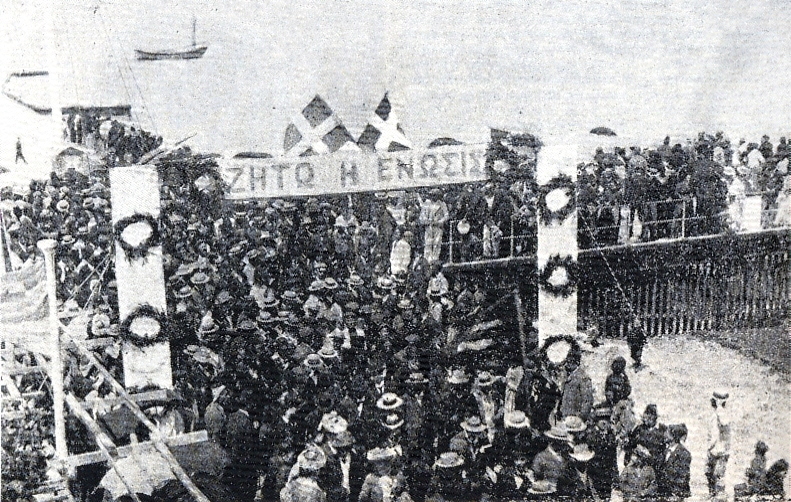
Disy has marked 95 years since the October uprising of 1931, describing the revolt as “a significant milestone in Cyprus’ anti-colonial struggle”.
The party said Cypriots should honour those who “stood tall against colonialism” while demanding freedom and self-determination.
It said historical memory “set a duty to continue the struggle for a free, reunified Cyprus, free of occupying forces and anachronistic guarantees”.
The uprising, known in Greek as ‘Oktovriana’, began on October 21, 1931, and lasted until early November.
The revolt was led by Greek Cypriots who sought Enosis (union) with Greece and is regarded as the most intense rebellion Britain faced between the two world wars.
On the opening day some 5,000 Cypriots, mostly students, priests and city notables, rallied in Nicosia chanting pro-Enosis slogans.
The crowd besieged the old government house, which was subsequently set on fire.
In September, governor Ronald Storrs blocked a legislative council decision to halt tax rises meant to cover a budget deficit, and Greek Cypriot members resigned.
On October 18, bishop Nikodemos of Kition urged civil disobedience until demands for Enosis were met.
The grievances went back further, as Greek Cypriots objected to an education act aimed at curbing Greek influence in schools and to a new penal code that permitted torture.
A memorandum seeking Enosis, presented in London in 1929 to colonial secretary Lord Passfield, was rejected.
Britain responded with force, sending 150 troops flown in from Cairo, and warships including the cruisers Shropshire and London arrived at Limassol, with a destroyer sent to Paphos.
Seven protesters were killed, ten were exiled for life and more than 2,600 received punishments ranging from prison terms to fines for sedition.
British authorities accused Alexis Kyrou, the Greek consul general in Nicosia, of instigating the revolt; he was dismissed, and Storrs was transferred to Northern Rhodesia.
The colonial administration then abolished the legislative council and municipal elections, and gave the governor power to appoint mukhtars and district judges.
Promoting Enosis and flying the Greek flag was banned, as was any assembly of more than five people.
Censorship hit newspapers, particularly left-wing titles, with the period of draconian rule that followed becoming known as ‘Palmerocracy,’ after governor Richmond Palmer, and lasted until World War II.




Click here to change your cookie preferences