
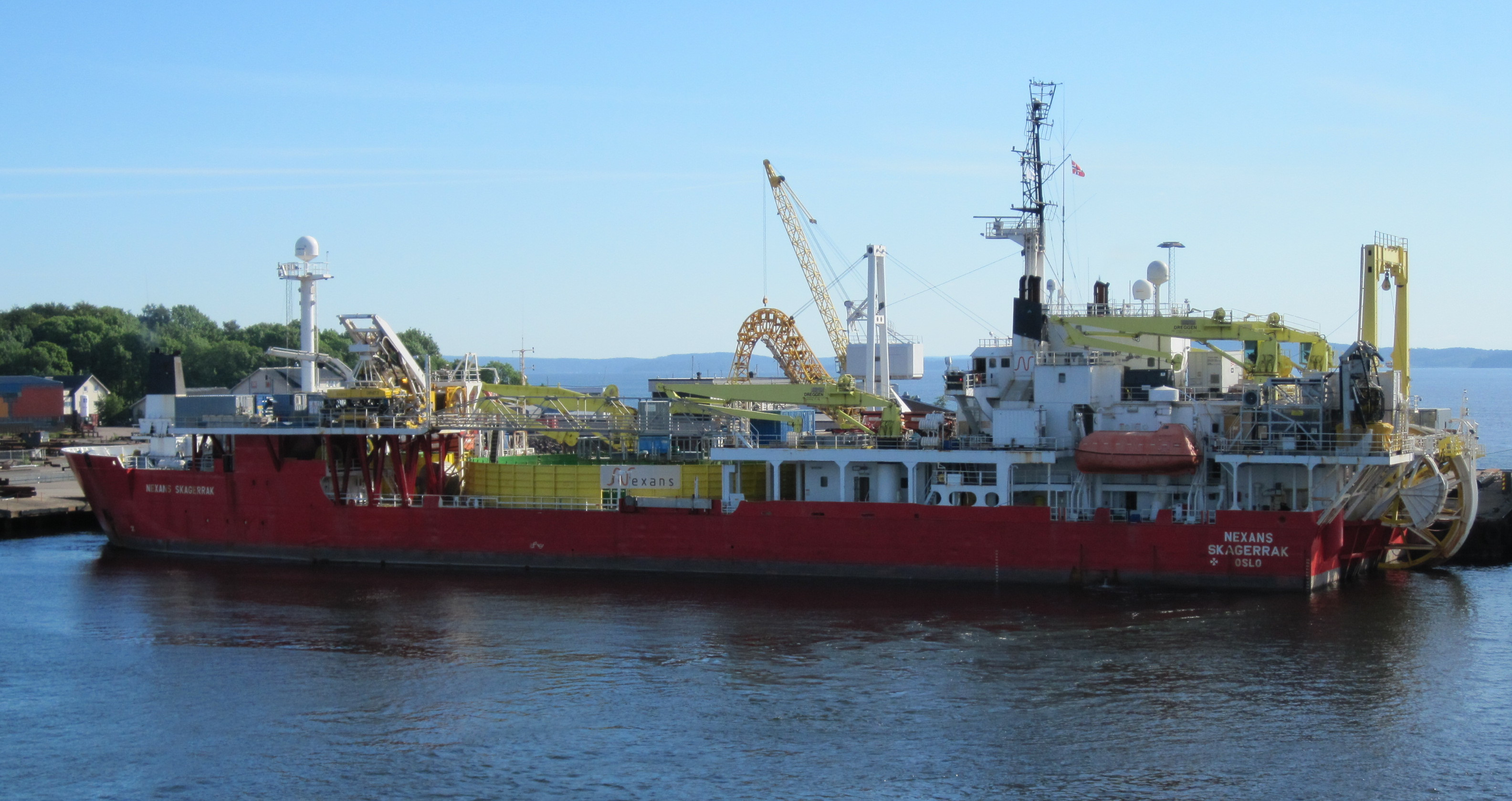
The future of the Great Sea Interconnector (GSI) remains uncertain, with French cable manufacturer Nexans indicating that production linked to the project may not resume until 2028, despite recent assurances from Cyprus and Greece that work is indeed moving forward.
“With GSI or without, that will not change the picture of our financial projection by 2028,” Nexans chief executive Julien Hueber told investors during the company’s third-quarter earnings call.
Referring to the possibility of work resuming, Hueber said Nexans could give GSI time, “if the GSI will restart”, to undertake several months of seabed surveys, pre-engineering and financing before potentially restarting the project in 2028.
“I think what matters the most is that we have de-risked this project of MI,” he said, referring to the mass-impregnated (MI) cable technology used for the interconnector.
“We have now two options,” Hueber added, explaining that Nexans was also working on alternative projects while discussions concerning GSI remained at the diplomatic level.
His comments came in response to a question from an analyst, who asked whether GSI could begin contributing to the company’s business again in 2028 or 2029, given that Nexans was allocating its manufacturing capacity to another Mediterranean project. Hueber explained that the alternative project was expected to enter production by the end of 2026 and occupy the company’s plant until mid-2028.
“That gives us time for two things,” he said, explaining that Nexans could continue working on other Mediterranean projects or allow GSI time to complete the preparatory work required for a possible restart.
“One is to keep working with other projects on MI that are under preparations in the Mediterranean Sea to, let’s say, load the plant after mid-2028, because we have several projects under discussion, or give us the time for the GSI, if the GSI will restart […]” he said.
The company’s cautious position was also evident when an analyst questioned Hueber about reports that seabed surveys could resume before the end of October and that a €25 million payment might be forthcoming.
The analyst asked whether the resumption of surveys would allow Nexans to begin receiving payments again and what implications this would have for the company’s profits and manufacturing capacity.
“Regarding GSI, I want to be very careful about that because I don’t want to repeat the problem that we faced, if you remember, a year ago,” Hueber replied adding that “today, there are ongoing discussion on the political side, diplomatic side, and I will let these politics to work on it.”
“And when it will be time for Nexans to position and to communicate, we will communicate. But at this moment, discussion is at political and diplomatic level.”
Earlier in the same presentation, he also made clear that the company’s financial forecasts for 2026 do not assume any execution of GSI during the remainder of the year.
“As previously communicated, these guidance do not assume execution of the Great Sea Interconnector project in 2026,” he said. Nexans chief financial officer Vincent Piquet subsequently confirmed, in response to a question from an analyst, that the alternative project would occupy the company’s MI manufacturing capacity throughout 2027 and until mid-2028. “The project will start at the end of the year, and will fill the MI capacity completely next year and until [mid] 2028.”
The remarks come against a backdrop of more optimistic statements from Cyprus and Greece regarding the interconnector’s progress.
As the Cyprus Mail reported on October 15, Energy Minister Michael Damianos said a Navtex for the resumption of seabed surveys would be issued before the end of October, expressing satisfaction that the project was moving forward. “We are happy because the project will start running, as previously agreed,” he said at the time.
Greek government spokesman Pavlos Marinakis also insisted last week that the project would proceed according to its original planning, despite geopolitical difficulties involving Turkey.
However, the Cyprus Mail reported on Tuesday that Cyprus’ energy regulator had revised the estimated completion date from January 2030 to January 2031, while acknowledging that the final cost remained uncertain.
Regulator Polis Lemonaris told MPs that approximately 60 per cent of the necessary seabed surveys had been completed, with the remaining 40 per cent expected to take around six months. He also questioned whether the frequently cited €1.9 billion project cost remained realistic.
Meanwhile, Damianos told MPs on Monday that Cyprus would only make its pledged €25 million contribution once tangible progress was made, stressing that the commitment concerned a project moving forward rather than one remaining pending.
“If electricity does not come to Cyprus, we will not pay,” he said.
Hueber’s comments raise questions about when cable manufacturing could realistically restart and whether the project’s industrial timetable remains aligned with government expectations.





Click here to change your cookie preferences