
Cyprus businesses will need to invest more, improve productivity and turn research into commercially successful products if they are to compete internationally, with employers warning that the ability to adapt quickly to new technologies will increasingly matter more than company size.
The warning comes as Cyprus leads the EU in innovation activity among smaller businesses, but continues to face difficulties attracting private investment and turning research into commercial growth.
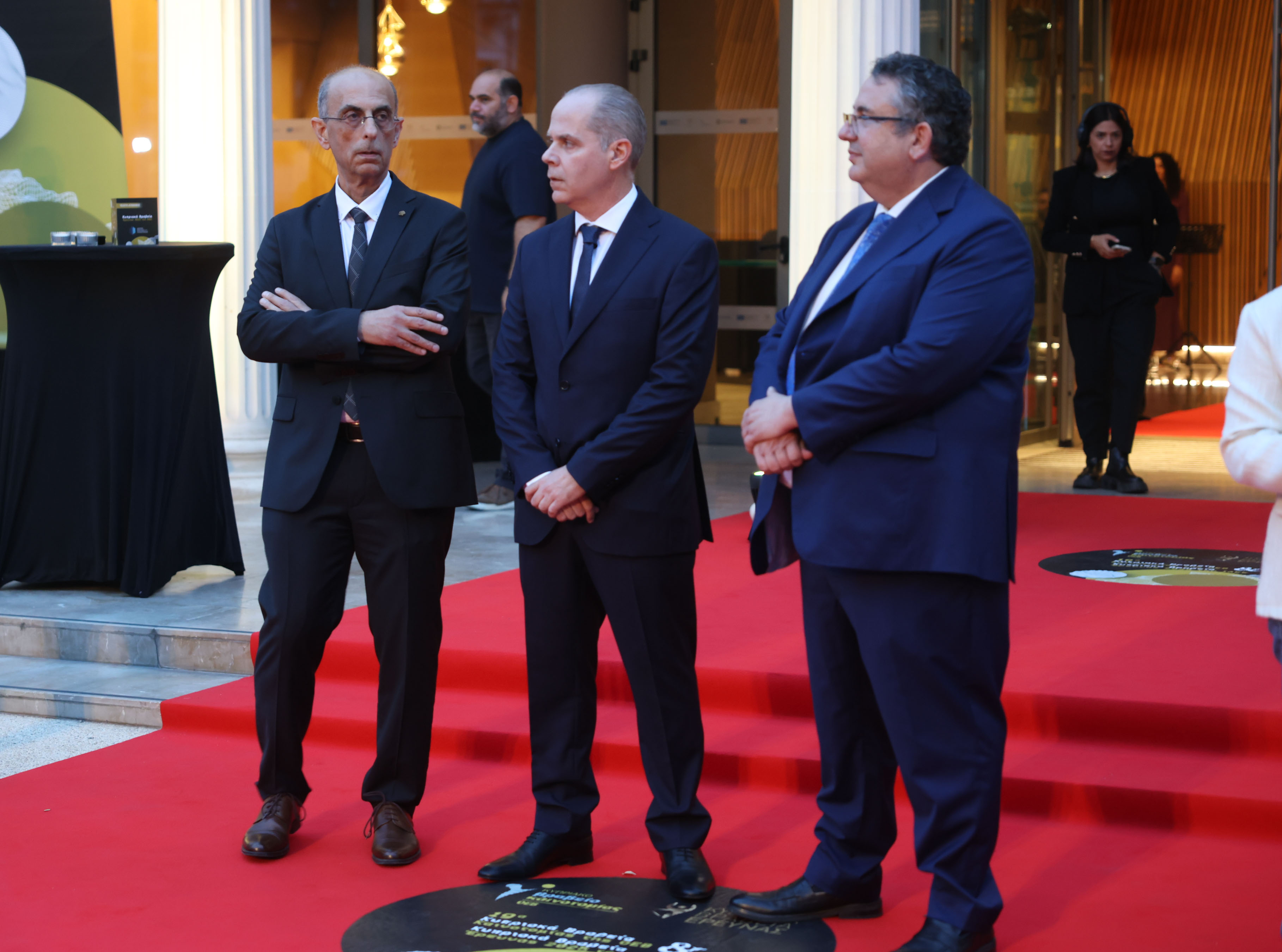
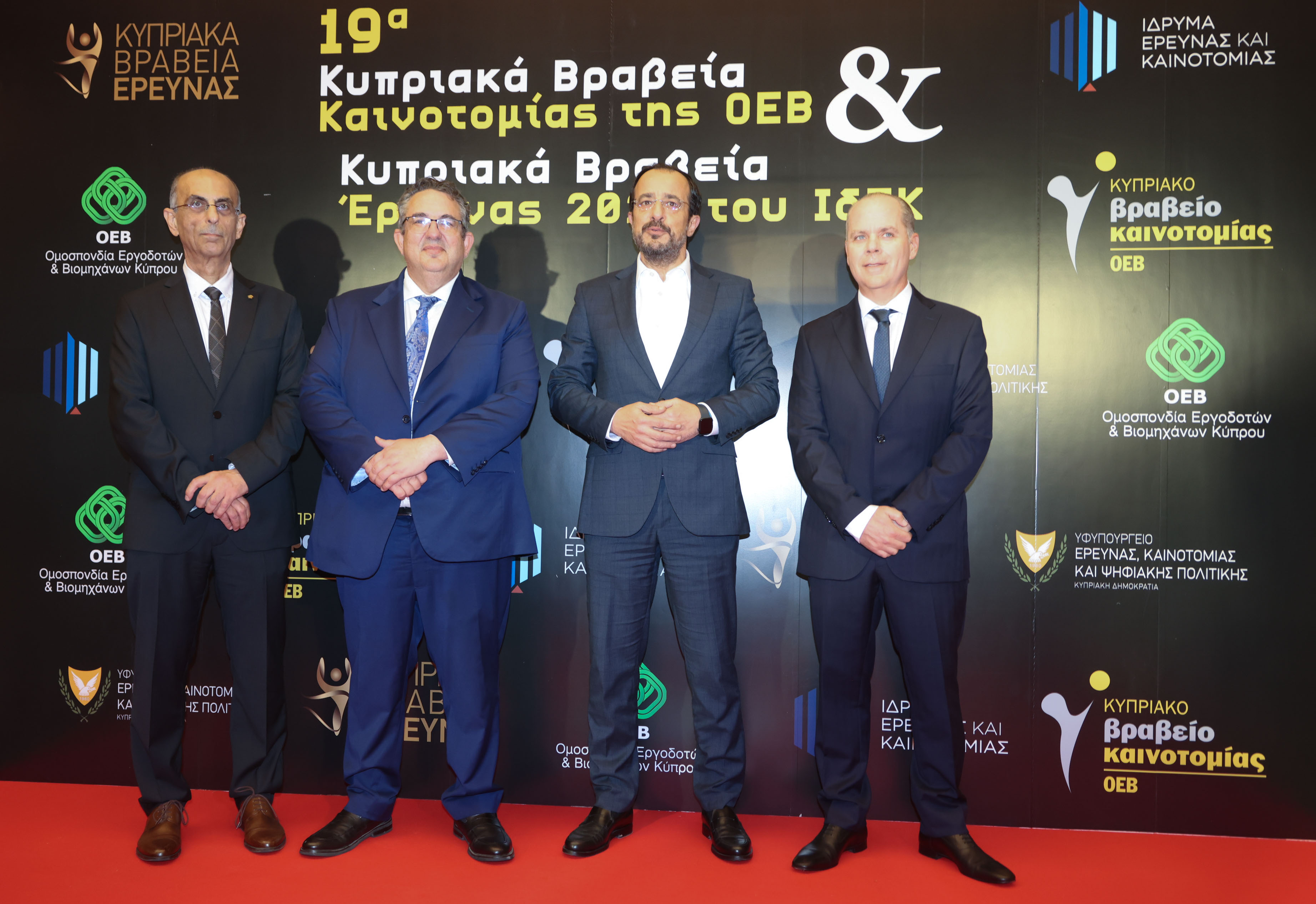
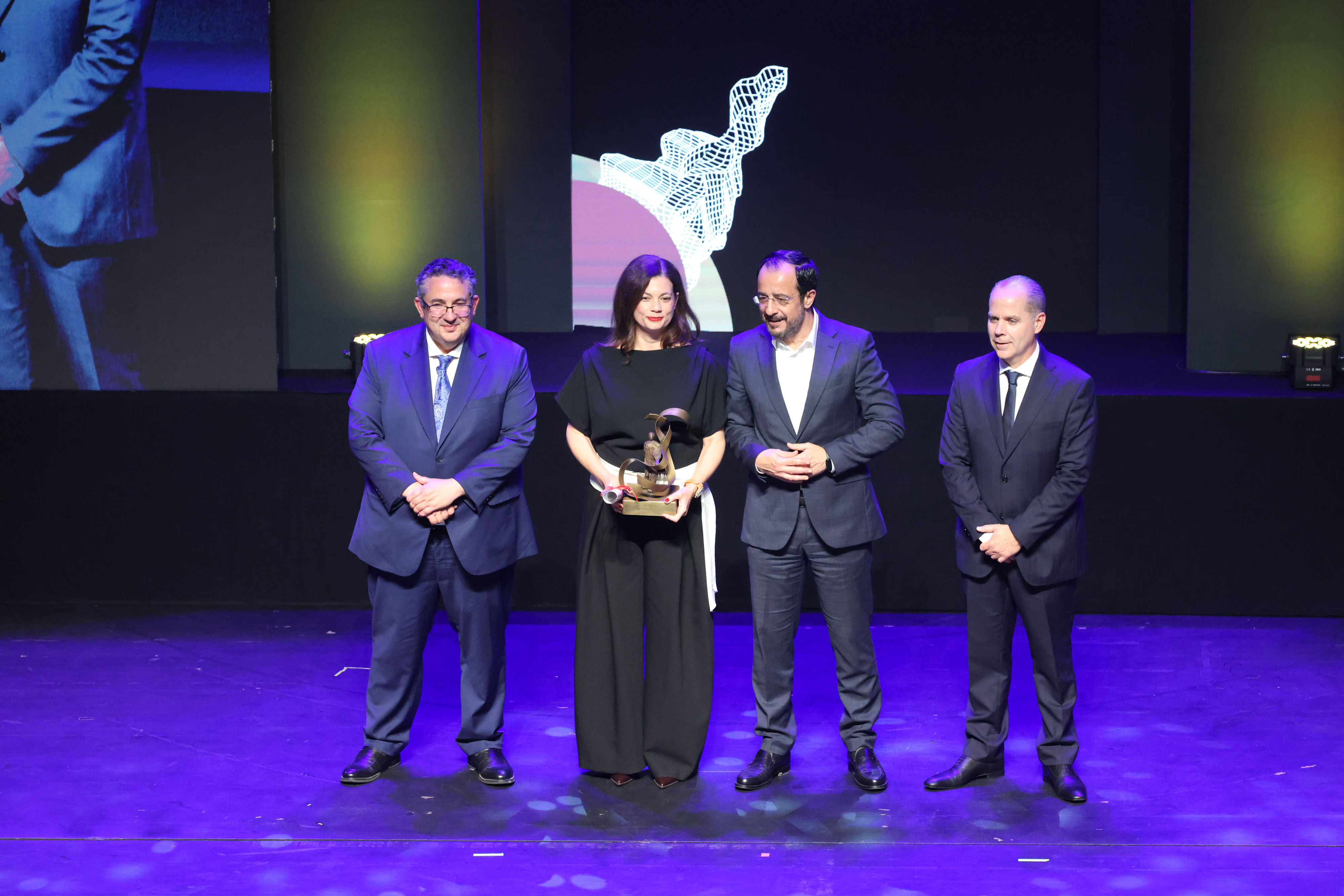
Speaking at the 19th Cyprus Innovation Awards and the Cyprus Research Awards 2025 at the Nicosia Municipal Theatre on Monday, Employers and Industrialists Federation (Oev) chairman Giorgos Pantelides said “the companies most likely to succeed would not necessarily be the largest, but those quickest to adapt.”
With artificial intelligence, robotics and digital technologies changing the way companies operate, he argued that businesses could no longer afford to treat innovation as something optional.
For companies, he explained, the question was no longer whether they would have to change, but how quickly they could do so and whether they could turn that change into a competitive advantage.
This matters particularly for Cyprus, where businesses cannot rely on the size of the domestic market to compete internationally.
Instead, Pantelides argued, the country’s strengths lie in flexibility, quality and the ability to make better use of knowledge and technology.
He called for more businesses capable of turning research into products and new ideas into investments, stressing that innovation only becomes valuable when it finds a practical use in the economy.
And there is plenty of evidence that Cypriot businesses are willing to innovate.
According to the European Commission’s 2026 innovation scoreboard, Cyprus climbed from 15th to first place in the EU for innovation activity among small and medium-sized businesses.
The country also rose from tenth to second place in the category measuring research and business cooperation.
The picture is less impressive when looking at overall performance, however. Cyprus remains classified as a moderate innovator, reaching 92.1 per cent of the EU average, with weaknesses in venture capital investment and business spending on research and development.
In other words, Cypriot businesses are showing considerable appetite for innovation, but securing the investment needed to take promising ideas further remains difficult.
It is a gap that Chief Scientist Demetris Skourides, who also chairs the Research and Innovation Foundation (RIF), believes Cyprus must work harder to close.
Speaking at the same ceremony, Skourides argued that “producing more scientific knowledge was not enough.” The challenge was to turn that knowledge into innovation, innovation into opportunities and, ultimately, those opportunities into economic and social benefits.
Doing so, he explained, requires closer cooperation between universities, research centres and businesses, alongside greater investment in the people producing the research.
Cyprus has already made progress in attracting competitive European funding.
According to Skourides, the country has secured 17 European Research Council (ERC) grants during the current programming period, compared with 12 in the previous one. Successful applications among early-career researchers have also increased from two to five.
With 5.1 ERC grants per million inhabitants, Cyprus now exceeds the European average of 4.2.
Two recent successes involved University of Cyprus researchers Maria Kalli and Myrofora Panayi, who secured a combined €3 million in European funding.
Both had previously received €100,000 through RIF’s VISION ERC programme, demonstrating how domestic support can help researchers compete for much larger international grants.
Skourides also emphasised the achievements of Triantafyllos Stylianopoulos and Stavroula Constantinou in the established researcher category, where Cyprus had gone 11 years without a successful application.
Another example is University of Pennsylvania professor Costas Koumenis, who chose Cyprus to carry out an ERC Synergy-funded research project exploring new approaches to cancer treatment.
These achievements are particularly important for a country that has long seen talented scientists pursue opportunities abroad.
Skourides wants Cyprus to become not only a place where scientific careers begin, but somewhere researchers can return to build them.
The Minds in Cyprus initiative forms part of that effort, seeking to attract scientists working overseas and make better use of their international experience.
There are encouraging figures here too. Skourides pointed to Cyprus’ 59th-place position in the TopSciNet 2026 ranking, with 154 distinguished scientists, and said around 8.3 per cent of active researchers at Cypriot universities feature among the world’s top 2 per cent of scientists.
Still, recognition alone will not persuade scientists to stay. They need research opportunities, access to funding and the prospect of seeing their work put to use.
Funding, therefore, featured prominently throughout Monday’s discussions.
President Nikos Christodoulides highlighted the country’s economic performance, improved credit ratings and the growing contribution of technology, now estimated at around 15 per cent of GDP, as reported on Monday evening. He also stressed the need to translate economic growth into greater productivity, better jobs and stronger competitiveness.
Providing further details, the president said RIF had launched 95 funding calls worth €165m between 2023 and 2026, with 575 contracts signed for a combined €105m.
These programmes have contributed to more than 700 new jobs and 187 cooperation networks linking businesses with research organisations.
Importantly, public funding is also helping to attract private money.
Between 2021 and 2025, RIF programmes drew more than €47.2m in private investment, with the Disrupt and Boost schemes alone providing €12m in public support to 14 businesses that secured a further €16.5m from private investors.
More funding is on the way.
RIF announced last week that a new BOOST round is expected to open in early December, with an initial budget of €1.2m.
Eligible innovative businesses will be able to apply for grants of up to €300,000, provided they have secured a binding agreement for at least €200,000 in private equity investment.
The first application deadline is expected on April 9, 2027, while another €1m has been earmarked for a subsequent round.
The approach is intended to help companies move beyond developing an idea and secure the capital needed to expand, particularly when access to private investment remains a stumbling block.
Meanwhile, RIF is inviting researchers and businesses to help shape its funding programmes for 2028 – 2034, with a public consultation open until November 2.
The proposed framework places greater emphasis on commercialising research, strengthening research infrastructure, attracting private investment and developing skills.
Alongside these domestic efforts, the government is looking abroad for partnerships that could open doors for Cypriot businesses.
Christodoulides announced that he would return to the US towards the end of November, pointing to growing interest in Cyprus among American technology companies.
He referred to cooperation with NVIDIA on advanced computing infrastructure, Cyprus’ participation in the European AI Factories network through Pharos-CY and the establishment of the Plug and Play innovation centre.
The Future Founders Academy, developed with Columbia University following meetings in New York earlier this year, is another attempt to give young entrepreneurs access to international expertise and opportunities.
The government is also preparing a new national research and innovation strategy extending to 2033, with priorities ranging from artificial intelligence and biotechnology to advanced digital and clean technologies.
For Pantelides, however, the point of all this investment and international cooperation comes down to something much simpler.
Research must find its way into production, businesses must be able to compete beyond Cyprus and innovation must deliver something useful, rather than remain an idea on paper.
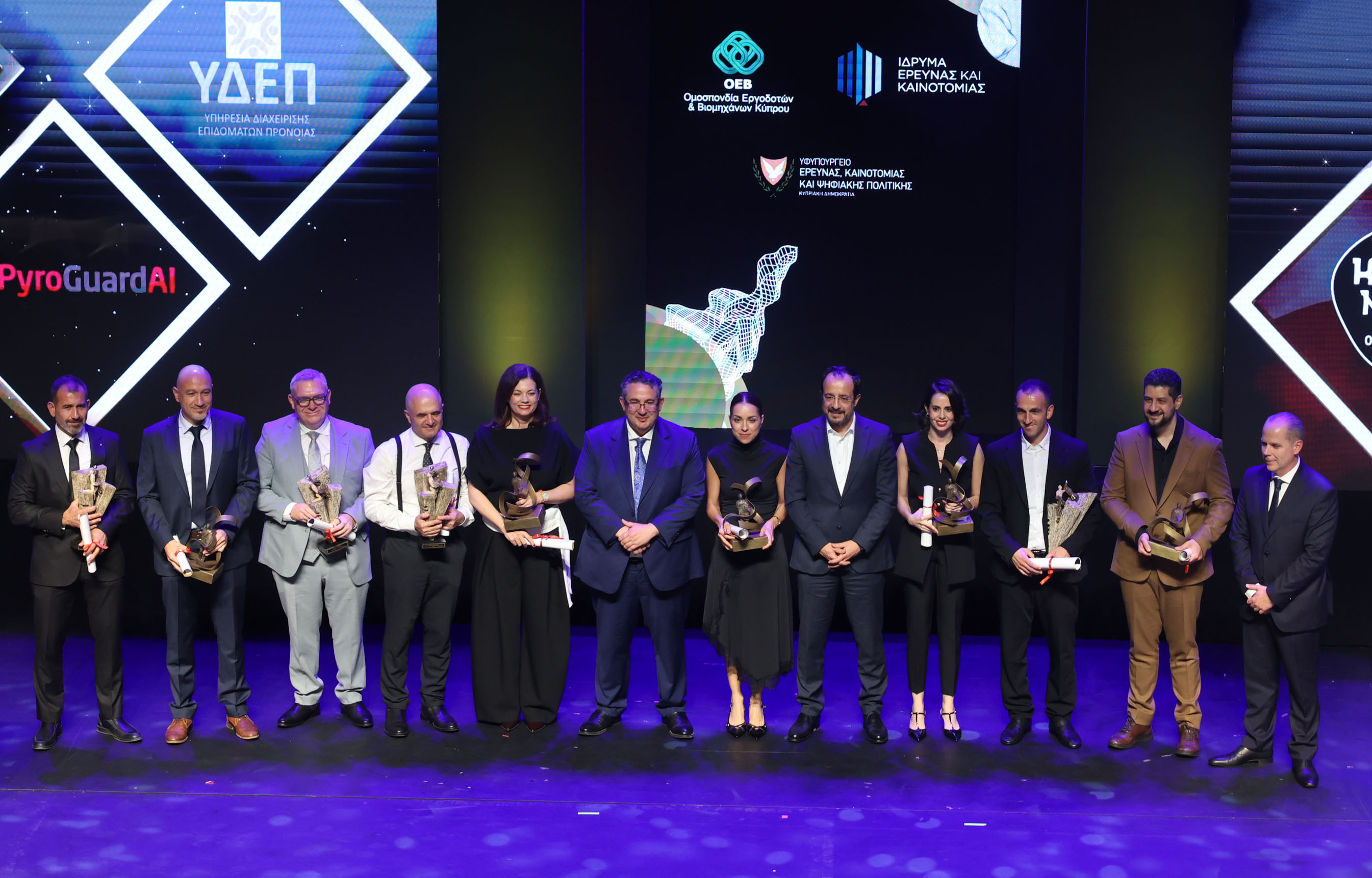
It is a principle Oev has sought to promote since introducing its innovation awards in 2006. The awards now form part of European SME Week and recognise successful applications of innovation in manufacturing, services, the primary sector and social innovation.




Click here to change your cookie preferences