
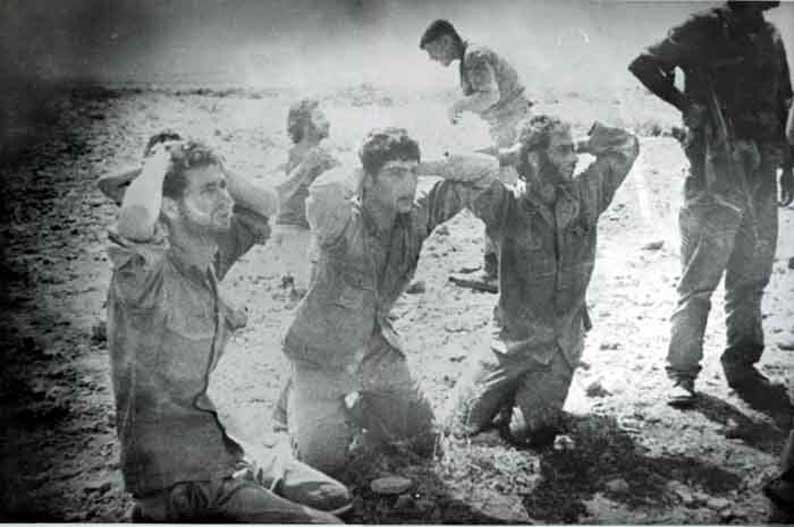
The Audit Office has identified eight cases of questionable benefit payments to individuals recognised as prisoners of war during the 1974 Turkish invasion, warning that more ineligible recipients may exist and highlighting the absence of a single, reliable database to verify beneficiaries.
In a special report published on Thursday, the Audit Office called for a comprehensive review and updating of existing records after finding significant discrepancies between the authorities responsible for identifying prisoners of war and administering their benefits.
The investigation, which followed a complaint by the Association of Prisoners of War of 1974, found that 852 people received at least one of the relevant benefits in 2025, under schemes through which approximately €8.93 million was paid during the year.
Auditor-general Andreas Papaconstantinou warned that the findings went beyond isolated errors, exposing wider weaknesses in a system that remains fragmented, largely manual and reliant on historical records that are sometimes incomplete or impossible to verify.
In the report’s foreword, he stressed that recognising the contribution and ordeal of those held prisoner during the invasion was a fundamental obligation of the state, but that the honorary nature of the benefits made it essential to ensure payments reached genuine beneficiaries.
“The number of ineligible recipients receiving benefits may be higher,” he warned, pointing out that the audit examined only a sample of cases.
The investigation cross-checked information held by the social insurance services (SIS) and welfare benefits administration service (WBAS) against the defence ministry’s register of prisoners of war, military conscription records and Cyprus Red Cross archives.
Of the approximately €8.93 million paid in 2025, around €8.34 million was administered through the SIS and €588,099 through the WBAS. The benefits include a monthly honorary allowance ranging from €5.23 to €83.68 and a six-monthly lump-sum payment of €1,000. The report does not establish the amount potentially paid incorrectly.
The auditors initially identified 150 recipients who could not be matched with Cyprus Red Cross records. Of these, 130 were subsequently located in the defence ministry’s register, while 20 appeared in neither.
Of the 20, fifteen received benefits through the SIS and five through the WBAS.
Further examination of military records established that six of the 15 SIS recipients had indeed been prisoners of war and should have been included in the ministry’s register. Another three had been captured as civilian hostages before joining the National Guard and were entitled to benefits, although not as conscript prisoners of war.
For the remaining six, no evidence was found establishing that they had been prisoners of war, leaving their entitlement to payments under that category unsubstantiated.
The audit also questioned how the SIS verified another 22 individuals who appeared in Cyprus Red Cross records but for whom no prisoner-of-war certificate appeared to have been issued. They were also absent from the defence ministry’s register.
According to the report, the SIS failed to provide convincing explanations demonstrating that the six-monthly payments were being granted only to eligible recipients.
Two further questionable cases emerged from an examination of 77 military conscription records from Nicosia, Kyrenia and Morphou.
One concerned an individual declared a deserter in April 1975 who was subsequently arrested by Turkish forces and released the following month. Although his monthly allowance could be justified by additional military service, the auditors found that the six-monthly payment was not justified because his captivity occurred after the 1974 invasion.
In the second case, information relating to another person, including references to captivity, had mistakenly been entered into a military record. Although corrected in 1983, the erroneous information was subsequently used to compile the prisoner-of-war register.
The individual’s entitlement to both the six-monthly payment and the monthly allowance was questioned, particularly after a 2019 investigation found no evidence of reserve service during the invasion.
Beyond these cases, the Audit Office identified serious weaknesses in the underlying military records.
In 39 of the 77 cases examined, essential information was missing, including military units or the dates of captivity. Some entries had been added years or decades after 1974, including one in 2001, based on supporting documents that have since been destroyed.
Some original registers were also found to be badly deteriorated, prompting recommendations for further preservation work in cooperation with the State Archives.
The auditors found that the National Guard does not issue a specific prisoner-of-war certificate, instead providing a general military service certificate without retaining a copy, preventing subsequent verification.
The SIS was also criticised for relying on an outdated copy of the ministry’s register and failing to produce supporting evidence that verification procedures had been followed in the 15 cases examined.
Problems extended to application forms, with no dedicated form for the six-monthly payment for existing monthly allowance recipients.
Papaconstantinou acknowledged that the invasion, missing archives and incomplete initial records had created genuine difficulties, but said these did not justify allowing weaknesses to persist, “particularly when they result in someone who was not a prisoner of war becoming a benefit recipient”.
He also suggested that the sensitivity of the issue may have discouraged officials from revisiting records, possibly in the expectation that time would eventually resolve the problem.
“This, however, is unacceptable,” he said, adding that the possibility of deliberate errors could not be excluded.
By contrast, the audit found no procedural problems in 65 cases involving care allowances administered through the WBAS, where prisoner-of-war status was verified through Cyprus Red Cross certificates.
The Audit Office recommended a comprehensive reassessment of beneficiaries, corrections and systematic updates to the defence ministry’s register, improved verification procedures and closer coordination between authorities.
Where eligibility cannot be established after examining all available reliable evidence, the report calls for appropriate administrative measures.
It concluded that no single, complete and verifiable database currently exists on which all responsible authorities can reliably depend when determining eligibility and authorising payments.




Click here to change your cookie preferences