
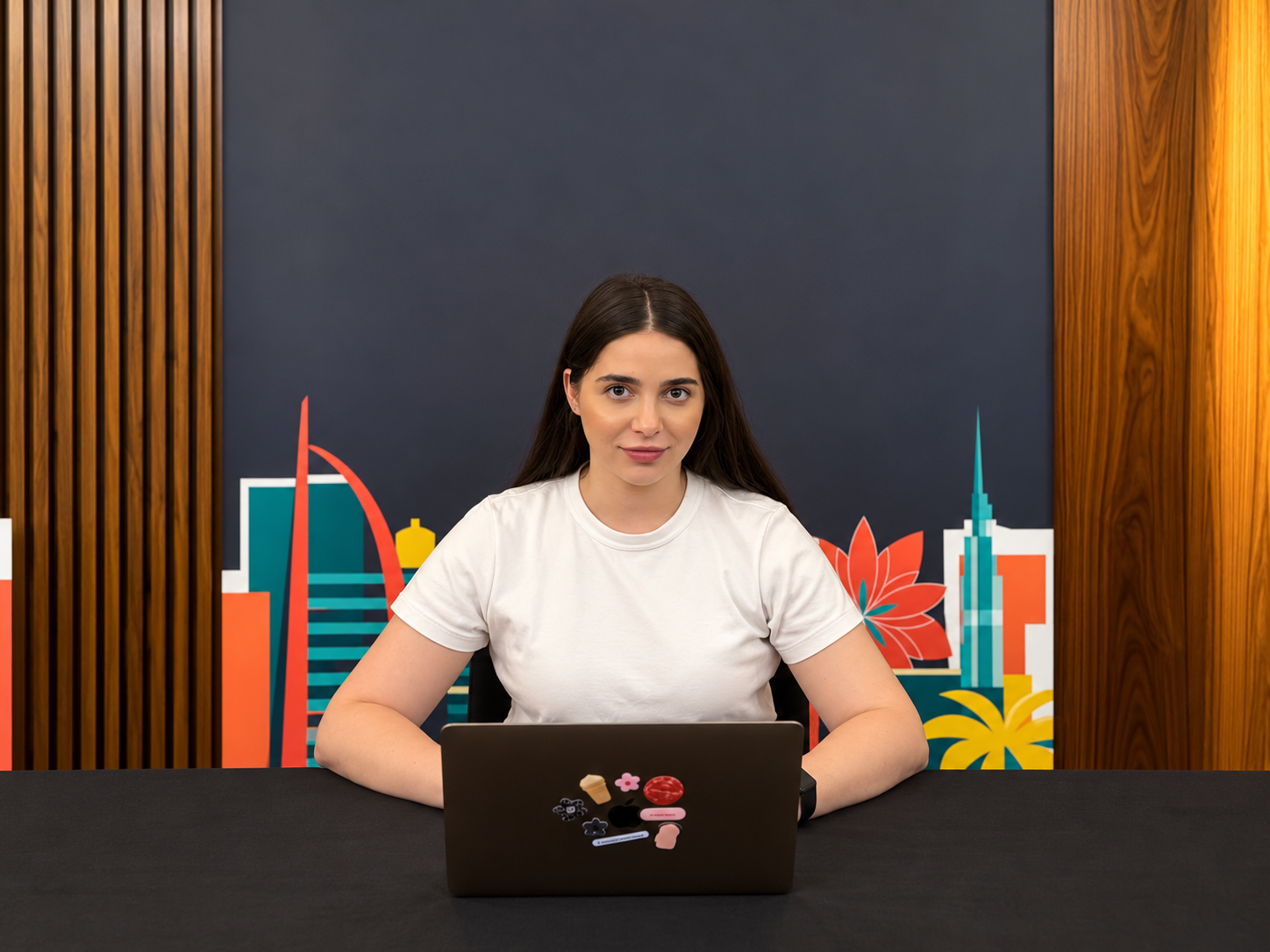
CEO of GetOffers.com, Maria Budekhina, discusses building a travel platform around an AI assistant, giving businesses access to net rates and winning clients’ trust
Before GetOffers.com, I worked in travel tech for several years. I started in customer support and later moved into sales. In both roles, I kept hearing the same complaints from business clients: a service fee was added to every ticket, and companies paid it because nobody had offered them another way to book.
Smaller firms had it worse. Most corporate travel tools were designed for large organisations, so a company of 40 people would end up booking through consumer websites. At the end of the quarter, the finance team had no clear picture of what had been spent or why.
There is no shortage of flights or hotels. What companies were really paying for was a chain of intermediaries, each adding its own margin, with no one competing for the booking.
We launched GetOffers.com this year to give businesses net rates. A company describes the trip in one message, and competing offers from suppliers come back in the same conversation, alongside approval rules and reporting. Because we started recently, we could build the product around an AI assistant from the beginning.
A model for three markets
Large online travel agencies are built for people booking holidays. Established corporate platforms mostly serve large enterprises, with the pricing and implementation time that come with that. A mid-sized company that travels frequently but has no travel manager doesn’t really fit either model.
We work with three groups. Companies get net rates and can set travel policies, approve trips and see reports in the same place. Connecting is free, and in our standard model, we don’t add a GetOffers booking fee. We make our money through agreements with suppliers, including revenue sharing. The customer should see the full price and the supplier’s terms before approving the trip.
Travel agencies use the platform to build trips from net rates. The assistant assembles the whole trip from competing supplier offers, usually the most time-consuming part of a manager’s work, and the agency keeps its margin.
Hotels can offer guests transfers, excursions and eSIMs directly, without paying commission to an intermediary.
For clients, this mainly means lower prices and less time spent on bookings. For us, it means we don’t depend on a single type of customer.
Where AI helps
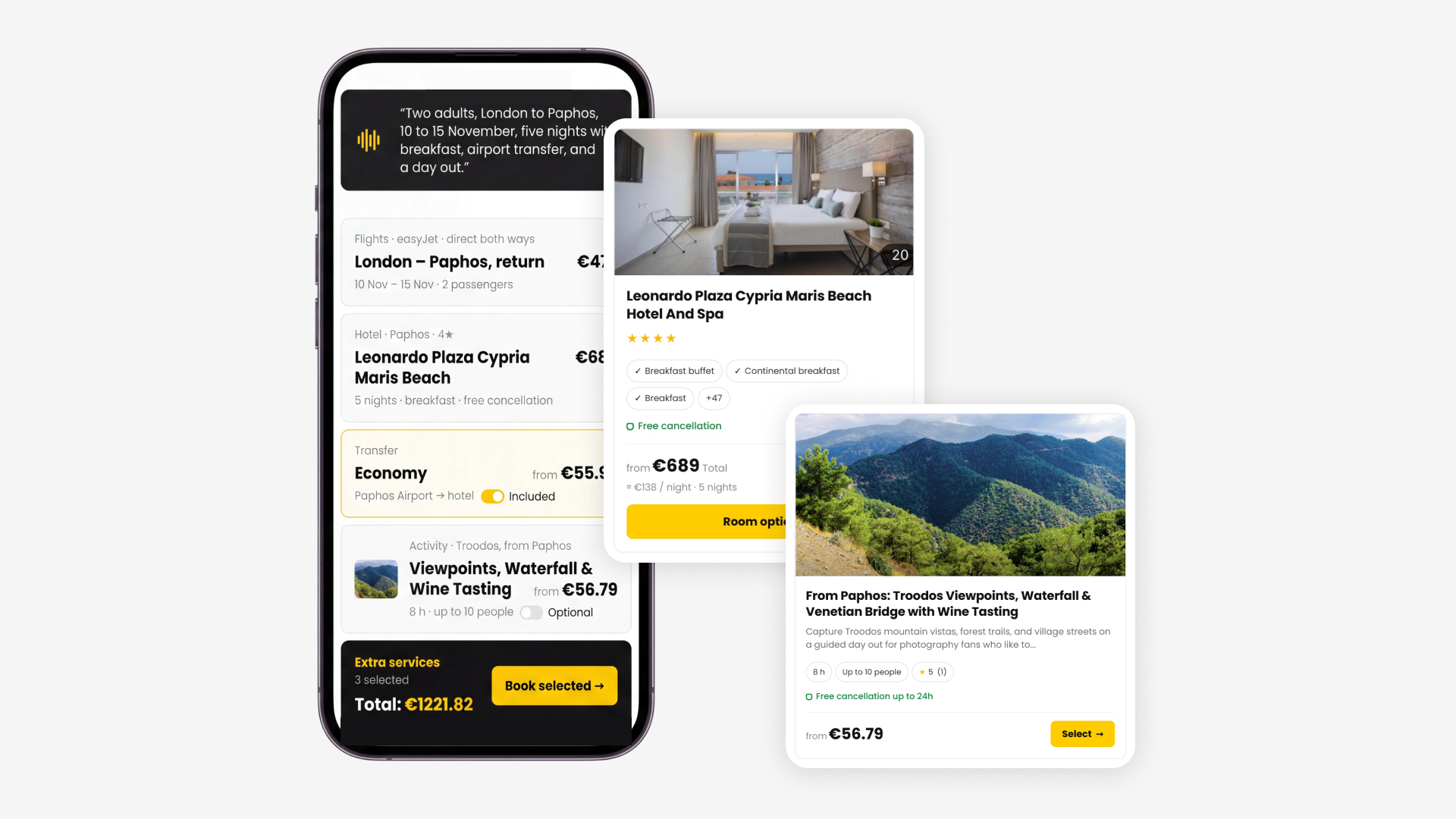
You can speak to the assistant or type to it at any time. A typical request might be: “I have a meeting in Limassol on Tuesday morning, I need to be back on Wednesday evening, and it has to be within our policy.”
The assistant puts competing offers side by side and highlights the one that fits best. Once the traveller or their manager agrees, it books everything, including the flight, hotel and airport transfer.
Before booking, though, it should ask about things you might not have mentioned. Are you taking equipment with you? Will you be arriving at the hotel late? Those answers could change what it recommends. I’d rather it asked than left you to sort out a problem when you get there.
At the moment, it’s most useful for routine work: searching, comparing prices, combining several services into one trip and checking everything against company rules. When a trip is complicated or something unusual comes up, a person still needs to make the decision. We tell clients that from the start.
Over the next five years, I expect assistants to do more before and after booking. If a team is going to a trade fair and nearby hotels are filling up, the assistant should warn them while rooms are still available.
With cancellations, it gets harder. A replacement flight might get you to the right city, but too late for the meeting. The hotel and transfer may need changing, too. That’s the work I’d like the assistant to take on, with the traveller agreeing to any changes in price or booking conditions.
Expense reporting will change as well. Most reports should be generated from booking data, so employees don’t have to collect receipts after every trip.
I don’t expect travel agents to disappear. Those who use these tools will be able to handle more clients, putting pressure on those who don’t.
Earning clients’ trust
GetOffers.com launched this year, and we’re not publishing figures yet. It’s too early for the numbers to say much.
The hardest part so far is getting companies to trust us with their travel. Some have used the same agency for years. Their agent knows who prefers an early flight, who approves the budget and who to call when plans change. I understand why they wouldn’t switch on price alone. We have to show we understand how they work and that moving their bookings to us won’t mean more work for them.
Working with three types of clients also makes growth harder to plan. Companies come to us for prices and choice, while suppliers want to see booking volume before offering good rates. We’ve already signed agreements with several major wholesalers, which lets us offer competitive prices before volume builds up.
Every client comes to us through direct conversations, and each one teaches us something about the product. The clients most open to trying it are independent agencies, whose managers spend hours assembling trips by hand, and mid-sized firms that travel internationally but have no one dedicated to travel. Both feel the problem most directly, so that is where we are focusing.
Growth plans and Cyprus
In three years, I’d like GetOffers.com to be the first place a travel agency or a company without a travel department goes when they need to put together a trip.
We’re currently concentrating on the product and our first clients. We’ll consider raising money when there’s a clear need for it, and we’re happy to talk to investors who know the travel sector. We plan to expand into new markets as client demand appears, rather than following a fixed timetable.
On the product side, we want the assistant to handle more of the trip after booking. That includes dealing with delays and cancellations, recording expenses automatically and connecting through our API to the accounting and HR systems companies already use.
Cyprus is an important market for us. It has been a difficult year for tourism here, and hotels are looking closely at every source of revenue. Services beyond the room, such as transfers or activities, can make a real difference. Hotels should be able to sell them without giving a large share to intermediaries.
The hotel association has just called for AI to become part of the national tourism strategy. I agree, but for smaller hotels, the tools have to be affordable and simple to set up. Otherwise, only the large chains will benefit.
Business travel is the other part of the picture. Limassol and Larnaca are home to many international companies whose staff travel constantly and the government is now supporting conference tourism outside the summer months. Business trips and events help hotels fill rooms in the quieter season, and that is where we would like to be useful.



Click here to change your cookie preferences