
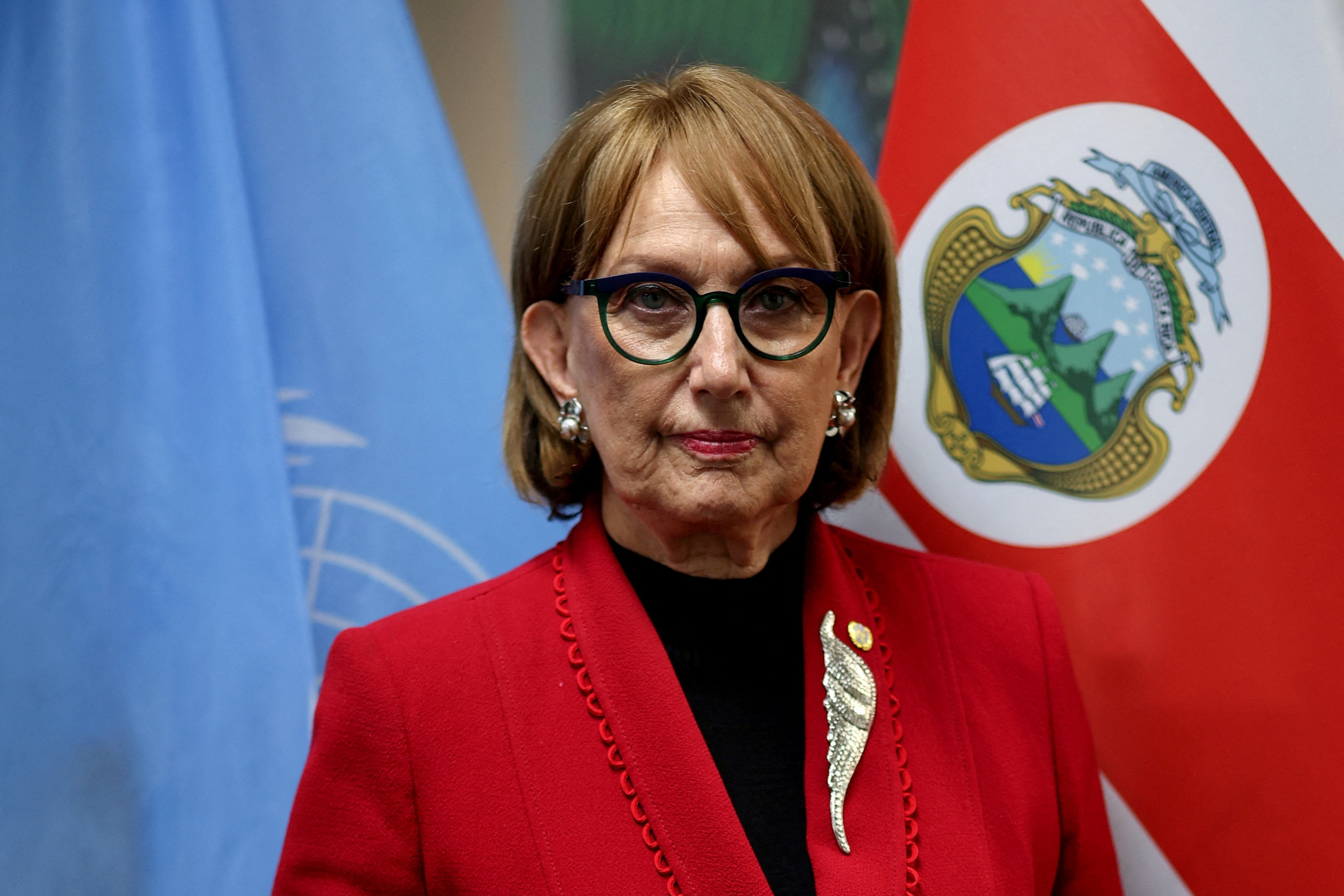
Former Costa Rican vice president Rebeca Grynspan secured her strongest showing yet in a Security Council poll, as the United Nations prepares to choose its first new leader in a decade
An informal poll by the United Nations Security Council on Thursday showed former Costa Rican Vice President Rebeca Grynspan extended her lead as frontrunner in the race to become the 10th UN secretary-general, people close to the process said.
Grynspan received 12 votes in favor and three against on the 15-member council, marking her strongest showing in eight closed-door ballots conducted in recent months to replace Antonio Guterres as he finishes his second five-year term this year.
Whoever wins will have to tackle multiple crises, including several wars, cutbacks in US contributions to the UN, and the 193-member body’s declining political relevance as Washington has pulled out of dozens of its agencies.
Permanent members hold decisive votes
Securing the council’s recommendation will require a formal vote, expected once one candidate shows a strong chance of prevailing, with at least nine positive votes and no “discourage” votes from the five permanent members — France, Britain, the US, Russia and China. Thursday’s ballot did not disclose the preferences of those five members.
Six of seven polls conducted in recent months showed Grynspan narrowly ahead, with one poll in August placing Guyana’s UN ambassador Carolyn Rodrigues-Birkett in the top spot.
On Thursday, Rodrigues-Birkett received eight votes in favor, coming in third, while Argentina’s Rafael Grossi, the director general of the UN nuclear watchdog, came in second with nine “encourage” votes.
Their results were very close to the outcome of last week’s poll, compared to Grynspan’s gain of one vote in her favor.
Also identical to last week was the result for United Arab Emirates diplomat Lana Nusseibeh, a late entrant to the race, who again came in fourth with seven votes in favor, six against and two marked as “no opinion.”
When Guterres was chosen in October 2016, it took six straw polls for the council to reach agreement.
A historic appointment in prospect
Tradition has dictated that the role rotate among regions, with Latin America next in line. In the more than 80-year history of theUN, there has never been a female secretary-general.
In an interview earlier this month, the Costa Rican economist told Reuters that the UN has become too risk-averse and its next leader must be prepared to bear the cost of diplomatic failure and to try again.


Click here to change your cookie preferences